Med Spa Compliance Lawyer Tennessee: Corporate Practice of Medicine, MSO Structures, and Regulatory Risks for Growing Aesthetics Businesses
The medical spa industry is booming across East Tennessee, but the regulatory framework governing these businesses is anything but simple. If you're a physician, entrepreneur, or investor exploring a med spa venture in Blount, Knox, Sevier, or the surrounding counties, the compliance landscape demands your attention before you sign a lease, hire a provider, or accept your first patient.
Key Takeaways
Tennessee medical spa owners face overlapping healthcare, business, and employment regulations that can create serious risk if handled incorrectly. DZ Law, PLLC helps physicians and entrepreneurs navigate these issues across Blount, Knox, Sevier, Loudon, Jefferson, and Cocke Counties.
Tennessee's version of the corporate practice of medicine doctrine limits how non-physicians can own or control a medical spa. The Corporate Practice of Medicine prohibits non-physician ownership of entities that provide medical services, and improper structures can trigger licensing action, civil penalties, and business disruption. Legal advice is essential for structuring med spas to comply with Tennessee laws regarding ownership and operation.
Compliant Management Services Organization (MSO) and professional entity structures can allow non-physician investors, physician assistants, and nurse practitioners to participate in a med spa business while keeping clinical control with licensed physicians. A Management Services Organization separates medical and business services, creating a lawful path for entrepreneurial involvement.
Compliance lawyers help med spas with business structuring, licensing, and regulatory compliance in Tennessee. DZ Law assists with business transactions and contracts-including ownership agreements, MSO contracts, confidentiality agreements, and employment policies-and can also handle related commercial litigation, malpractice, personal liability, and premises liability disputes if something goes wrong.
Tennessee has strict rules governing aesthetic practices for med spas, and the consequences of noncompliance range from Board discipline to contract disputes, malpractice claims, and loss of the ability to operate.
Ready to discuss your med spa plans or compliance concerns? Call DZ Law at (865) 259-0020 or message us online to schedule a consultation.
Overview of Tennessee Med Spa Compliance and Why It Matters Now
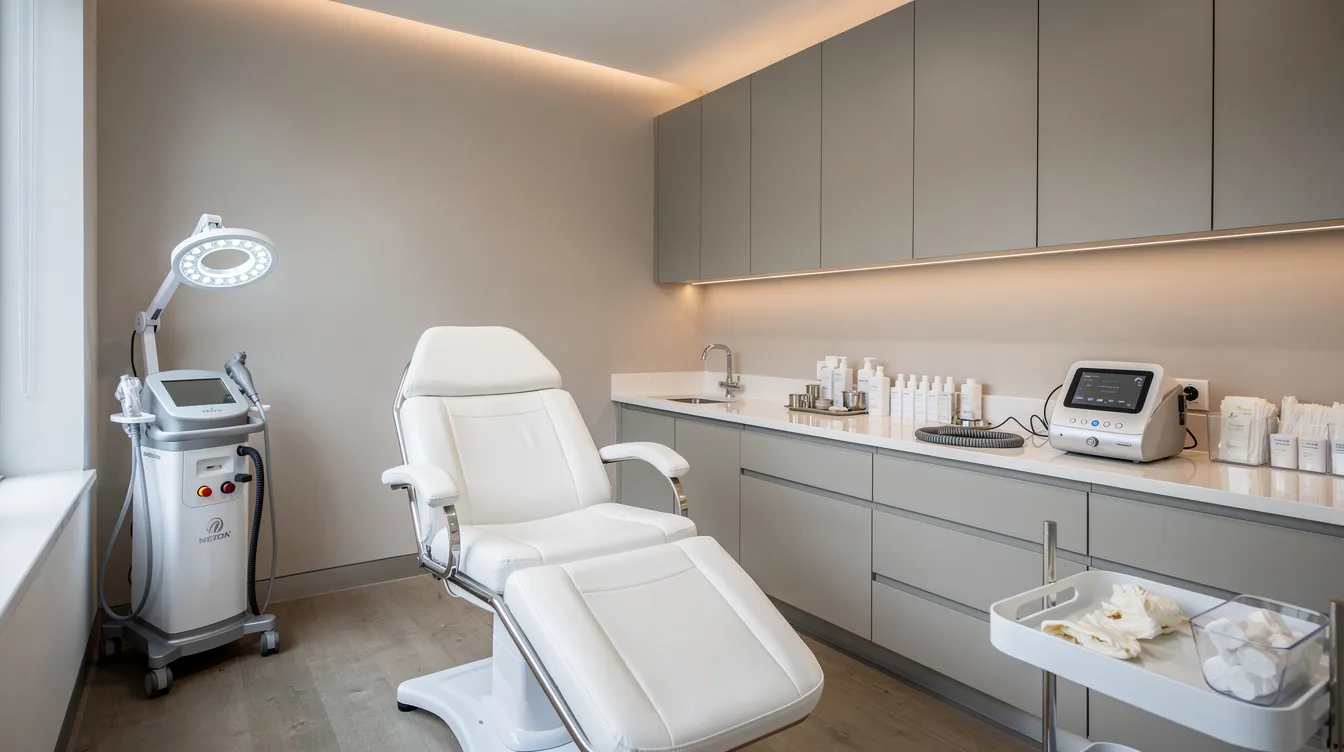
A medical spa in Tennessee is a facility that offers cosmetic or aesthetic medical services-think Botox, dermal fillers, laser treatments, chemical peels, and IV therapy-in a spa-like setting, but under physician supervision. Tennessee's regulations classify treatments like Botox and laser therapy as medical procedures, which means a med spa is not simply a day spa with upgraded equipment. It is a medical practice subject to Tennessee Board of Medical Examiners rules, nursing regulations, and federal privacy and fraud-and-abuse laws.
Medical spas must have a licensed physician medical director who registers the facility annually in Tennessee. Each medical spa location must register separately with the Board of Medical Examiners, and Tennessee law requires annual renewals for medical spa registrations. Medical spas in Tennessee need specific healthcare licenses to operate legally, and the physician serving as medical director must maintain an active medical practice in the state-practicing purely via telemedicine does not satisfy this requirement.
The stakes for getting compliance wrong are significant. Improper corporate practice structures, poor supervision of physician assistants or registered nurses, or noncompliant marketing can result in license discipline, contract disputes, and potential malpractice or premises liability exposure. Small business owners in Knoxville, Maryville, Sevierville, and surrounding communities are increasingly exploring med spa ventures, and the regulatory environment is tightening as authorities close loopholes and issue new guidance.
If you are planning to open or expand a Tennessee medical spa, call (865) 259-0020 or message DZ Law online to review your business and regulatory strategy before signing a lease or investor agreement.
Corporate Practice of Medicine in Tennessee: Foundations for Med Spa Ownership
The corporate practice of medicine is the principle that non-licensed persons or general business corporations cannot independently practice medicine or control clinical judgment. CPOM laws require a physician to control a medical spa's operations, and in Tennessee, a medical spa must comply with corporate practice laws enforced through statutes, Board of Medical Examiners rules, common law (including the foundational Loser v. National Optical Stores Co. decision from 1949), and Attorney General opinions.
In practice, this means that only physicians-or professional entities they own-can provide medical services and retain authority over medical decision-making. Non-physicians cannot own a medical spa in some states, and Tennessee is among those that restrict ownership of medical practice entities to licensed professionals. States like California, Texas, and New York also strictly enforce CPOM laws, but each state's approach has its own nuances.
This doctrine directly affects common med spa scenarios. A non-physician entrepreneur funding a clinic, a salon owner adding injectables to the service menu, or an out-of-state brand trying to replicate a franchise model in Knoxville or Pigeon Forge all face the same threshold question: who controls the medical practice? Stark Law is intended to prevent conflicted physician referrals for designated health services payable by Medicare or Medicaid, so any med spa arrangement touching those programs should be structured to fit an exception. Tennessee allows limited liability company and professional limited liability company structures, but the ownership of an entity providing medical services must generally be restricted to licensed professionals to avoid CPOM problems.
DZ Law's business transactions and contracts practice helps structure med spa ownership, governance, and compensation models to respect CPOM while still giving non-physician investors a defined, lawful economic role.
Professional Entities, PLLCs, and Structuring the Medical Side of a Med Spa
There is an important difference between a standard LLC and a Professional Limited Liability Company under Tennessee law. A PLLC is for licensed professionals-physicians, nurse practitioners, physician assistants-and is the proper vehicle when an entity will employ clinicians to deliver medical services. Medical spas may require specific incorporation documents to operate, and choosing the wrong entity type can create problems down the road.
The professional entity, typically a physician-owned PLLC or professional corporation, is the entity that holds the medical licenses and NPI, employs or contracts with clinicians, and bills for medical spa procedures where insurance or medical billing is involved. Under Rule 0880-02-.20, only physicians licensed in Tennessee (or entities wholly owned by such physicians) may hold ownership interests in a medical professional corporation or medical professional limited liability company.
Tennessee also restricts which licensed professionals may co-own a PLLC. Under T.C.A. § 48-249-1109(e)(1), only specific "health care professional pairs" are authorized to form a shared PLLC-for example, physicians and physician assistants, or physicians and APRNs. Attorney General Opinion No. 26-002 (February 2026) confirmed that these pairs are exclusive; mixing outside them without licensing authority approval is noncompliant.
Misusing a regular LLC to deliver medical services can lead to licensing concerns and may complicate malpractice coverage or future business litigation if ownership or compensation disputes arise. Med spa owners should obtain legal help to choose the proper entity type, allocate voting rights and distributions, draft buy-sell terms, and prepare operating agreements that align with Tennessee professional rules.
DZ Law routinely negotiates and drafts operating agreements, buy-sell arrangements, and governance documents for professional entities across Blount and Knox Counties. Call (865) 259-0020 for guidance on forming the right entity for your med spa.
Management Services Organizations (MSOs) and Non-Physician Participation
A Management Services Organization is the most common structure for non-physician investors or entrepreneurs to participate in a Tennessee medical spa without crossing CPOM lines. Non-physicians manage med spas via Management Services Organizations structured to avoid violating fee-splitting rules, and Management Services Organizations help non-physicians manage medical spas legally when properly documented.
The two-entity model works as follows:
A physician-owned professional entity (PLLC) provides all medical spa services, employs clinicians, and maintains clinical control.
A separately owned MSO (often a standard LLC) provides non-clinical management services-marketing, billing, staffing support, rent, equipment, and business activities that do not involve medical judgment.
Tennessee law requires separate management services agreements for non-physician ownership participation in med spas. Tennessee also requires compliance with fee-splitting and anti-kickback rules for med spas, so the MSO agreement must be carefully drafted.
Key terms a Tennessee MSO agreement should address include:
Scope of services and fees
Term and termination rights
Compliance with CPOM and fee-splitting restrictions
Clear separation of clinical judgment from business operations
Restrictions on the MSO's ability to hire, fire, or direct clinicians
Overreaching MSO contracts-where the MSO has final say over hiring clinicians or dictating medical protocols-can be viewed as violating CPOM and create grounds for Board action or civil litigation. Friendly physician arrangements can involve non-physician investors in medical spas, but these must be structured so the physician retains genuine, independent control over clinical decisions.
DZ Law's business transactions and contracts practice assists with drafting, reviewing, and renegotiating MSO agreements for Tennessee medical spa owners, including those operating in Sevier and Loudon Counties, to help minimize regulatory and commercial litigation risk.

Physician Supervision, Delegation, and Use of Physician Assistants in Tennessee Med Spas
Many Tennessee med spas rely on physician assistants, nurse practitioners, and registered nurses to perform injectables, laser services, and other aesthetic treatments under physician supervision. Tennessee requires a licensed physician to supervise medical spa operations, and only licensed professionals can perform medical procedures in Tennessee. Tennessee law limits who can perform medical procedures based on training and licensing, and all medical spa staff must operate within their specific scope of practice as defined by Tennessee law.
Delegation of medical procedures must comply with Tennessee regulations on supervision and scope of practice. Physicians must establish appropriate supervision and collaborative agreements with physician assistants and nurse practitioners, approve written protocols for delegated procedures, and ensure adequate availability for consultation and periodic chart review. For nurse practitioners, the supervising physician must visit the practice site at least once every 30 days and review at least 20% of charts.
Common practical questions include whether physician assistants or nurse practitioners can work at multiple med spa locations, whether a supervising physician must be physically on-site for particular procedures, and how many providers one physician can supervise. Tennessee does not set an explicit maximum number of locations, but the obligation is consistency with good medical practice.
"Rent-a-medical-director" arrangements-where the physician has little real oversight-are risky in Tennessee and may impact both licensing status and malpractice exposure. Compliance lawyers assist in drafting medical director agreements that specify supervision and responsibilities. Continuing education is often required for professional licenses, so medical directors and clinical staff must remain current on credentialing.
DZ Law's medical malpractice and business litigation practices intersect here: the firm can help structure compliant supervision relationships on the front end and defend or pursue claims when supervision and delegation breakdowns lead to injuries or disputes.
Clinical Protocols, Informed Consent, and Malpractice Risk in Aesthetic Medicine
Even though aesthetic procedures are often elective, they carry risks-burns, scarring, nerve damage, and injection injuries-that can lead to Tennessee medical malpractice or premises liability claims. Medical spas must provide informed consent forms specific to treatments offered to patients, and Tennessee requires a good-faith medical examination prior to administering certain treatments at med spas.
Best-practice compliance measures include:
Written protocols for each service (injectables, lasers, chemical peels, IV therapy, and other procedures)
Standardized medical history and screening to identify contraindications
Procedure-specific informed consent forms explaining risks, benefits, and alternatives
Medical spas must maintain appropriate records for patient treatment and consent in Tennessee
Well-drafted consent forms and protocols can improve patient understanding and satisfaction, reduce claim severity if something goes wrong, and demonstrate compliance with professional standards in the event of litigation. Med spa owners should periodically examine consent forms, policies, and training with counsel familiar with Tennessee medical malpractice standards to ensure documents align with current practice.
DZ Law's medical malpractice team evaluates potential claims from both sides-helping injured patients understand their rights and advising providers and medical businesses on litigation risks and documentation improvements.
Premises Liability and Safety Considerations in Tennessee Medical Spas
Med spas are both healthcare facilities and commercial premises, meaning they face overlapping risks. Slip-and-fall accidents, treatment-room hazards, and equipment malfunctions may trigger premises liability claims. Tennessee courts will assess whether the medical spa took reasonable steps to inspect and remedy dangerous conditions.
Key premises-related compliance steps include:
Maintaining safe flooring and lighting in lobbies and treatment areas
Ensuring ADA-compliant access and restroom facilities
Securing equipment cords, lasers, and treatment chairs to prevent falls
Regular inspection and maintenance of specialized medical equipment
Med spa owners should coordinate with landlords and property managers on lease terms allocating responsibility for maintenance, build-out approvals, and insurance coverage for customer injuries. Medical spas in Tennessee must also comply with local zoning laws, which may restrict where a med spa can operate or what types of signage are permitted.
DZ Law's premises liability practice and construction and commercial lease dispute experience positions the firm to review medical spa leases, resolve build-out disputes, and litigate or defend premises claims arising from med spa operations.
Key Contracts for Tennessee Med Spas: Leases, Vendor Agreements, and Confidentiality
Med spas are contract-heavy businesses. Beyond the MSO agreement and operating agreements already discussed, med spa owners must manage commercial leases, equipment financing arrangements, product purchasing agreements, software contracts, and employment or independent-contractor relationships.
Critical agreements include:
Agreement Type | Key Provisions |
|---|---|
Commercial lease | Build-out allowances, maintenance obligations, signage rights, medical use approvals |
Equipment and laser leases | Warranties, service obligations, indemnity provisions |
Confidentiality agreements and NDAs | Protecting trade secrets, proprietary marketing strategies, pricing, and patient lists |
Vendor and product agreements | Exclusivity, return policies, liability for defective products |
Poor contract drafting can lead to future business and commercial litigation-disputes over non-compete clauses, exclusivity arrangements with product manufacturers, or early lease terminations if the med spa underperforms. All necessary paperwork should be in place before operations begin.
Med spa owners should have Tennessee-specific NDAs and confidentiality agreements for staff and third parties who access patient lists, marketing plans, and custom protocols to reduce trade secret and data misuse risk. DZ Law's business transactions and contracts group regularly drafts and enforces commercial contracts and can step in with appeals and federal court litigation experience if disputes end up in more complex forums.
Employment Law Issues: Classifying Providers, Pay Models, and Workplace Policies
Tennessee med spas frequently employ a mix of employees and independent contractors-aestheticians, injectors, medical assistants, and front-desk staff-making proper classification a critical compliance task. Misclassifying employees as independent contractors can lead to penalties from both federal and state agencies.
Key employment law considerations include:
Classification: Distinguish between employees and independent contractors using IRS and Tennessee tests. Workers who are controlled as to when, where, and how they work are generally employees.
Wage and hour compliance: Employees working over 40 hours per week are entitled to overtime pay. Track hours carefully for hourly staff.
Anti-discrimination: Employers must comply with federal anti-discrimination laws, including Title VII and the ADA.
Workplace postings: Labor posters must be displayed in the workplace as required by law.
Handbooks and policies: Written employee handbooks should cover anti-harassment policies, attendance, and workplace conduct.
Common med spa pay structures include straight salary, hourly plus commission, and production-based compensation for high-producing providers. However, commission or revenue-sharing models must be evaluated against CPOM and fee-splitting rules to avoid unlawful sharing of medical fees with non-physicians.
Med spa owners should work with counsel to develop written employee handbooks, incentive compensation plans, and confidentiality agreements that reflect Tennessee law and the realities of a cosmetic medical practice.
HIPAA, Patient Privacy, and Use of Patient Information in Marketing
HIPAA is the primary federal law governing protected health information for many medical spas that bill or transmit health information electronically. Tennessee medical spas must maintain compliance with HIPAA regulations, and even cash-based practices that do not bill insurance often handle sensitive medical information and should adopt robust privacy and security practices.
Practical HIPAA considerations for a Tennessee medical spa include:
Privacy notices and acknowledgment forms at intake
Secure storage of charts, photos, and intake forms
Role-based access to EMR and scheduling systems so employees only see the information they need
Marketing intersects with privacy in several ways. HIPAA protects patient data in marketing and advertising. "Before and after" photos require written patient authorization. Online reviews and testimonials may involve PHI if the patient is identifiable. Email or text marketing must comply with both HIPAA and applicable e-communication laws.
Business Associate Agreements with third-party vendors-cloud EMR providers, marketing agencies, call centers-who have access to PHI are not optional. A privacy or data breach can quickly turn into litigation risk or regulatory inquiry, and DZ Law's commercial and appellate experience can help med spa owners respond strategically if a dispute escalates.
Advertising, Social Media, and Truth-in-Marketing Rules for Tennessee Medical Spas
Advertising is essential for a medical spa's business success, but Tennessee and federal rules require that marketing and advertising be truthful, not misleading, and consistent with professional standards. Medical spas must be careful with advertising claims to ensure they comply with state regulations.
High-level advertising compliance themes:
The FTC requires truthful advertising backed by evidence. Claims about treatment results must be supported by reliable data.
Titles and credentials used in ads (e.g., "doctor," "nurse injector") must accurately reflect Tennessee licensure. California also prohibits misleading statements about medical services, illustrating that this is a nationwide concern.
Disclosures may be needed where results vary or off-label uses are promoted.
Google Ads requires certification for healthcare-related advertising.
Facebook prohibits ads promoting prescription drugs or health conditions.
Social media specifics matter too. Med spas should maintain written policies for staff posting on Instagram, TikTok, or Facebook about procedures. Avoid unauthorized use of patient images or reviews, and monitor staff conduct to prevent misleading statements that may be attributed to the practice.
Tennessee professional boards can discipline providers for deceptive advertising, and misrepresentations may also create grounds for consumer lawsuits or business tort claims. Med spa owners should periodically have legal professionals review core website content, social media disclaimers, and promotional campaigns to minimize regulatory and litigation exposure.
Insurance, Risk Allocation, and Preparing for Potential Litigation
Even a well-run Tennessee medical spa should plan for the possibility of claims. Risk management involves both compliance and targeted insurance coverage. Insurance needs vary based on factors such as the med spa's location, size, and service mix, so owners should work with an insurance professional who knows the industry.
Key coverages med spa owners should consider:
Coverage Type | What It Protects |
|---|---|
Professional liability (malpractice) | Claims arising from clinical errors; malpractice insurance is critical for medical spas |
General liability | Protects against bodily injury claims from on-site incidents |
Workers' compensation | Required for employee injuries on the job |
Cyber liability | Covers data breach financial losses involving patient information |
Product liability | Essential for skincare products sold at the med spa |
Property and business interruption | Covers equipment damage and downtime |
Contract clauses in leases and vendor agreements-indemnity, limitation of liability, and additional insured requirements-can shift or share risk between the med spa and landlords, equipment suppliers, or independent contractors. When serious injuries or business disputes arise, litigation may proceed in Tennessee state courts or federal court, and DZ Law's appeals and federal court litigation and business and commercial litigation practices position the firm to handle complex disputes through trial and post-judgment appeals.
Coordinate early with counsel on insurance and contract risk allocation rather than waiting for an accident or lawsuit to test your protections.

Common Disputes Involving Tennessee Med Spas and How DZ Law Can Help
Typical conflict areas for Tennessee med spas include:
Ownership and shareholder or LLC member disputes among med spa investors
Contract disputes with landlords, MSO partners, or vendors
Alleged medical malpractice or negligent supervision claims by patients
Premises liability suits stemming from falls or other on-site injuries
Complaint from a licensing board regarding registration, supervision, or advertising
These matters intersect directly with DZ Law's key practice areas: business and commercial litigation for ownership, contract, or non-compete disputes; medical malpractice for injury claims related to aesthetic procedures; premises liability for accidents on the property; and appeals and federal court litigation if complex jurisdiction or appellate issues arise.
Well-drafted contracts and proactive compliance can reduce litigation, but med spa owners should not delay in contacting counsel once a dispute or claim letter surfaces. If you're facing a lawsuit threat, Board inquiry, or partner dispute, call (865) 259-0020 or send a message online to speak with DZ Law about strategy and defense.
Planning, Growing, or Exiting a Tennessee Medical Spa: Transactional Considerations
Building a successful medical spa is often a multi-stage process as owners or investors align personal and professional goals with plans for growth or an eventual exit, and each phase raises specific contract and regulatory questions.
Start-up phase:
Site selection and lease negotiation (including zoning verification)
Choice of business entity (PLLC vs. LLC) and ownership structure
Initial MSO and vendor agreement strategy
Obtain all necessary paperwork, healthcare licenses, and Board registration
Growth phase:
Adding locations in Knoxville, Sevierville, or other East Tennessee markets (each location must be separately registered)
Hiring additional doctors, physician assistants, medical assistants, and support staff
Revisiting compensation models and governance to accommodate expansion
Ensuring financing arrangements and equipment leases support scalability
Exit or transition:
Asset purchase agreements and stock or interest sales
Non-compete and non-solicitation provisions tailored to Tennessee law
Successor obligations related to patient records and ongoing treatment plans
DZ Law's business transactions and contracts team guides Tennessee healthcare entrepreneurs through purchases, sales, and reorganizations, aiming to create deal structures that respect CPOM and protect both buyer and seller.
Taking the Next Step: How DZ Law, PLLC Supports Tennessee Med Spa Owners
DZ Law's blend of business, healthcare-adjacent litigation, and contract experience makes the firm a prepared and reliable partner for physicians and entrepreneurs building compliant medical spas in East Tennessee. Based in Blount County and serving clients across Sevier, Blount, Knox, Loudon, Jefferson, and Cocke Counties, the firm offers guidance across the full lifecycle of a med spa.
Specific ways DZ Law can help:
Draft and review entity documents, MSO agreements, and leases
Evaluate supervision structures for physician assistants, nurse practitioners, and registered nurses
Review marketing materials, website content, and confidentiality agreements
Represent med spa owners in business disputes, malpractice claims, and premises liability suits
Consult on employment classification, pay structures, and workplace policies
Schedule a confidential consultation by calling (865) 259-0020 or reaching out through our online contact form. The best time to secure legal guidance is early in the planning process-before signing contracts or opening additional locations-to reduce the risk of expensive restructuring or litigation later.
Frequently Asked Questions About Tennessee Med Spa Compliance
These questions address practical issues not fully covered above and provide concise, reader-friendly answers for Tennessee med spa owners and investors.
Who can legally own a medical spa in Tennessee?
The entity providing medical spa services must generally be owned by Tennessee-licensed physicians or professional entities they control, consistent with CPOM principles. Non-physicians cannot directly own the clinical entity. However, non-physicians may often participate through a separate MSO or management entity that provides business services-like marketing, billing, and staffing-without controlling clinical decision-making. The key is that the physicians must retain genuine authority over all medical matters, and the ownership structure must comply with Tennessee's medical professional entity rules.
Can a Tennessee salon or non-medical spa add Botox and injectables to its menu?
Adding medical procedures like Botox converts part of the operation into a medical practice. This is not a simple menu expansion. It requires physician involvement through a properly structured professional entity, appropriate supervision of injectors, medical spa registration with the Board of Medical Examiners, and compliance with Tennessee medical licensing rules. The salon would likely need a separate professional entity or a formal MSO arrangement rather than simply adding a service line to an existing non-medical business entity.
How much supervision is required for physician assistants and nurse practitioners in a medical spa?
Tennessee law requires formal supervisory or collaborative agreements, written protocols, and reasonable availability of the supervising physician. For nurse practitioners, the physician must visit the practice site at least every 30 days and review at least 20% of charts. The exact level of oversight depends on the provider type and procedures performed. Practices should obtain legal advice tailored to their staffing model, as "paper-only" supervision arrangements carry regulatory and malpractice risk.
Do Tennessee medical spas have to follow HIPAA if they are mostly cash-based?
HIPAA generally applies to covered entities that transmit certain health information electronically. Even cash-based medical spas often handle sensitive medical information-intake forms, medical histories, before-and-after photos-and should adopt robust privacy and security practices. Many choose to follow HIPAA-like standards and enter Business Associate Agreements with vendors as a risk-management best practice, regardless of whether they technically meet the "covered entity" threshold.
When should I contact a lawyer about my Tennessee medical spa plans?
Consult counsel as early as possible-before forming entities, signing a lease, or committing to MSO or investor agreements. Restructuring after the fact is more expensive and may not fully cure CPOM or contract problems. The earlier you involve a healthcare attorney, the more options you retain for building a compliant, successful business from the ground up. Call DZ Law at (865) 259-0020 or message us online to discuss your specific situation.