Negligent Security Lawyer Tennessee: Claims, When Businesses and Property Owners May Be Liable for Violent Crime
When a violent crime happens on commercial property or at a rental complex, the victim's first thought is rarely about civil liability. A negligent security lawyer in Tennessee helps victims of assaults and other violent crimes on commercial or rental properties pursue compensation when inadequate security contributed to the attack and a property owner failed to address known risks. In many cases across East Tennessee, the harm could have been prevented—or at least made less likely—if the owner had corrected known security gaps.
Tennessee premises liability law gives victims, their families, and others seeking legal help with negligent security claims a path to hold negligent property owners accountable. This page explains how Tennessee negligent security claims work, the incidents that commonly lead to these cases, what must be proven, what evidence can strengthen a claim, the filing deadlines that apply under Tennessee law, and how DZ Law, PLLC assists clients pursuing these cases. Acting quickly matters because these claims are tied to strict time limits, and prompt action can help preserve the evidence needed to show that preventable security failures contributed to serious injuries.
Key Takeaways
Many violent crimes in East Tennessee-including in Knoxville, Maryville, Sevierville, and surrounding areas-happen in parking lots, apartment complexes, hotels, and bars where a property owner failed to provide basic safety measures. Victims can file claims if harmed due to security failures on someone else's property.
Under Tennessee premises liability law, businesses and landlords can be held civilly liable for assaults, shootings, and robberies that occur due to negligent security. Victims can seek compensation for injuries sustained in these incidents.
Negligent security claims often turn on "foreseeability"-prior similar crimes, police calls, or complaints-and whether the property owner took reasonable steps like installing adequate lighting, security cameras, and access control.
Tennessee law generally gives victims only one year from the date of the attack to file a negligent security claim, making early legal advice critical.
If you or a loved one has been harmed by violent crime on someone else's property, contact DZ Law, PLLC for a free consultation at (865) 259-0020 or message us online to discuss your case.
How Negligent Security Claims Work in Tennessee
Negligent security is a type of premises liability claim, but it is not about wet floors or broken handrails. It focuses on violent crime and third-party attacks-situations where a property owner's failure to use reasonable security measures allowed a criminal act to happen or become worse.
In Tennessee, property owners must keep premises safe for visitors. When negligent security occurs, it means the owner did not implement adequate security and that gap contributed to someone being injured by a criminal. These are civil lawsuits for money damages and are entirely separate from any criminal case against the attacker.
DZ Law, PLLC handles negligent security as part of its premises liability and serious injury practice, representing clients across Blount, Knox, Sevier, Loudon, Jefferson, and Cocke Counties.
Real-World Examples of Negligent Security in East Tennessee
Negligent security claims often arise from predictable crime risks that a careful landlord or business should have addressed. Here are just a few examples of scenarios that reflect common fact patterns in our area:
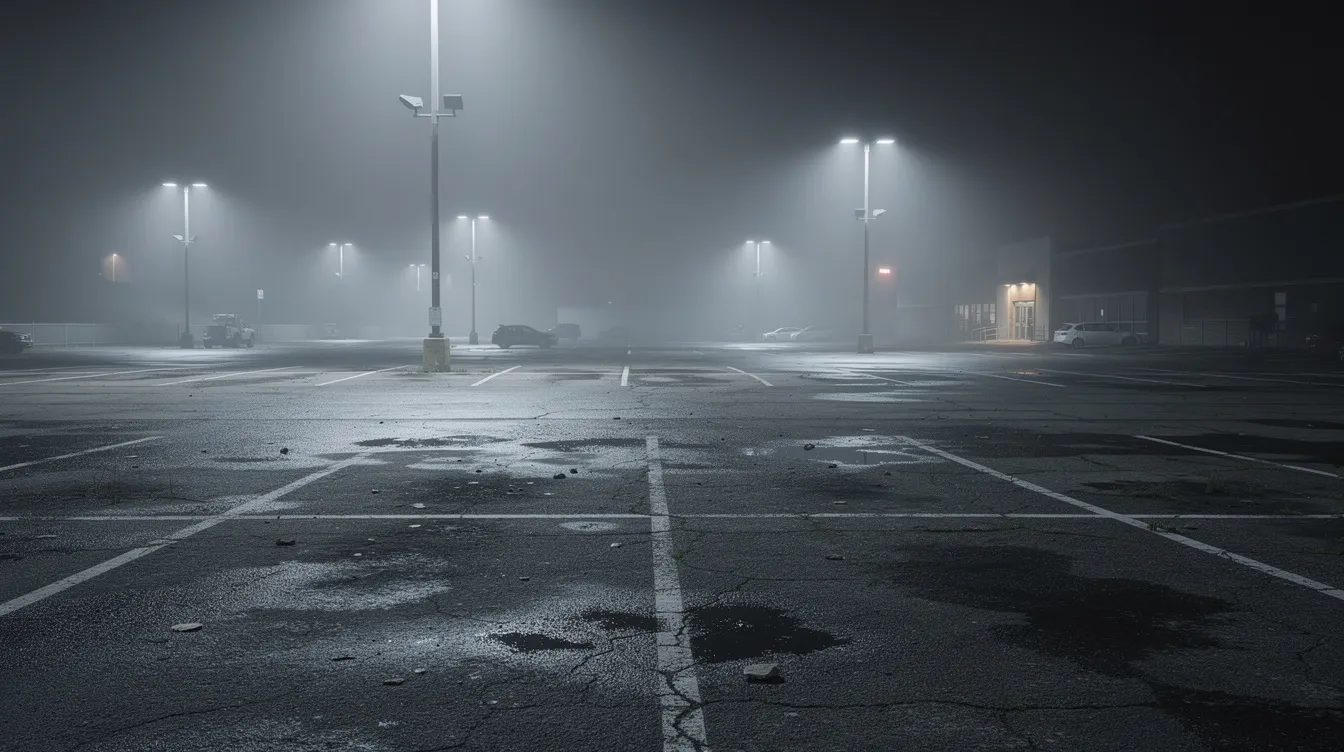
Parking lot assault: A customer is robbed and beaten in a poorly lit parking lot outside a shopping center in West Knoxville. Police had responded to multiple theft and assault calls at the same lot over the prior two years, but the owner never improved lighting or added security patrols.
Apartment shooting: A shooting occurs in the courtyard of a Maryville apartment complex where the entry gates had been broken for weeks, exterior lights were out, and tenants had repeatedly complained to management about strangers entering the property.
Hotel sexual assault: A guest at a Gatlinburg or Pigeon Forge hotel is attacked after someone enters through a side door with broken or inadequate locks. The lock had been inoperable for months, allowing anyone to walk in from the street.
Bar fight escalation: A patron is seriously injured at a bar near Market Square or the Old City in downtown Knoxville. The venue had a documented history of fights but employed no security guards on busy weekend nights.
These patterns-prior incidents, ignored tenant complaints, repeated vandalism-can transform a criminal attack into a viable negligent security case. Every situation is fact-specific, and DZ Law evaluates whether the crime was reasonably foreseeable given the property's history and location.
Common Places Where Negligent Security Incidents Occur
Negligent security claims can arise in various property settings throughout East Tennessee-places people visit every day for shopping, dining, living, or traveling. Common locations include:
Apartment complexes and rental homes in Maryville, Alcoa, West Knoxville, and surrounding communities.
Hotels, motels, and short-term rentals serving tourists in Sevier County (Gatlinburg, Pigeon Forge, Sevierville).
Shopping centers and big-box stores along Kingston Pike, Alcoa Highway, and suburban retail hubs.
Parking garages and surface lots near UT campus, downtown Knoxville, and local hospitals.
Bars, nightclubs, and music venues in the Old City, Market Square, and other nightlife districts.
Office buildings, medical facilities, and business parks with regular public or employee foot traffic.
Negligent security claims can also arise at sporting events, fairs, festivals, and other large gatherings where crowd control and proper security are expected.
What Counts as "Inadequate Security" or "Negligent Security"?
Tennessee law does not require perfect security-only reasonable measures appropriate to the location and the level of risk. Negligent security claims arise from inadequate safety measures that a responsible property owner should have addressed. Common negligent security failures include inadequate lighting and broken locks, but the list extends further:
Broken or missing exterior lighting in parking areas, stairwells, or walkways.
Inoperable door locks, gates, or key-card systems at apartment buildings and hotels. Failure to repair broken locks after notice is a recurring issue.
Lack of security cameras in obvious high-risk areas, or security cameras failure (cameras that haven't worked in months).
No security personnel at bars or venues with a known pattern of fights or disturbances.
Failure to control entry points-propped-open doors, unsecured loading bays used as public entrances.
Failure to respond reasonably to prior threats, police calls, assaults, or tenant complaints.
What counts as adequate security measures depends on the type of business, time of day, neighborhood crime rates, and what the owner knew or should have known. A negligent security lawyer at DZ Law examines police records, crime statistics, and property documents to assess whether the owner's efforts fell short in a particular case.
Tennessee Law on Negligent Security and Foreseeability
Tennessee courts focus heavily on "foreseeability" when deciding negligent security cases. To win a negligent security case, foreseeability of the crime must be proven. Property owners can be liable for foreseeable hazards, and property owners must protect visitors from foreseeable harm.
The McClung v. Delta Square Decision
The Tennessee Supreme Court's 1996 decision in McClung v. Delta Square Limited Partnership is the foundational negligent security precedent in this state. The case involved the abduction and murder of a woman in a shopping center parking lot. The Court held that a business does not automatically owe a duty to protect against all crime-but when the business knows or has reason to know from past experience that criminal acts are foreseeable, a duty arises.
Courts consider:
Prior crimes at or near the property.
The type of business and its clientele.
Any specific prior warnings or threats.
Whether similar businesses in the area employed security.
The Court then balances the foreseeability and gravity of harm against the burden of possible security measures.
How Duty Is Analyzed
Tennessee premises liability law distinguishes between invitees (customers, tenants, hotel guests, employees), licensees, and trespassers. Property owners owe invitees the highest duty: to take reasonable steps to keep the property reasonably safe from foreseeable dangers, including foreseeable criminal acts. More limited duties apply to licensees and trespassers, though some negligent security cases can still exist even when legal status is contested.
Proving Foreseeability
Foreseeability is often established through:
Prior police reports and 911 calls to the property.
Internal incident reports kept by the business or landlord.
Complaints from tenants, employees, or customers about safety concerns.
Knowledge of crime patterns in a particular corridor or neighborhood.
The 2025 Tennessee Supreme Court decision in Trentham v. Mid-America Apartments reaffirmed that property owners have constructive notice of general or continuing dangerous conditions-meaning they cannot claim ignorance of problems that persist over time.
Elements of a Negligent Security Claim in Tennessee
Negligent security claims must meet standard negligence elements tailored to third-party criminal conduct. In Tennessee, property owners have a legal duty to ensure safety for lawful visitors. The key elements are:
Lawful presence: The injured person was on the property as a tenant, guest, customer, or employee.
Duty: The property owner or operator owed a legal duty to take reasonable steps to protect against foreseeable criminal acts.
Breach: The owner breached that duty by failing to provide reasonable security measures-inadequate lighting, broken locks, lack of guards, no response to prior incidents.
Foreseeability: The crime and resulting injuries were reasonably foreseeable given the property's history and environment.
Causation: The attack likely would not have occurred, or would have been less severe, if reasonable safety measures had been in place.
Damages: The victim suffered actual harm-medical bills, lost income, lasting physical and emotional injury.
Each element involves detailed factual and legal analysis. Lawyers often consult experts to testify about security standards for similar properties. DZ Law builds negligent security cases using police records, property files, and expert testimony where appropriate.
Determining Liability: Who May Be Responsible for Negligent Security?
Multiple parties can share responsibility for negligent security, especially in commercial properties. Determining liability requires examining who controlled the security decisions at the property. Potential defendants include:
Potential Defendant | Role |
|---|---|
Property owners and landlords | Ultimate control over the premises (apartment complexes, shopping centers, hotels) |
Property managers | Day-to-day operations and maintenance decisions |
Commercial tenants | Bars, restaurants, or stores that control their own space and security policies |
Security companies | Private firms hired to staff or monitor the property under contract |
Event organizers or promoters | Control over access and security at a specific venue or event |
Lease agreements and contracts often allocate security responsibilities between owners and tenants. DZ Law reviews those documents to identify all accountable parties.
Tennessee follows comparative fault, so a jury may assign percentages of liability among property defendants, the criminal, and sometimes the victim, which can affect recovery.
Evidence Used to Prove Negligent Security Cases
Negligent security claims are often won or lost on the paperwork and video-the detailed evidence showing what the property owner's negligence looked like in practice and what the owner knew. Negligent security claims involve gathering time-sensitive evidence, so speed matters. Evidence in negligent security cases often includes police reports and surveillance footage, along with:
Crime reports and 911 call records for the property and surrounding area (from Knoxville Police Department, Blount County Sheriff, and other local agencies).
Prior incident and complaint logs kept by the landlord, hotel, or business.
Security footage from the scene-or proof that cameras were missing or inoperable.
Maintenance and repair records for lights, locks, gates, access-control systems, and alarms.
Leases, security contracts, and insurance policies allocating responsibility for safety.
Witness statements from tenants, employees, security staff, and bystanders.
Expert testimony on reasonable security standards for similar properties in Tennessee.
Acting quickly is essential. Video footage may be overwritten within days. Physical conditions change. Witnesses relocate. These are the kinds of thorough investigations that can make or break a case.
Don't let critical evidence disappear. Contact DZ Law promptly after an incident at (865) 259-0020 or send details through the firm's secure online contact form.
Injuries and Damages in Negligent Security Cases
Negligent security cases often involve severe, life-altering injuries because they arise from assaults, shootings, and other violent crime. Common injuries sustained include:
Gunshot wounds and related surgeries
Stab wounds and lacerations
Traumatic brain injuries and concussions from beatings or falls
Broken bones and orthopedic injuries
Sexual assaults and resulting physical and psychological trauma
Post-traumatic stress disorder (PTSD), anxiety, depression, and sleep disturbances
Recoverable Damages
A successful claim allows recovery for ongoing medical costs, lost wages, and emotional suffering. Compensation types include medical expenses and lost wages, as well as:
Medical expenses: emergency care, hospitalization, surgeries, rehabilitation, counseling
Future medical and mental-health treatment costs
Lost wages and loss of future earning capacity
Pain and suffering, emotional distress, and loss of enjoyment of life
Scarring, disfigurement, and permanent disability
Wrongful death damages for surviving family members in fatal cases, including loss of support and funeral expenses
DZ Law's premises liability and medical negligence practice groups work together when necessary to fully document both physical and psychological injuries and present them effectively in negotiations or at trial. The goal is always to pursue fair compensation and maximum compensation for the harm suffered.
Deadlines: Tennessee's Statute of Limitations for Negligent Security Claims
Tennessee law imposes very short time limits on negligent security and other personal injury claims. Tennessee allows one year to file premises liability claims. Under Tennessee Code Annotated § 28-3-104, an adult victim generally has one year from the date of injury to file a negligent security lawsuit or premises liability claim.
Different or extended deadlines can apply in limited circumstances-such as claims involving minors, wrongful death timing questions, or certain governmental defendants-so individualized legal advice is important. But the baseline rule is strict: waiting too long can result in the claim being barred entirely, regardless of how strong the facts may be.
Don't wait. Speak with DZ Law about your timeline and next steps by calling (865) 259-0020 or sending a message through the online contact form.
What To Do After an Assault or Violent Crime on Someone Else's Property
If you or someone you know has been attacked on else's property, these steps can protect both your health and your legal rights:
Immediate Safety and Medical Care
Get to a safe location and call 911 as soon as possible.
Seek emergency medical care immediately, even if injuries do not seem severe at first. Some injuries-including concussions and internal bleeding-may not be obvious right away.
Report the incident to property management, hotel staff, or store management and request that an incident report be created.
Evidence Preservation
Take photographs or short video clips of the area where the crime occurred, including lighting conditions, broken locks, access points, and any visible cameras.
Save clothing and personal items in the same condition as after the incident, in case forensic analysis is needed.
Write down names and contact information for witnesses, security staff, and responding officers.
What to Avoid
Do not provide recorded statements or sign documents for insurance companies before speaking with an attorney.
Do not post detailed information about the incident or your injuries on social media.
Speak with a negligent security attorney at DZ Law as soon as you are able. Early involvement allows the firm to gather evidence, preserve footage, and protect your rights before the statute of limitations begins to run.

How DZ Law, PLLC Handles Negligent Security Cases
DZ Law is an East Tennessee litigation law firm based in Blount County that regularly handles complex premises liability, negligent security, and serious injury claims in both state and federal courts. The firm's approach includes:
Early investigation to secure surveillance footage, police records, and property documents before they disappear.
Detailed liability analysis focused on foreseeability, prior crime patterns, and contractual allocation of security duties.
Coordination with medical experts and, when appropriate, mental-health professionals to document the full impact of injuries.
Strategic negotiation with insurers and corporate defendants grounded in proof, leverage, and an understanding of business realities.
Preparedness to file suit and pursue appeals or federal-court remedies where needed.
Negligent security claims often intersect with DZ Law's other practice groups, including business and commercial litigation (when security responsibilities are disputed between companies) and appeals and federal court litigation.
Schedule a free negligent security case evaluation by calling (865) 259-0020 or reaching out through the firm's online contact portal.
How a Tennessee Negligent Security Lawyer Can Help You
Negligent security claims can be emotionally difficult and procedurally complex, especially when dealing with serious injuries and parallel criminal proceedings. A security lawyer at DZ Law assists clients by:
Evaluating whether the facts and available evidence support a viable personal injury claim or negligent security lawsuit under Tennessee law.
Identifying all potentially responsible parties-owners, property managers, tenants, security companies-and applicable insurance coverage.
Managing communications and negotiations with insurance companies and corporate defense lawyers.
Coordinating with law enforcement or prosecutors when criminal proceedings overlap with civil claims, while maintaining focus on the client's civil recovery.
Preparing the case for trial if a fair resolution cannot be reached through negotiation.
You do not need to have everything figured out before calling. An initial free consultation is designed to help you understand your options and next steps.
How Negligent Security Interacts With Criminal Cases and Comparative Fault
The attacker's criminal responsibility and the property owner's civil responsibility are separate legal issues. Understanding how they interact matters.
Criminal vs. Civil Proceedings
A criminal conviction of the assailant can strengthen a negligent security claim but is not required. The civil case focuses on whether the property owner's poor security helped allow the crime to occur or made the harm suffered more severe. Police reports, physical evidence, and witness statements can support a civil personal injury claim even if the criminal case is unresolved.
Tennessee's Modified Comparative Fault Rule
Tennessee follows a 50% modified comparative fault rule. A jury can assign percentages of fault among the criminal, the property defendants, and sometimes the plaintiff. If a plaintiff is found to be 50% or more at fault, they generally cannot recover damages. If less than 50% at fault, recovery is reduced proportionally.
The defense may argue that the victim shares blame for the incident-for example, by claiming the victim ignored obvious warning signs or took unnecessary risks. This makes skilled advocacy important in protecting the client's rights and proving that the property owner's inadequate security measures were the primary cause of foreseeable harm.
Choosing DZ Law, PLLC for Your Negligent Security Claim
DZ Law focuses on serious premises liability and negligent security matters across East Tennessee. The firm brings qualities that matter in these cases:
Experience with complex civil litigation, including premises liability, business disputes over security contracts, and appeals.
A strategic approach that balances legal theories with practical realities, insurance coverage, and long-term client needs.
Local knowledge of courts and communities in Blount, Knox, Sevier, Loudon, Jefferson, and Cocke Counties.
Trial-ready attorneys accustomed to working with detailed records, expert witnesses, and high-stakes disputes.
If you or a loved one were harmed due to negligent security, contact DZ Law at (865) 259-0020 or send a confidential message via the online contact form.
Negligent Security Claims in Business and Commercial Contexts
Negligent security disputes do not only involve injured individuals filing a personal injury claim. They can also arise between businesses-for example, between a shopping center owner and a tenant store, or between a property owner and a contracted security firm.
DZ Law's construction litigation, business and commercial litigation, and business transactions practices regularly intersect with negligent security work in scenarios like:
Contract disputes over which party was responsible for hiring security guards, installing security cameras, or maintaining adequate lighting.
Indemnification and insurance coverage fights after an assault or shooting on a commercial property.
Lease drafting and negotiation involving future security responsibilities and risk allocation.
In addition to representing injured victims, DZ Law counsels businesses, property owners, and medical practices on security-related risk management and contract terms designed to reduce exposure in the event of negligent security claims.
Frequently Asked Questions About Negligent Security in Tennessee
Do I still have a negligent security claim if the attacker was never caught or convicted?
Yes. A negligent security claim is a civil action against the property owner or manager, not against the criminal. It does not require the attacker to be identified or convicted. What matters is whether the property owner failed to provide adequate security to protect against foreseeable crime, and whether that failure contributed to the attack. Crime reports, physical evidence, and witness testimony can support a civil claim even when the criminal case remains unresolved.
Can I bring a negligent security claim if the crime happened in a "high-crime" area?
A high-crime area does not excuse a property owner from providing reasonable security. In fact, Tennessee courts often view known crime patterns as evidence of foreseeability, which can strengthen a negligent security claim. The key question is whether the owner took reasonable measures given the level of risk-not whether the neighborhood was already dangerous.
What if I was drinking or made a risky decision before the attack-do I still have a case?
Tennessee's comparative fault system means a victim's own conduct may be considered, but it does not automatically eliminate a claim. A jury can assign percentages of fault, and as long as the plaintiff's share is less than 50%, they may still recover reduced damages. Do not assume you have no case. A negligent security attorney can evaluate how comparative fault might apply and help you provide reasonable safety measures evidence against the property owner.
How long will a negligent security case take in Tennessee?
Timelines vary depending on the complexity of the case, the volume of evidence, the number of defendants, and court schedules. Many negligent security cases settle within several months to a couple of years. Cases that go to trial can take longer. Early investigation and prompt filing within the one-year statute of limitations can help keep the case moving efficiently.
How do I get started with DZ Law on a negligent security claim?
The first step is a free, confidential consultation where DZ Law reviews the basic facts, available documents, and any deadlines. If you have police reports, photographs, medical records, or correspondence with property owners or insurers, bring those along or share them during your initial call. Contact DZ Law at (865) 259-0020 or send a message through the firm's online contact form to discuss your potential negligent security claim in Tennessee.