Construction Arbitration Award Enforcement in Tennessee: What Contractors and Developers Need to Know
If you have recently won-or lost-a construction arbitration, the process is not over yet. What happens next can determine whether a favorable award actually translates into money in your account, or whether an unfavorable decision truly stands. For contractors, subcontractors, owners, and developers working across East Tennessee, understanding how construction arbitration award enforcement works under Tennessee and federal law is essential to protecting your business.
Key Takeaways
This page is for Tennessee contractors, subcontractors, owners, and developers who already have (or expect) a construction arbitration award and need to either enforce or challenge it in a practical, cost effective way. Whether you are holding a six-figure award or facing one, the steps you take right now will shape the outcome.
Most Tennessee construction contracts now include an arbitration agreement, and once an arbitration award is issued, courts in Sevier, Blount, Knox, Loudon, Jefferson, and Cocke Counties will generally treat it as final and binding unless narrow legal grounds exist to vacate or modify it.
Converting an arbitration award into an enforceable Tennessee judgment requires specific filings and deadlines under the Federal Arbitration Act (FAA) and the Tennessee Uniform Arbitration Act (TUAA).
There are strict, short time limits-often 90 days or less-to challenge an adverse award, and missing them will almost always end any realistic opportunity to overturn the decision.
Arbitration awards are generally final and binding with limited appeal options, making prompt legal review critical no matter which side of the award you are on.
Ready to act? Call DZ Law, PLLC at (865) 259-0020 or message us online for help enforcing or challenging a construction arbitration award in East Tennessee.
How Construction Arbitration Fits Into Tennessee Projects
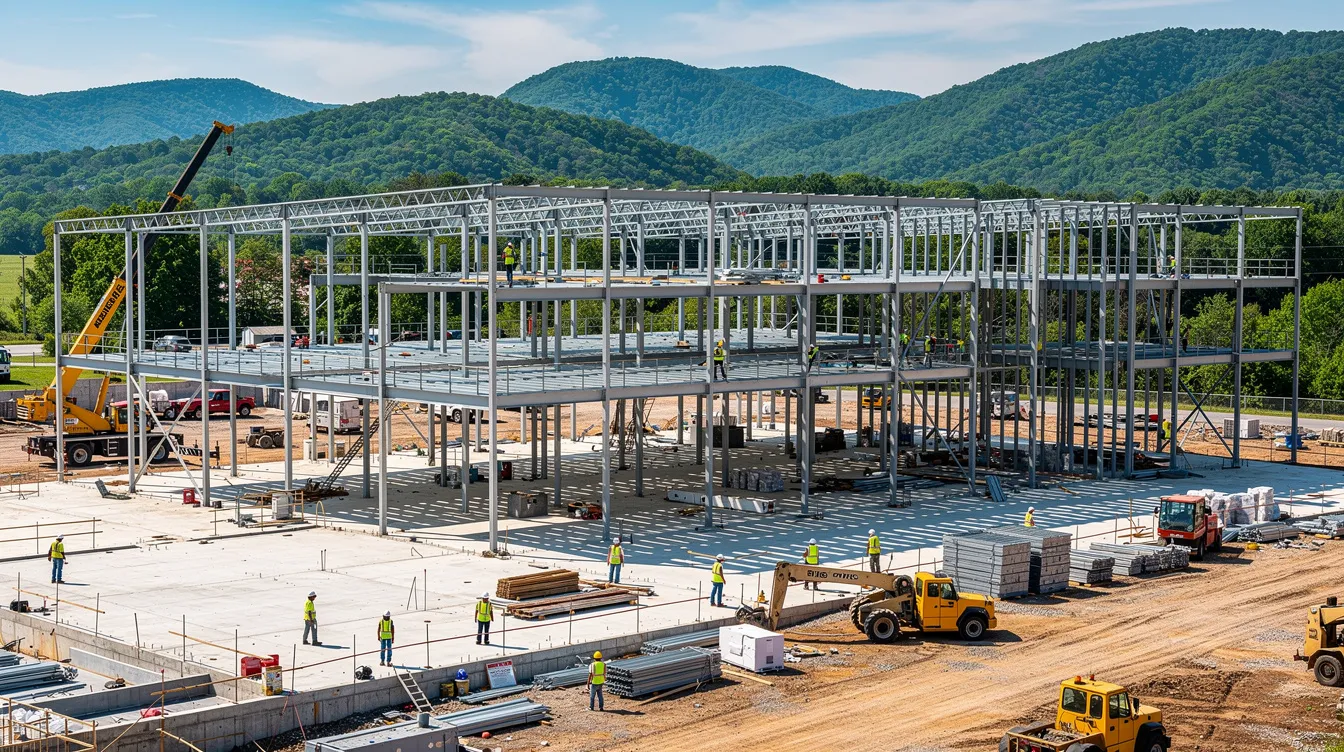
Arbitration has become the default dispute resolution process in many East Tennessee construction contracts. Whether the project is a commercial build in Knoxville, a residential development in Blount County, or a tourism-related project in Sevier County, there is a strong chance the contract requires arbitration rather than litigation in court.
Owners, general contractors, subcontractors, design professionals, and suppliers frequently sign contracts with mandatory arbitration provisions, waiving their right to a jury trial for construction disputes.
Arbitration is faster than traditional litigation, offers confidentiality for sensitive business information, and can significantly reduce legal costs compared to court. Arbitration proceedings are less formal than court trials, and parties have more control over the process because they can choose arbitrators with specific expertise in construction law and technical issues.
The arbitration process begins with a notice of claim, proceeds through hearings and evidence presentation, and ultimately results in a written award. Before a dispute arises, parties should understand the applicable rules and procedural steps that govern the process. Construction arbitration often follows American Arbitration Association rules, though some contracts use customized provisions.
For many readers, the arbitration itself is already complete. This article is focused on what happens after the arbitrator issues a written arbitration award in a construction dispute.
Construction disputes often have unique challenges such as complex contractual relationships among owners, general contractors, subcontractors, and suppliers. The types of conflicts that commonly go to arbitration in Tennessee include cost overruns, delay and acceleration claims, change order disputes, alleged construction defects, nonpayment or underpayment, and termination of contractors or subcontractors.
DZ Law's construction litigation and arbitration practice is designed to step in at the enforcement or challenge stage-even if another lawyer handled the underlying arbitration hearings.
Understanding Your Arbitration Agreement in a Construction Contract
Before enforcing or attacking an arbitration award, a lawyer will closely review the underlying arbitration agreement in the prime contract or subcontract. The goal is to confirm who is bound, what claims were arbitrable, and which rules apply, and to carefully understand the agreement before deciding whether enforcement or a challenge is viable.
Parties can select a sole arbitrator or a panel, and the selection process typically involves submitting a list of potential arbitrators. Arbitrators should be impartial and knowledgeable in the relevant area of construction law.
Common Tennessee construction contract language waives the right to a jury trial and requires binding arbitration for "any dispute arising out of or relating to" the project. That scope language matters significantly for award enforcement because it defines the arbitrator's authority.
Typical "procedural" terms that may impact enforcement include deadlines to file arbitration, limits on damages, attorney's fee provisions, cost allocations, and choice-of-law and venue clauses pointing to Tennessee state courts or the U.S. District Court for the Eastern District of Tennessee.
Defects in the arbitration agreement-such as an unconscionable arbitration clause, ambiguous scope, or a party that never actually agreed-sometimes provide a foothold for resisting enforcement; importantly, that argument can be stronger when the clause was presented on a take-it-or-leave-it basis without meaningful negotiation. In Lee Brown & GutterShutter v. Styles (2011), a Tennessee court reversed an award confirmation because the named party was never bound by the arbitration agreement in the first place.
Have questions about your arbitration agreement? DZ Law can review your agreement and final award and give you an honest opinion on enforceability. Call (865) 259-0020 or contact us online.
What Is a Construction Arbitration Award, Practically Speaking?
The arbitration award is the written decision issued by the arbitrator or arbitration panel after the hearings are complete. Arbitrators issue awards usually within weeks after hearings conclude, typically setting out who wins, the dollar amounts owed, deadlines for payment, and sometimes non-monetary relief related to construction performance. Arbitrators manage proceedings and render final awards based on the evidence and testimony presented.
Key components of a typical Tennessee construction arbitration award include:
Findings about breach of contract or negligence
Damage calculations for unpaid progress payments, extra work, delay damages, liquidated damages, change orders, or warranty repairs
Decisions about attorney's fees and arbitration costs
Directions for future performance, if applicable
Awards may be "reasoned" (with detailed explanations) or more bare-bones. The level of detail can affect how easily one party can challenge the award in court. Most modern construction arbitration awards are expressly labeled "final and binding," meaning the arbitration award is usually binding and cannot be appealed easily-the parties' ability to appeal is extremely limited compared to a court judgment after a jury trial.
A physical or electronic copy of the final award, along with proof of service on the other party, is essential to any later enforcement or vacatur petition in Tennessee courts. Arbitrators must have expertise in construction law and technical issues to ensure the award addresses the specialized nature of these disputes.
Why Enforcing a Construction Arbitration Award Matters in Tennessee
An arbitration award, by itself, does not automatically seize bank accounts, place liens, or garnish funds. It usually must be confirmed as a judgment by a Tennessee trial court before a contractor, owner, or supplier can take full collection measures.
The practical stakes for East Tennessee construction businesses are real: awards might involve six- or seven-figure sums on major commercial projects in Knoxville or Pigeon Forge, and delays in enforcement can threaten cash flow, bonding capacity, and ongoing project performance.
Enforcement can be especially urgent when there are signs the losing party may move assets, close an entity, or file for bankruptcy. Insolvency of the debtor can hinder recovery despite having a legally valid award. Multi-jurisdictional assets can further complicate the enforcement of arbitration awards.
Prompt enforcement can strengthen leverage in post-award settlement discussions, often leading to payment plans or negotiated resolutions that keep projects moving and protect the interests of everyone involved.
If you have received a favorable award, contact DZ Law quickly to map out an enforcement strategy tailored to Tennessee law-before the window narrows.
The Legal Framework: Federal and Tennessee Law Governing Award Enforcement
Most construction arbitration award enforcement in Tennessee is controlled by a combination of the Federal Arbitration Act (FAA, 9 U.S.C. §§ 1–16) and the Tennessee Uniform Arbitration Act (Tenn. Code Ann. § 29-5-301 et seq.). Legal frameworks for enforcing arbitration awards include international treaties and national statutes, though most Tennessee readers will be primarily concerned with domestic enforcement.
The FAA typically applies when the contract involves interstate commerce, multi-state parties, or out-of-state materials and financing-which is common in modern construction projects even when the jobsite is in East Tennessee. The Federal Arbitration Act governs enforcement of arbitration awards in the United States.
The TUAA governs confirming, vacating, or modifying awards in state courts in Blount, Knox, Sevier, Loudon, Jefferson, and Cocke Counties. Many construction disputes rely on both frameworks. Arbitration laws vary significantly by jurisdiction including local state laws, and many states follow versions of the UNCITRAL Model Law to govern arbitration procedures.
International construction awards are governed by the New York Convention on the Recognition and Enforcement of Foreign Arbitral Awards, but that scenario is uncommon for most local East Tennessee projects.
Tennessee courts generally favor upholding arbitration awards unless narrow legal grounds are established. Courts generally favor upholding arbitration awards, which means parties challenging an award face a steep uphill battle. As the Tennessee Court of Appeals held in MidSouth Construction, LLC v. Burstiner (2025), simply believing the arbitrator misapplied contract law or "got the facts wrong" is not enough to satisfy statutory grounds for vacatur.
Step-by-Step: Converting a Construction Arbitration Award into a Tennessee Judgment
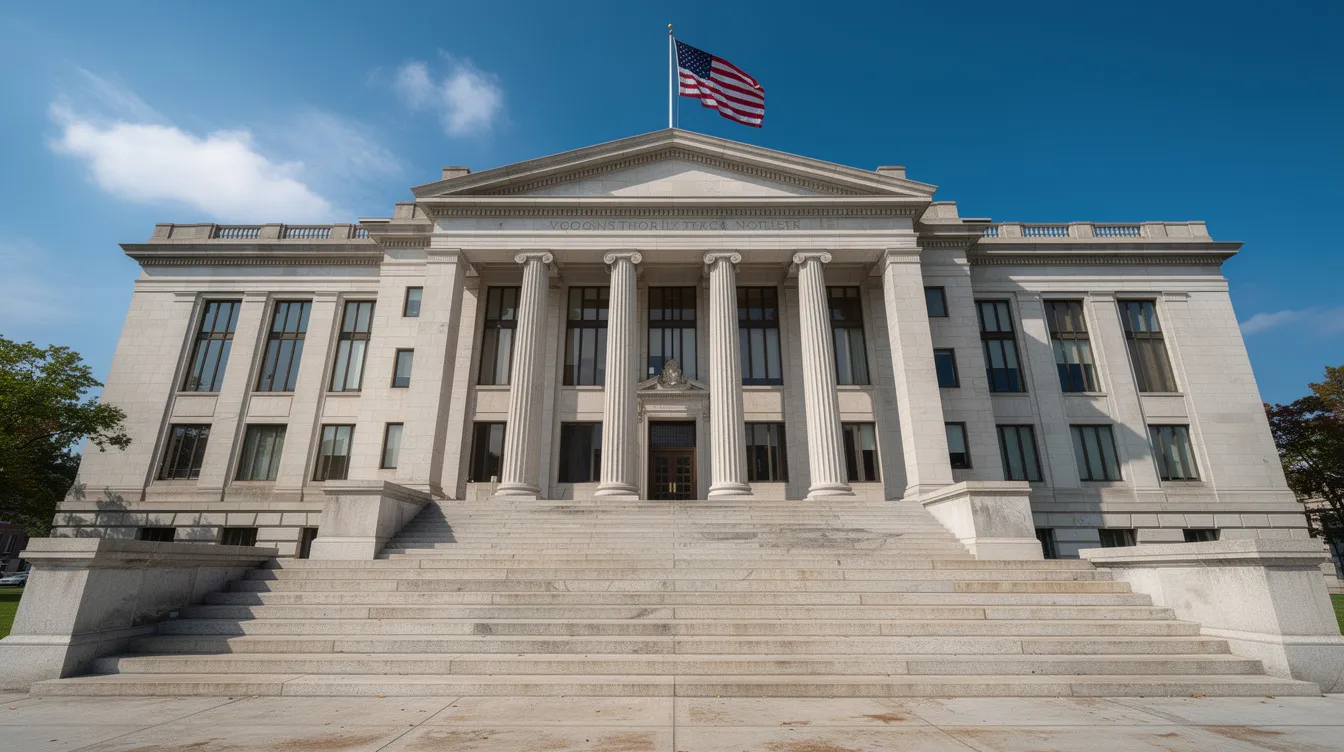
Enforcing an arbitration award typically involves filing a petition or motion in the appropriate Tennessee trial court (or sometimes federal court) asking the judge to "confirm" the award and enter it as a judgment. The enforcement process typically requires filing a petition to confirm the award in court. Successful enforcement demands compliance with both arbitration and local enforcement laws.
Here are the main procedural steps in logical order:
Select the right court based on contract venue clauses and project location.
Prepare the petition to confirm the arbitration award.
Attach the arbitration award and underlying arbitration agreement as exhibits.
Properly serve the opposing party with notice of the petition.
Schedule and attend any required hearing before the judge.
Under the FAA, a prevailing party generally has up to one year after award delivery to seek confirmation, but filing sooner is almost always advisable. Under the TUAA, the court "shall" confirm an arbitration award unless grounds have been timely urged for vacating, modifying, or correcting it-making confirmation the default outcome when no valid objection is raised.
If the other party does not timely object or file a motion to vacate or modify, Tennessee courts will often confirm a valid arbitration award with limited scrutiny, turning it into an enforceable judgment for the stated amount.
DZ Law's experience in both construction litigation and arbitration and commercial judgment enforcement allows the firm to not only obtain confirmation but also pursue post-judgment remedies such as garnishments, liens, and asset discovery.
Challenging an Unfavorable Construction Arbitration Award in Tennessee
Many contractors, owners, and design professionals come to DZ Law after losing an arbitration and wanting to know whether anything can still be done. Immediate legal review is critical because deadlines are extremely short and challenges to arbitration awards are limited to specific legal grounds.
The typical legal vehicles for attacking an award in Tennessee are motions or petitions to vacate, modify, or correct the award. Motions to vacate an award may be filed based on fraud or arbitrator misconduct, among other narrow grounds. These must be filed within strict statutory periods-often 90 days from receipt of the award under Tennessee law, and three months under the FAA-subject to case-specific analysis.
Courts will not re-weigh evidence or act as a new jury. Instead, they look for narrow, legally defined problems such as serious procedural irregularities, arbitrator misconduct, or acts that exceed the arbitrator's powers. In Thomas Builders, Inc. v. CKF Excavating, LLC (2023), the Tennessee Court of Appeals emphasized that FAA § 10's exclusive grounds apply and the burden of proof is very high for a party attempting to vacate.
DZ Law can review the arbitration record, contract, and award to identify any realistic grounds to challenge-and can also advise clients honestly when the law is unlikely to permit relief.
If you have received an adverse construction arbitration award, do not wait. Call (865) 259-0020 or message DZ Law online the moment you receive the award so critical deadlines are not missed.
Narrow Grounds to Vacate or Modify a Construction Arbitration Award
Both the Federal Arbitration Act and Tennessee Uniform Arbitration Act strictly limit the reasons a court may set aside or change an arbitration award. The point that "the arbitrator got it wrong" is almost never enough.
The key statutory grounds for vacatur, in simplified language, include:
Evidence of corruption, fraud, or undue means used to secure the award
Evident partiality or bias by the arbitrator
Serious misconduct in refusing to hear important evidence or testimony, or in refusing to postpone hearings when justified
The arbitrator exceeding the scope of authority granted by the arbitration agreement
The award being so indefinite or incomplete that it cannot be enforced
Public policy exceptions may prevent the enforcement of arbitration awards in rare cases
"Modification" or "correction" is usually limited to fixing clear calculation mistakes, clerical errors, or issues where the arbitrator decided something on a matter not submitted but the rest of the award can stand. Ambiguities in an arbitration award may lead to further disputes about enforcement.
Tennessee courts are generally skeptical of non-statutory grounds such as "manifest disregard of the law." As the Supreme Court held in Hall Street Associates, L.L.C. v. Mattel, Inc., 552 U.S. 576 (2008), parties cannot expand or contract the exclusive FAA standards for vacatur by private agreement. Arguments based on simple legal or factual error by the arbitrator ultimately fail in almost every case.
Because these standards are so demanding, careful legal analysis by a lawyer experienced in construction arbitration and appeals and federal court litigation is essential before investing in a challenge.
What Happens After Confirmation: Collecting on a Tennessee Construction Arbitration Award
Once an award is confirmed and reduced to judgment, the prevailing party can use many of the same tools available after a successful lawsuit to actually collect what is owed. The award is no longer just a piece of paper-it carries the full force of a court judgment.
Key post-judgment remedies under Tennessee law include:
Bank account garnishments
Wage garnishments when appropriate
Judgment liens against real property
Levies on equipment or other non-exempt assets
Post-judgment discovery to identify where assets are held
Construction-specific issues may arise during collection. Mechanics' lien laws provide additional remedies for unpaid contractors under Tenn. Code Title 66, Chapter 11. Statutory adjudication laws can impact monetary claims in construction disputes, and competing mechanics' liens, payment bond claims on public projects, or disputes among multiple tiers of subcontractors and suppliers can all affect how collection strategies are designed.
Insolvency proceedings can affect the priority of creditor claims, impacting enforcement success. Enforcement strategies should consider the economic realities of the losing party's business-whether it is solvent, bonded, insured, or facing other claims-so the approach is cost effective and proportional.
DZ Law handles both construction arbitration award enforcement and broader commercial judgment enforcement throughout East Tennessee, with the goal of turning paper awards into real-world recoveries.

Cost Considerations: Is Enforcing or Challenging an Award Cost Effective?
Contractors and owners must weigh expected recovery against the additional legal fees and time involved in enforcement or challenge, particularly when dealing with tight project budgets and thin profit margins.
The main cost drivers include:
Cost Category | Enforcement | Challenge (Vacatur) |
|---|---|---|
Court filing fees | Moderate | Moderate |
Service of process | Low | Low |
Attorney's fees | Moderate | High |
Hearing/travel expenses | Variable | Variable |
Asset investigation costs | Moderate | N/A |
Many construction arbitration awards include fee-shifting provisions where the prevailing party may recover reasonable attorney's fees incurred in enforcing the award. The underlying arbitration agreement may also affect how costs are allocated between the parties.
Challenges to an award-motions to vacate or modify-can be particularly expensive and often have low odds of success. Because arbitration can significantly reduce legal costs compared to court in the first place, the question of whether to spend more on post-award litigation deserves a candid cost-benefit evaluation with experienced counsel.
DZ Law can provide an honest assessment of whether enforcement or challenge is likely to be cost effective in light of the award amount, the opposing party's financial condition, and the available legal grounds.
How Arbitration Differs from a Tennessee Jury Trial, and Why That Matters After the Award
Many contractors and owners only fully realize the differences between arbitration and court litigation at the enforcement stage-especially when they learn that appeals from arbitration awards are extremely limited compared to appeals from a jury trial verdict.
Major contrasts include:
Arbitration's private, streamlined procedures versus public, formal court processes
The ability to select a construction-savvy arbitrator instead of a randomly assigned judge or jury, giving parties more control over who decides technical construction disputes
Evidentiary rules that are often more flexible during a hearing
The typical finality of arbitration awards, which can help parties achieve a faster resolution while limiting later appeal options
In a jury trial, losing parties can often appeal claiming legal errors by the judge. By contrast, arbitration awards are rarely disturbed even if the arbitrator arguably misapplied Tennessee contract or construction law. Enforcing arbitration awards may involve navigating different jurisdictions and local laws, adding another layer of complexity.
Because appellate options are narrow, the question after arbitration is usually not "Can we relitigate the case?" but rather "How quickly can we enforce, or is there any narrow statutory basis to resist enforcement?"
DZ Law's background in both business and commercial litigation and appeals and federal court litigation allows the firm to advise clients on whether arbitration versus litigation is better for future disputes in their construction contracts-a decision that is ultimately resolved at the drafting table, before any dispute has a chance to arise.
Practical Tips for Contractors, Owners, and Developers Drafting Arbitration Clauses
The best time to influence how an arbitration award can later be enforced or challenged is when the arbitration agreement is negotiated, before any dispute arises on a Tennessee construction project. Preparing a well-drafted clause now can save enormous time and cost later, while helping the parties better understand how enforcement and potential challenges may play out after an award.
Key drafting issues to address include:
Clearly defining which disputes must go to arbitration and the scope of arbitrable claims
Specifying Tennessee law and local venue for any enforcement proceedings
Choosing the administering institution (such as AAA) and applicable construction rules
Addressing whether attorney's fees and costs are recoverable by the prevailing party
Specifying that arbitrators must have expertise in construction law relevant to the project type
Parties should consider provisions affecting timing, such as deadlines for the arbitrator to issue the award, and whether interim measures can be requested during construction arbitration proceedings-which may be crucial on time-sensitive construction schedules.
Avoid overly one-sided or unconscionable clauses that could later be attacked in Tennessee courts, since balanced drafting improves the chances of achieving an enforceable result. Tennessee appellate decisions have struck down mandatory arbitration provisions for unfairness, undermining the enforceability of the entire agreement and leaving both parties without a clear path to resolve their dispute.
Want help drafting a balanced, enforceable arbitration clause? DZ Law's business transactions and contracts team can support you in negotiating and drafting arbitration agreements for construction projects across East Tennessee.
How DZ Law Helps with Construction Arbitration Award Enforcement and Challenges
DZ Law, PLLC is a Blount County–based firm that regularly represents contractors, subcontractors, owners, developers, and design professionals in construction litigation and arbitration matters throughout Sevier, Blount, Knox, Loudon, Jefferson, and Cocke Counties.
Specific services the firm provides in this area include:
Reviewing arbitration agreements and awards for enforceability
Advising on enforcement strategy tailored to your project and contract
Preparing and filing petitions to confirm, vacate, or modify awards in Tennessee state and federal courts
Conducting post-judgment collection, including garnishments, liens, and asset discovery
Coordinating with bonding companies or insurers when necessary
DZ Law's broader experience in business and commercial litigation and appeals and federal court litigation is often important when arbitration awards intersect with related lawsuits, injunctions, or appellate issues. The firm takes a practical, solution-focused approach-seeking negotiated resolutions where appropriate but ready to aggressively pursue or defend enforcement actions when needed to protect clients' financial and business interests.
Call (865) 259-0020 for a consultation or send a secure message through our online contact form.

When to Contact a Tennessee Construction Arbitration Lawyer
There are key moments when it is wise to involve counsel: as soon as a dispute appears likely to go to arbitration, immediately upon receipt of a final or partial arbitration award, or whenever there is a threat that the other party will not comply voluntarily.
Red-flag situations that demand prompt legal attention include:
The other party refuses to pay after losing an arbitration
An award seems internally inconsistent or beyond the arbitrator's authority
There are concerns about arbitrator bias or misconduct during the arbitration proceedings
There are signs that an adverse party is hiding or moving assets
Competing claims from mechanics' liens or bond claims need to be coordinated with enforcement
Timing questions-such as whether to file in state or federal court, how to coordinate with mechanics' lien or bond claims, and how to preserve appellate arguments-are all reasons to seek prompt legal advice. Consulting with DZ Law early can help you ensure your rights are protected while still exploring cost effective options short of full-scale enforcement or challenge litigation.
Don't let important Tennessee and federal deadlines run out. Reach out to DZ Law at (865) 259-0020 or online today.
Frequently Asked Questions About Construction Arbitration Award Enforcement in Tennessee
How long do I have to enforce a construction arbitration award in Tennessee?
Under the Federal Arbitration Act, a prevailing party generally has up to one year from the date the award is made to seek confirmation in court. However, waiting is risky-especially when collection or asset dissipation is a concern. Tennessee's Uniform Arbitration Act has its own timing provisions, and practical considerations like the other side's solvency, ongoing projects, or parallel lawsuits may justify filing much quicker than the outer legal deadline. Treat the issuance of the award as a trigger to speak with a lawyer immediately, rather than trying to calculate deadlines on your own.
Can I stop enforcement if the arbitrator clearly misapplied Tennessee construction law?
Mere legal error-even a serious one-is generally not enough to vacate or block enforcement of an arbitration award under the FAA or Tennessee law. Courts focus on whether the arbitrator exceeded the scope of the arbitration agreement, engaged in misconduct, or acted with fraud or bias-not on whether the judge would have decided the law differently. That said, anyone who believes an arbitrator ignored clear Tennessee construction statutes or case law should still have the award reviewed promptly by counsel to see whether any valid statutory grounds for challenge exist. The matter requires careful analysis.
Do I have to pay the award while I am challenging it in court?
An arbitration award remains binding unless and until a court vacates or modifies it, but courts may in some cases stay enforcement proceedings while a timely challenge is pending. Whether payment must be made immediately may depend on the terms of the contract language, the arbitrator's directives, and whether a court has entered a stay or other interim relief. Businesses should not unilaterally ignore an award without legal guidance, as this can lead to interest accrual, additional fee exposure, and aggressive collection actions if the award is later confirmed.
What if the losing party threatens bankruptcy to avoid paying a construction arbitration award?
A bankruptcy filing can temporarily halt collection efforts-including enforcement of arbitration awards-because of the automatic stay. However, it does not automatically erase the underlying debt. Arbitration-based judgments are often treated like other unsecured debts in bankruptcy, and the creditor must participate in the bankruptcy process to protect its claim. Early legal advice is especially important when bankruptcy is on the horizon, so enforcement steps can be timed and structured strategically and rights can be preserved in any later bankruptcy case.
Can DZ Law handle my case if the arbitration took place outside Blount or Knox County?
Yes. DZ Law represents clients throughout East Tennessee and beyond, including cases arising out of construction arbitrations scheduled in other parts of Tennessee, so long as jurisdiction and venue requirements are met for enforcement or challenge. The firm regularly evaluates contract venue clauses and jurisdictional issues to determine the best forum-state or federal-for filing petitions to confirm or vacate awards. If you have an out-of-county or multi-state construction dispute, contact DZ Law for a case-specific assessment of where and how to proceed with your enforcement or challenge efforts.