Construction Arbitration Lawyer in Tennessee: Resolve Your Disputes Effectively
Most commercial construction disputes in East Tennessee never see a courtroom. They end in a conference room, in front of an arbitrator, decided by project records that were either kept or neglected months earlier. If you're an owner, contractor, or developer working on a six- or seven-figure project, the arbitration clause buried in your contract may be the most consequential provision you sign.
This guide is for owners, contractors, and developers involved in high-dollar commercial construction projects in Tennessee who are considering or facing arbitration. Understanding construction arbitration and the role of a specialized lawyer can save time, money, and protect your business interests.
If you are searching for a construction arbitration lawyer, this article is designed to help you understand your options and how legal expertise can impact your outcome.
What is a Construction Arbitration Lawyer?
A construction arbitration lawyer provides specialized legal expertise for efficient dispute resolution in construction projects. They guide clients through the arbitration process, from contract drafting to final award, ensuring that your interests are protected and your case is presented effectively.
Here's what you need to know to use arbitration to your advantage.
Key Takeaways
DZ Law handles high-dollar construction disputes across East Tennessee, often guiding owners, contractors, and subcontractors toward arbitration when it serves their business goals—because arbitration can be three times faster than court trials in many cases.
Arbitration outcomes in Tennessee construction cases are largely determined before the hearing by how contracts are drafted, notices are sent, and project records are maintained on the jobsite.
DZ Law represents clients throughout Blount, Knox, Sevier, Loudon, Jefferson, and Cocke Counties in complex, document-heavy construction arbitration matters.
For many commercial construction disputes (typically six figures and above), a well-managed arbitration process offers more speed, privacy, and predictability than a Blount or Knox County court case. The American Arbitration Association managed claims as large as $514 million in 2025, showing that arbitration handles disputes at every scale.
Ready to discuss your construction dispute? Call DZ Law at (865) 259-0020 or message us online for a construction arbitration consultation.
Why Tennessee Contractors and Owners Should Take Arbitration Seriously From Day One
Many construction contracts used in Tennessee—AIA, ConsensusDocs, and custom forms alike—contain mandatory arbitration clauses that control how construction disputes are resolved. This is not fine print. It defines where you fight, who decides, and how much it costs.
In practice, arbitration outcomes are shaped months or years before any evidentiary hearing by how contracts are negotiated, how notices are delivered, and how project teams manage their records. The parties who treat arbitration as an afterthought tend to learn this lesson the hard way.
The East Tennessee construction industry is active across commercial, hospitality, and industrial sectors. Heavy construction around Knoxville, Maryville, Alcoa, Pigeon Forge, and Sevierville relies on arbitration to avoid crowded county dockets and keep construction matters private. DZ Law's construction litigation & arbitration practice is organized around assembling complex project records and presenting them effectively to arbitrators who understand the construction process.
If you're facing a current construction dispute, call (865) 259-0020 for a targeted case assessment.
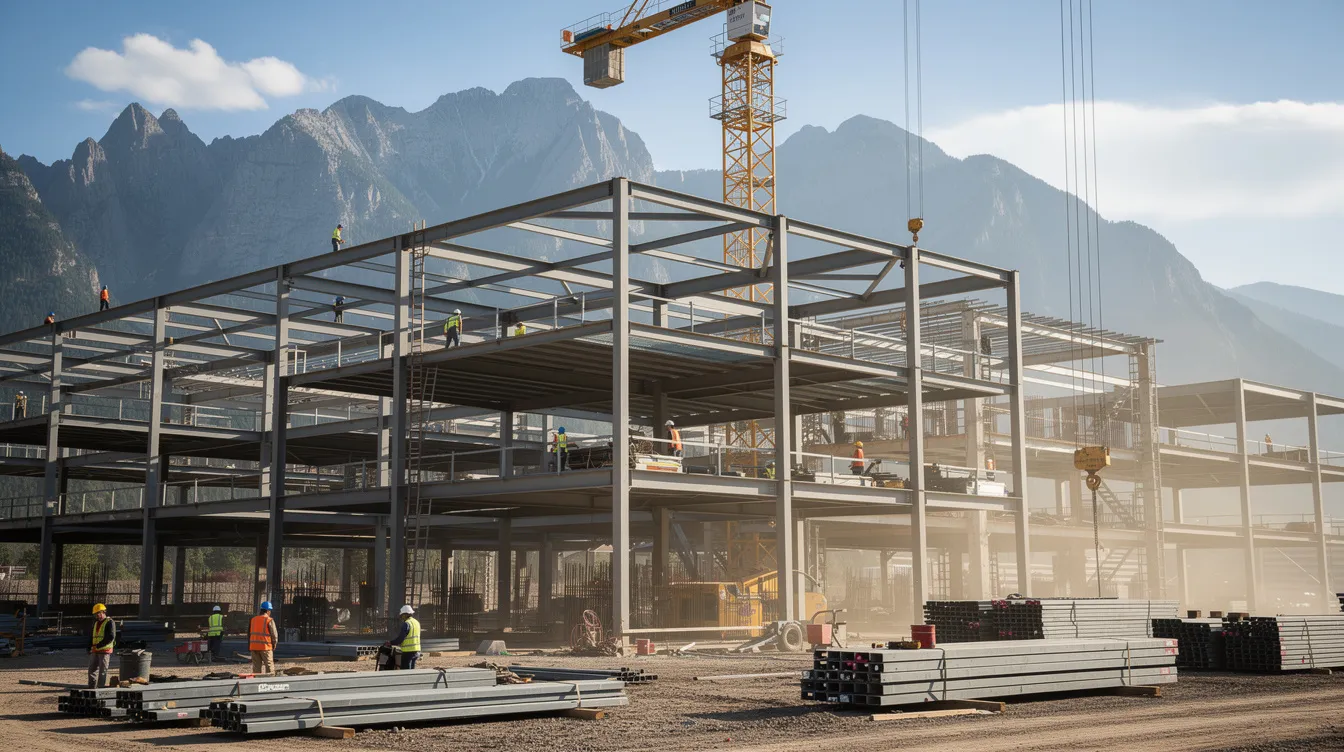
Dispute Resolution Options in Tennessee Construction Projects
Tennessee commercial construction contracts commonly set out a ladder of dispute resolution options. Understanding each rung helps you choose the right path when a dispute arises.
Negotiation: Project-level discussions between the field, a construction executive, and project managers to resolve disputes over scope, project delays, or pay applications before formal proceedings start. This is where most issues should be caught.
Mediation: A non-binding meeting—often in Knoxville or Maryville—with a neutral third party to explore settlement on payment disputes, delay claims, or defect issues before investing in full construction arbitration. The AAA resolves disputes across all project phases, and mediation often runs alongside that framework.
Arbitration: A private, binding process where one or three neutral arbitrators decide the case under applicable arbitration rules, such as the AAA Construction Industry Arbitration Rules or JAMS Engineering and Construction Arbitration Rules. Arbitration is less formal than court litigation and follows its own procedural rules that differ from traditional trial practice. Fast track procedures apply to claims under $150,000, keeping smaller disputes efficient.
Litigation: Traditional court litigation in Sevier, Blount, or Knox County—including state or federal court—can be slower, more public, and more formal. But it may be preferable for some multi party construction disputes or cases where precedent matters.
DZ Law advises clients at both contract drafting and when a particular dispute surfaces, helping determine which path best fits their business objectives and the substantive law at issue.
How Arbitration Clauses in Tennessee Construction Contracts Shape Your Case
The arbitration clause in a construction contract is not boilerplate. It controls venue (e.g., Knoxville), governing law (Tennessee), applicable construction rules, and who must arbitrate. Arbitration clauses streamline dispute resolution in construction contracts—but only when they're drafted with care.
A well-crafted clause decides whether mediation is mandatory first, which arbitration services provider (AAA, JAMS, or ad hoc) will administer, and whether claims can be consolidated or joined across related parties.
Poorly drafted clauses create procedural fights on arbitrability, split proceedings between multiple arbitrations, or bar joinder of critical subcontractors or design professionals—leading to duplicative costs and inconsistent results.
DZ Law reviews and drafts arbitration clauses for owners, general contractors, developers, and subcontractors through its business transactions & contracts practice, reducing future construction disputes before they start.
Negotiating a new project in 2026? Have DZ Law review your arbitration clauses before you sign. Message us online for contract review.
Key Elements of a Strong Tennessee Construction Arbitration Clause
High-dollar commercial projects in East Tennessee should have carefully tailored arbitration clauses aligned with project risk, number of parties, and claim size. Arbitration clauses should specify rules, forum, and number of arbitrators—and also address fees and cost allocation.
Key elements include:
Element | What to Specify |
|---|---|
Forum / Seat | Arbitration seated in Knoxville or Maryville |
Governing Law | Tennessee state law |
Administering Body | AAA Construction, JAMS, or bespoke rules |
Applicable Rules | Specific construction industry arbitration rules |
Scope | Which disputes go to arbitration (payment, delays, change orders, defects, termination) and which go to court (injunctions, lien enforcement) |
Number of Arbitrators | One for mid sized construction disputes; three for seven-figure claims |
Consolidation / Joinder | Language allowing related parties and proceedings to be combined |
Fee-Shifting | Whether prevailing party recovers attorneys fees |
Claim Preservation | Notice deadlines, documentation standards, notice provisions |
These claim preservation requirements built into the contract become critical later in the construction arbitration process.
Risk-Shaping Contract Terms That Affect Arbitration Outcomes
Beyond the arbitration clause itself, several risk-shaping terms in Tennessee construction contracts directly influence arbitration outcomes and settlement leverage.
Liquidated damages, no-damage-for-delay clauses, pay when paid clauses, waiver of consequential damages, and limitations of liability are all provisions arbitrators are bound to apply under the parties agreement. Understanding how these interact with your claims is essential before arbitration begins.
Venue and choice-of-law provisions can steer disputes into Tennessee rather than an out-of-state forum, protecting local contractors and owners in Blount, Knox, and surrounding counties under familiar state law.
Attorneys fees and cost-shifting provisions can dramatically change settlement pressure in high-dollar construction arbitration. Without such language, each side typically bears its own costs—a fact that caught the parties off guard in Construction Company Inc. v. Robert Denley Co., where the Tennessee Supreme Court vacated a fee award because the arbitration agreement didn't authorize it.
DZ Law routinely helps clients re-balance these terms before contract execution to avoid surprise disadvantages if a construction dispute later goes to arbitration.
The Construction Arbitration Process in Tennessee: From Claim Preservation to Final Award
Although each case is unique, most Tennessee construction arbitration matters follow a predictable pattern from initial notice and claim preservation through hearing and award. The sections below walk through the process step by step—aimed at project executives and in-house counsel who may not have been through arbitration before.
Early involvement of experienced construction attorneys like DZ Law can reshape strategy and improve arbitration outcomes at each stage.
Step 1: Pre-Dispute Planning and Contract Review
Smart contractors and owners in Tennessee review arbitration clauses and claim provisions before the first shovel hits the ground.
Project teams should know notice deadlines, documentation requirements, and whether mediation is required before arbitration under the contract language.
Set up documentation systems for daily reports, schedules, RFI logs, change-order logs, pay applications, and correspondence so they are arbitration-ready from day one. This is part of sound project administration.
DZ Law helps clients develop internal playbooks for construction disputes, including templates for notices and change-order requests that comply with typical contract language used across East Tennessee.
Step 2: Claim Preservation on the Jobsite
Many Tennessee construction claims are lost not on the law, but because notice and claim preservation requirements were missed. Timely written notice is crucial for preserving claims.
Timely written notice: Claims for project delays, differing site conditions, or extra work often require written notice within a set number of days after the event. Missing a notice deadline can waive the claim entirely.
Content of notices: Good notices identify what happened, when, where, likely cost and schedule impact, and reference the relevant contract sections. This level of detail supports cost accounting and damages analysis later.
Record preservation: Preserving emails, schedules, meeting minutes, and photos in a structured way allows arbitrators to see exactly what happened and when. Common disputes include payment failures and scope changes—and documentation is what proves them.
DZ Law frequently steps in while projects are still underway to shore up claim preservation before a dispute hardens into full construction arbitration.
Step 3: Demand for Arbitration and Response
When negotiations and, if required, mediation fail, a party may serve a formal demand for arbitration under the contract's arbitration clause. Arbitration claims are initiated by filing a demand for arbitration with the designated provider.
A typical demand includes: parties, contract, relevant arbitration clause, description of the construction dispute, legal theories, and amount in controversy.
Tennessee commercial construction demands often go through AAA construction industry arbitration rules or JAMS, each with their own filing fees and procedures. Many construction contracts route disputes to one or the other automatically.
The responding party must file an answer and any counterclaims (backcharges, defective work, delay counterclaims) by a set deadline, or risk waiver of claims. This is true whether the underlying issue involves contract interpretation, payment disputes, or government contracts.
DZ Law drafts demands and responses to tell a coherent story, avoid overcommitting before full document review, and position clients for negotiation and hearing.

Step 4: Selecting the Arbitrator or Panel
In technical construction disputes, the choice of arbitrator can be as important as the contract language. Construction arbitration lawyers assist in selecting knowledgeable arbitrators with construction expertise, and this step deserves serious attention.
Arbitrators are selected through the rank and strike method under AAA or similar arbitration rules. Parties rank proposed arbitrators from a list and strike unacceptable ones. Parties can strike two names from the arbitrator candidate list.
The AAA provides a list of over 1,170 construction panelists with industry expertise. Arbitrators must be neutral and independent of the appointing party.
In high-dollar commercial disputes (often $500,000+ or seven-figure claims), parties may opt for a three-arbitrator panel for broader experience despite higher arbitrator compensation costs. Parties often choose arbitrators with specific construction experience in areas like construction management, engineering, or construction law.
DZ Law works with clients to evaluate arbitrator candidates' prior experience, publications, and potential conflicts to select a fair but knowledgeable decision-maker. Arbitrators and specialized lawyers understand technical details, preventing the need to educate a generalist judge.
Step 5: Preliminary Hearing and Scheduling Order
The first procedural conference with the arbitrator—the preliminary hearing—sets the roadmap for the entire case. Arbitration follows its own procedural rules that differ from court litigation.
This hearing establishes deadlines for document exchanges, written discovery (if any), expert disclosures, and motion practice.
The scheduling order also sets hearing dates (often several months out), hearing location (Knoxville, Maryville, or virtual), and rules for electronically stored information.
Disciplined scheduling keeps arbitration efficient. DZ Law pushes to align discovery scope with the actual value and complexity of the construction dispute, avoiding overbroad document requests that inflate arbitration costs without adding value.
Step 6: Discovery and Information Exchange
Discovery in construction arbitration is typically narrower and more document-focused than in full-blown litigation in Tennessee state or federal courts. This is one reason the process can move faster.
Common document categories include:
Contracts
Change orders
RFIs (Requests for Information)
Submittals
Drawings
Specifications
Schedules
Daily reports
Pay applications
Lien waivers
Photos
Cost records
Discovery is tailored by dispute type:
Schedule updates and delay analyses for delay claims
Testing and inspection reports for defect claims
Pay ledgers for non-payment claims
Depositions may be limited or conducted by agreement to control cost, particularly in mid sized construction disputes where proportionality matters.
DZ Law organizes and analyzes project records to tell a coherent, timeline-based story that resonates with arbitrators. This document-driven approach is central to the firm's business & commercial litigation philosophy as well.
Step 7: Experts, Damages, and Hearing Preparation
Experts play a critical role in high-dollar construction arbitration, especially in delay, disruption, and defect disputes. Disputes often involve complex technical issues like design defects that require specialized analysis.
Delay experts analyze critical path schedules to show whether a contractor or owner caused delays and how they affected completion dates, liquidated damages, and project management timelines.
Cost and damages experts help translate field events into traceable numbers: extra labor, materials, equipment, extended general conditions, or completion costs.
Expert opinions anchored in contemporaneous records are far more persuasive than after-the-fact reconstructions. This is where claim preservation pays off.
DZ Law prepares witnesses, works closely with experts, and structures hearing presentations to make complex construction issues understandable for the arbitration panel.
Step 8: Arbitration Hearing, Award, and Enforcement
The arbitration hearing functions like a condensed bench trial: opening statements, witness testimony, cross-examination, exhibits, and sometimes post-hearing briefs. No jury, no packed gallery.
Hearings may last from a single day for discrete payment disputes to several days or weeks for multi-issue commercial projects.
Arbitrators in Tennessee construction cases typically issue written arbitration awards. Arbitration awards must be issued within 30 days after the hearing closes.
Arbitration decisions are generally final and binding. Awards can be confirmed and enforced in Tennessee courts, but are very difficult to overturn absent fraud, misconduct, or the arbitrator exceeding their powers—these are limited grounds under Tenn. Code § 29-5-313.
DZ Law handles enforcement steps (confirmation, judgment, collection) and explores creative settlement or payment structures where appropriate, minimizing enforcement risk.

When Arbitration Beats Court for High-Dollar Tennessee Construction Disputes
Arbitration is not automatically better than a court trial, but for many six- and seven-figure commercial construction disputes in East Tennessee, it offers real advantages.
Privacy: Arbitration proceedings are confidential and protect sensitive business information. Pricing, change-order negotiations, and internal emails stay out of the public record. Confidentiality protects the parties' reputations in arbitration proceedings—a significant consideration for general contractors and developers who compete for future work.
Expertise: Construction-focused arbitrators understand complex scheduling, differing site conditions, and design-coordination issues better than a randomly assigned jury. Arbitration handles complex, multi-party construction disputes effectively when the right arbitrators are in place.
Speed: Arbitration can be three times faster than court trials. Cases often reach a hearing more quickly than crowded dockets in counties like Knox or Sevier allow, especially after post-2020 case backlogs. The largest construction claim in 2025 was $514 million—even disputes at that scale moved through arbitration more efficiently than comparable court litigation.
Proportional cost: Procedural flexibility in arbitration—limited discovery, tailored scheduling—can keep costs more proportional to dispute size when managed by experienced construction law attorneys.
Evaluating arbitration versus court involvement for a mid- to high-dollar construction dispute? Call (865) 259-0020 for a strategy session with DZ Law.
Where Arbitration Can Fall Short
Arbitration is not a cure-all and can sometimes be as expensive and slow as court litigation if not structured well.
Multi-party complications: Missing consolidation and joinder language in contracts can force multiple overlapping arbitrations involving owners, GCs, and subs in multi party construction disputes—multiplying cost and creating inconsistent results.
Upfront costs: Arbitration can be more expensive than litigation in some cases. Filing fees, administrative fees, and arbitrator hourly rates can be significant for disputes under certain thresholds when compared to Tennessee court filing fees. Arbitrator compensation alone for a three-member panel on a multi-week hearing adds up quickly.
Limited appeal: Arbitration limits the right to appeal decisions. A wrong decision is hard to correct, so preparation and arbitrator selection matter even more. The arbitrator issues a binding award, and courts will only intervene on limited grounds like fraud or exceeding authority.
DZ Law evaluates each construction dispute to determine whether to compel arbitration, negotiate a different forum, or proceed directly in court—based on the facts, the contract, and the client's business position.
Best Practices for Tennessee Contractors, Owners, and Developers Before a Dispute Escalates
Strong arbitration results start with disciplined project controls and smart contract decisions, long before lawyers file any demand.
Draft Arbitration Clauses for Real-World Construction Risk
Review and improve arbitration clauses, notice provisions, and claim procedures in standard contract forms before project kickoff.
Tailor clauses by project size, number of parties, and likely risk profile—hotels and multi-family projects in Pigeon Forge present different risks than industrial facilities in Blount County.
Include specific arbitration rules, seat of arbitration, number of arbitrators, consolidation and joinder provisions, emergency relief options, and confidentiality expectations. Using a construction arbitration lawyer provides specialized legal expertise for efficient dispute resolution when drafting these provisions.
Align arbitration clauses with mechanic's lien and bond rights under Tennessee law so that lien enforcement and arbitration strategy work together. For residential and farm property contracts, Tennessee's separate signature requirement under Tenn. Code § 29-5-302(a) means arbitration clauses must be separately signed or initialed—or they may be unenforceable.
DZ Law works at the front end of deals through its business transactions & contracts practice to support early agreement on dispute resolution terms and more predictable arbitration outcomes.
Keep Records Arbitration-Ready
Arbitrators often decide close construction cases based on which party has the clearer, better-organized project record. Daily reports and logs are essential for arbitration-ready documentation.
Maintain consistent, detailed daily reports documenting manpower, weather, deliveries, change directives, and jobsite issues.
Keep updated CPM schedules, meeting minutes, and RFI/change-order logs that can reconstruct the timeline of a construction dispute months or years later.
Write professional, factual email communications—many internal emails become exhibits in a future arbitration hearing. Project management discipline becomes legal advantage.
DZ Law helps clients develop documentation protocols that are realistic in the field but robust enough for complex construction arbitration cases.
Align Legal Strategy With Business Objectives
In high-dollar commercial construction disputes, legal strategy must align with cash flow, bonding, lending requirements, and future relationship considerations.
DZ Law helps clients evaluate settlement ranges, likely arbitration outcomes, timeframes, and business collateral impacts—bonding capacity, lender covenants, future bids.
Define clear goals before arbitration begins: recover a specific dollar amount, obtain release from liquidated damages, clear warranty allegations, or preserve a key relationship with a project partner.
Arbitration strategy may differ from litigation strategy, often prioritizing focused issues and clean damages presentations for a single decision-maker rather than the broad discovery typical of court proceedings.
Message DZ Law online to discuss how a pending construction dispute fits into your broader business plan.
How DZ Law Approaches Construction Arbitration in East Tennessee
DZ Law, PLLC is a Blount County–based firm serving commercial owners, contractors, subcontractors, and developers across Sevier, Blount, Knox, Loudon, Jefferson, and Cocke Counties.
The firm's construction litigation & arbitration practice is document-driven and business-focused, leveraging experience in both construction related disputes and broader business & commercial litigation.
A typical workflow includes: early case assessment, document triage, legal and factual theme development, expert coordination, and hearing preparation. Each step builds on the last.
DZ Law's experience in appeals & federal court litigation informs its arbitration strategy, making records and legal issues "appeal-proof" even when appeals are limited in the arbitration context.
The firm emphasizes direct communication, realistic budgeting, and candid assessments of arbitration outcomes—because surprises in arbitration are expensive and avoidable.
Who We Represent in Tennessee Construction Cases
DZ Law represents a wide range of players in the East Tennessee construction economy.
Client types: Commercial owners and developers, general contractors, construction managers, design-build teams, subcontractors, and suppliers.
The firm also counsels investors and business owners when construction disputes intersect with shareholder disputes or other business & commercial litigation issues.
DZ Law handles both single-project disputes and larger portfolios of related construction cases for repeat commercial clients across multiple counties.
Call (865) 259-0020 to see if DZ Law is the right fit for your construction arbitration matter.
How to Prepare for a Consultation With DZ Law About Construction Arbitration
To make the most of an initial conversation with DZ Law about a potential or pending construction arbitration:
Gather the prime contract, relevant subcontracts, change orders, key correspondence, schedules, and any prior mediation statements.
Prepare a short, factual timeline of the construction project, major events, and current status of any construction dispute or arbitration process.
DZ Law can often start with a focused initial review to identify obvious strengths, weaknesses, and claim preservation issues—helping you decide whether to resolve disputes through arbitration or explore other options.
Use the firm's online contact form any time to schedule a meeting at the Maryville office or virtually.
Frequently Asked Questions About Construction Arbitration in Tennessee
These FAQs address practical questions that Tennessee contractors, owners, and developers commonly ask about the construction arbitration process. This is general information—contact DZ Law for advice specific to your situation.
How do I know if my Tennessee construction contract requires arbitration?
Look for an arbitration clause or dispute resolution section in the prime contract or subcontract. It will typically reference AAA, JAMS, or binding arbitration. Many AIA and custom agreements used in East Tennessee automatically send most construction disputes to arbitration unless amended. DZ Law can quickly review your contract language and explain whether and how arbitration applies to your situation. Note that under the federal arbitration act and Tennessee law, valid arbitration agreements are generally enforceable, but residential contracts have additional signature requirements.
Is construction arbitration really faster than going to court in East Tennessee?
While not always faster, many high-dollar commercial construction cases reach an arbitration hearing more quickly than a full jury trial in Knox or surrounding counties. Arbitration can be three times faster than court trials, and streamlined scheduling with a single decision-maker reduces the delays caused by crowded dockets and extensive motion practice. That said, DZ Law advises clients case-by-case—sometimes recommending court instead where multi-party joinder or appellate review through federal courts or state courts is more important.
What types of construction disputes are best suited for arbitration?
Technical, document-heavy construction disputes are ideal: schedule delays, payment and retainage fights, differing site conditions, complex change orders, and non-structural defects. AAA regularly administers complex matters like these. These disputes benefit from neutral arbitrators who understand construction schedules, drawings, and industry practices. DZ Law often recommends arbitration for mid- to high-dollar commercial disputes where privacy, expertise, and finality are priorities.
Can I negotiate my arbitration clause before signing a Tennessee construction contract?
Absolutely. Arbitration clauses are negotiable like any other term, especially in significant commercial projects where parties agree that both sides are sophisticated. You can negotiate forum, rules, number of arbitrators, consolidation and joinder provisions, and fee-shifting to better reflect construction project risk. DZ Law helps East Tennessee businesses negotiate construction and business contracts with alternative dispute resolution language aligned to their risk tolerance.
When should I involve a construction arbitration lawyer in a Tennessee project?
Involve counsel at three key moments: before signing the contract, when a serious construction dispute first surfaces, and as soon as a demand for arbitration is served or anticipated. Early legal input improves contract drafting, claim preservation, documentation discipline, and overall arbitration outcomes. If you see a dispute forming—or have already received a demand—call (865) 259-0020 or message DZ Law online for guidance tailored to your specific project.