Construction Cost Overrun Lawyer: Who Pays When a Commercial Project Exceeds Its Budget in Tennessee?
When a commercial construction project blows past its budget, the question of who pays rarely has a simple answer. In Tennessee, cost overruns on office buildings, retail developments, warehouses, and other commercial projects routinely trigger disputes that can derail timelines, strain relationships, and threaten the financial viability of the entire venture. If you are searching for a construction cost overrun lawyer, this article is for Tennessee business owners, contractors, and construction professionals facing cost overruns on commercial projects. Understanding who pays for cost overruns can protect your business from financial risk and legal disputes. This article breaks down how Tennessee law, contract terms, and each party's conduct determine who bears responsibility when project costs spiral—and what you can do to protect your business.
A construction cost overrun lawyer can help manage and recover unexpected construction expenses. Hiring an attorney for construction cost overruns is important due to the complexity of construction contracts, and effective legal representation can help clients recover excess costs in construction disputes. An attorney should evaluate the validity of cost overrun claims by reviewing project records, correspondence, and each party's contractual obligations.
Key Takeaways
Construction cost overruns on Tennessee commercial projects often trigger complex construction disputes involving multiple stakeholders, tight deadlines, and deeply technical issues.
Serious disputes arise in 10 to 30 percent of construction projects, and disputes can cost the construction industry $4 billion to $12 billion annually. These numbers are not abstract—they represent real losses to contractors, project owners, subcontractors, and suppliers across East Tennessee.
Who pays for overruns usually depends on the contract language, Tennessee law, and each party's conduct throughout the course of the project—not just who seems "at fault" in a general sense. Contract terms governing change orders, notice requirements, and risk allocation often determine dispute outcomes more than any single party's good intentions.
If you are a project owner, contractor, or subcontractor dealing with a budget blowout, you should quickly review your original contract, document all overruns, and seek legal counsel before communication breaks down and positions harden.
Hiring an attorney for construction cost overruns is important due to the complexity of construction contracts and the stakes involved. An attorney should evaluate the validity of cost overrun claims by reviewing project records, correspondence, and each party's contractual obligations.
If you are facing a construction dispute over costs or project delays in Tennessee, call DZ Law, PLLC at (865) 259-0020 or message us online for a construction litigation and arbitration consultation. DZ Law is based in Blount County and represents clients throughout Sevier, Blount, Knox, Loudon, Jefferson, and Cocke Counties.
Why Construction Cost Overruns Are So Common in Commercial Projects
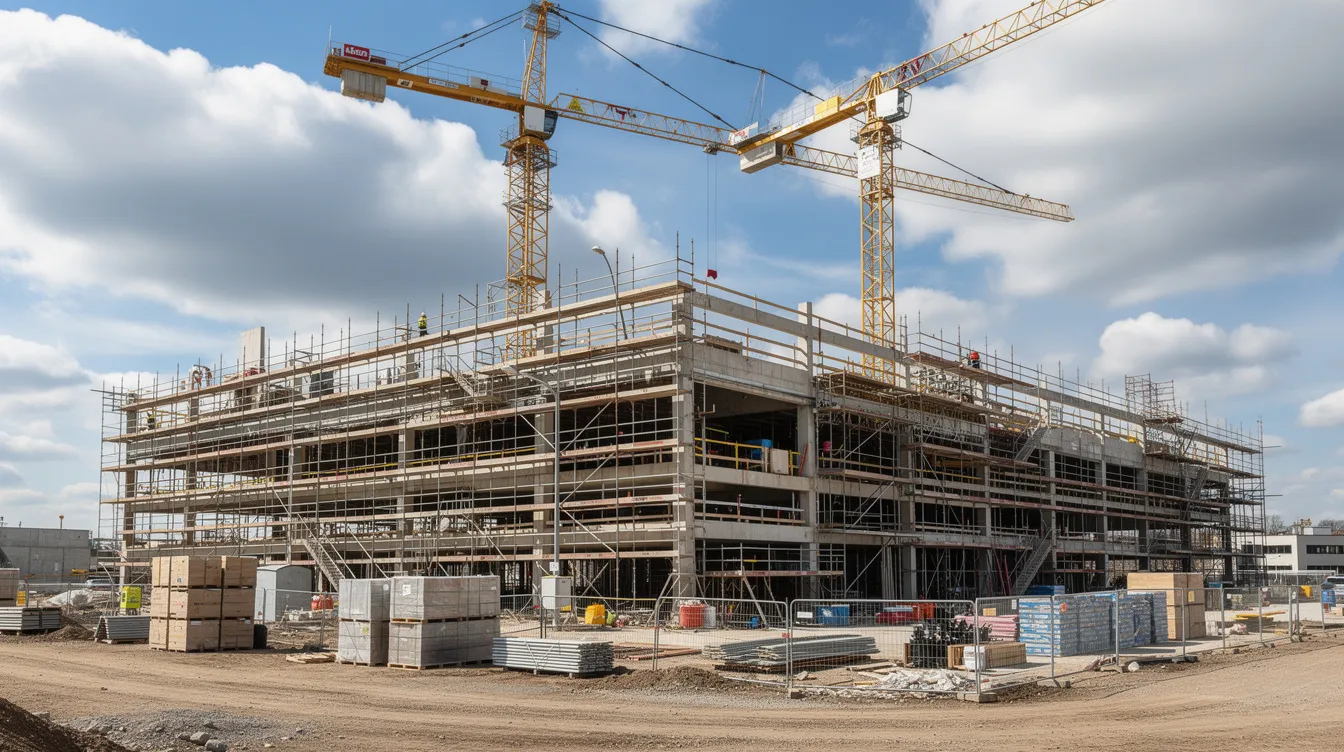
In the construction industry, cost overruns are the rule rather than the exception on complex projects. One in four construction projects has a claim, and the larger and more layered the project, the more likely the budget will not hold. Commercial projects with multiple stakeholders, evolving site conditions, and interdependent trades are especially vulnerable.
Typical Causes of Cost Overruns
Typical causes include incomplete design documents, unforeseen site conditions (think poor soil discovered during foundation work for a Maryville retail build), material price spikes in steel or lumber, labor shortages, and scope changes requested by project owners mid-stream. Disputes can arise from unexpected site conditions during construction that no one anticipated at bidding, or from rushed bidding processes that did not allow contractors enough time to develop accurate estimates.
The Impact of Tight Schedules and Interconnected Trades
Tight schedules and the interconnected nature of trades make it easy for relatively small project delays to snowball into major increases in overall budgets and dispute costs. A two-week delay waiting on a permit can push mechanical and electrical work into winter, adding overtime and weather protection costs that were never in the original contract price. Disputes can lead to significant project delays and lost revenue for everyone involved.
The Importance of Contracts and Prevention
Many of these problems are foreseeable from a legal standpoint, which is why detailed contracts and effective dispute prevention strategies are so critical. Establishing clear contracts reduces ambiguity and disputes before the first shovel hits the ground.
Understanding why overruns are common sets the stage for examining how contracts define and allocate these risks.
What "Cost Overrun" Means Under Tennessee Construction Contracts
A construction cost overrun occurs when actual project costs exceed the agreed budget, contract price, or guaranteed maximum price. At its core, a construction cost overrun means actual project costs materially exceed the agreed budget, contract price, or guaranteed maximum price. But the legal and financial implications depend heavily on the type of contract governing the project.
Here is how the three most common contract types allocate overrun risk:
Contract Type | Who Bears Overrun Risk? | Key Feature |
|---|---|---|
Lump Sum / Fixed Price | Contractor (generally) | Contractor agrees to a set price; estimating errors or inefficiencies are the contractor's problem unless contract provides otherwise |
Cost-Plus | Owner (generally) | Owner pays actual costs plus a fee; disputes arise over what costs are "reasonable" or "actual" |
Guaranteed Maximum Price (GMP) | Contractor above the cap | Contractor guarantees a ceiling; costs above the GMP are absorbed by the contractor unless justified by approved change orders |
Commercial contracts frequently include notice requirements—for example, a clause requiring the contractor to notify the owner when 75% of the budget has been reached and overruns are reasonably anticipated. Contracts frequently require written notice of increased costs within a specified time. Failure to comply with these requirements can limit or bar recovery.
Tennessee courts will usually enforce clear contract language on cost allocation. But contract ambiguities and conflicting provisions often trigger a construction dispute over payment responsibility. As the Tennessee Court of Appeals has shown in cases like M.R. Stokes Co. v. Shular, when the written terms and the parties' actual conduct diverge, courts will look at performance and communications to determine who bears the risk.
Before speaking with counsel, gather and review your signed contract, all change orders, pay applications, and project correspondence.
Transitioning from contract definitions, it's important to understand who is involved when costs spiral out of control.
Multiple Stakeholders: Who Is at the Table When Costs Spiral?
Construction disputes over overruns rarely involve only two parties. A typical commercial project includes project owners, general contractors, multiple subcontractors, architects, engineers, material suppliers, lenders, and sometimes insurers. Construction disputes involve multiple stakeholders like owners and contractors, and a payment dispute can freeze cash flow for 12 to 18 months—impacting every party in the chain.
When costs spiral, these stakeholders often have misaligned expectations, conflicting contract terms, and limited visibility into each other's work:
Architects and engineers may have produced incomplete or ambiguous plans that drive additional costs and RFIs.
Construction managers and owners' representatives may have failed to communicate owner decisions or approve submittals on time.
Subcontractors may have performed work based on verbal instructions and now face nonpayment.
Suppliers may be caught between contractual commitments and market-driven price increases.
A construction cost overrun lawyer must often untangle overlapping contracts—the prime contract, subcontracts, and purchase orders—to determine which stakeholder ultimately pays. Dispute outcomes often hinge on which party followed the process laid out in their specific agreement and whether open communication was maintained throughout the project.
Understanding the roles of each stakeholder helps clarify the root causes of cost overruns and disputes.
Common Causes of Cost Overruns That Lead to Disputes
Most construction claims and disputes over overruns can be traced back to a handful of recurring causes. Understanding these causes is the first step toward either building or defending a claim.
Incomplete Design Documents
When plans and specifications are missing critical details, contractors must issue RFIs and may have to estimate costs for undefined work.
Rushed Bidding
Tight deadlines during pre-construction can lead to underestimated labor, equipment, and material costs.
Material Cost Spikes
Post-2020 supply chain disruptions and ongoing volatility in steel, lumber, and fuel prices continue to affect construction projects. Costs under construction contracts may be influenced by escalation provisions—or by the absence of them.
Differing Site Conditions
Subsurface rock, contaminated soil, or unexpected groundwater can add hundreds of thousands of dollars to a project budget.
Regulatory Delays
Permits, inspections, and zoning approvals in Tennessee can lag behind schedule, especially on complex projects.
Owner-Driven Scope Changes
Upgrades, additions, or modifications requested after construction begins frequently push budgets past the breaking point.
Consider a scenario like a 2023 Knoxville warehouse project delayed by steel price increases and owner-directed change orders for additional loading docks. The contractor's original estimate assumed stable pricing and a fixed scope, but by the time the steel arrived, costs had risen substantially and the additional work consumed weeks of schedule float. Scope of work disputes occur from poorly defined project requirements, and ambiguous contract terms lead to frequent construction disputes.
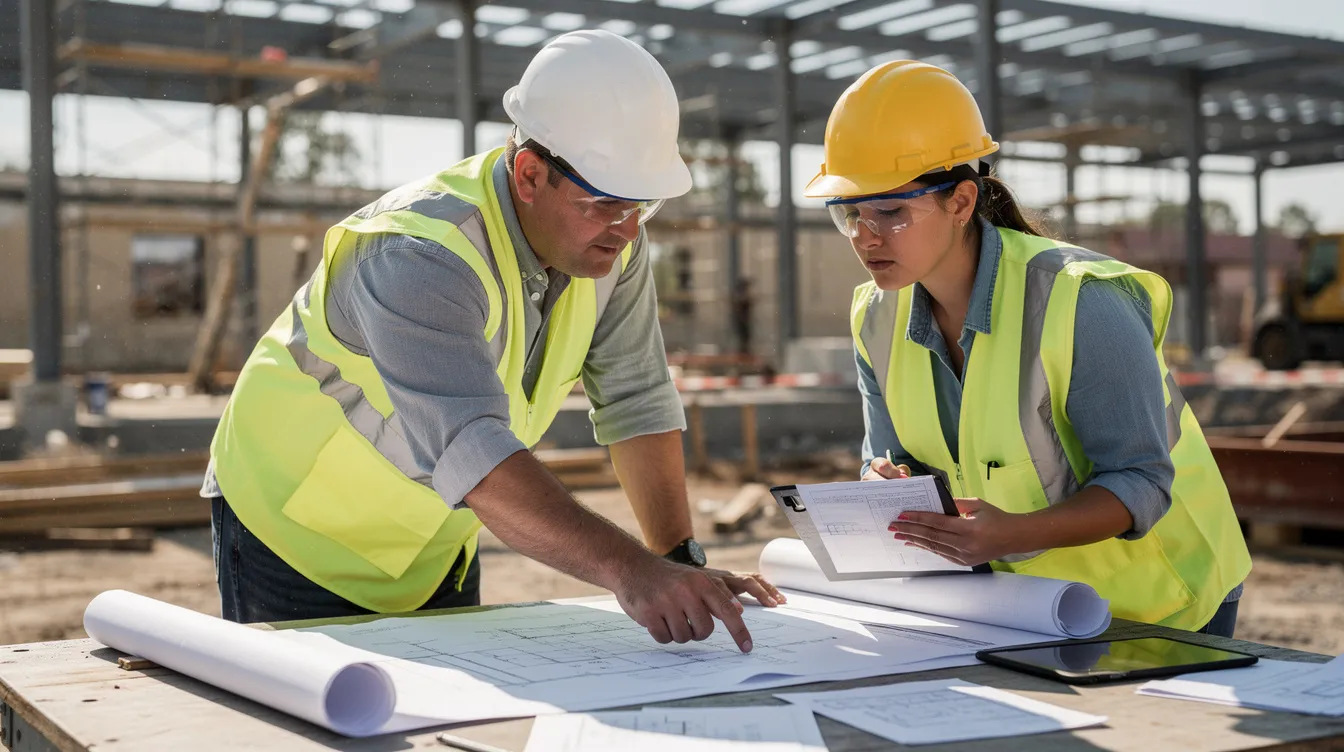
The importance of contemporaneous documentation—RFIs, daily reports, emails, and change order logs—cannot be overstated, especially when parties later dispute the quality or condition of completed work. Projects with robust records resolve disputes faster and more favorably than those without.
By understanding these common causes, you can better prepare for how Tennessee law and contract terms allocate responsibility for overruns.
How Tennessee Law and Contract Terms Allocate Responsibility for Overruns
Tennessee contract and commercial law usually control who pays when a commercial project exceeds its budget. Construction laws vary by state and locality, so a construction lawyer should specialize in construction law and verify local jurisdiction and state statutes governing construction claims. Tennessee Code § 62-6-102 defines key terms like "contractor" and sets licensing thresholds that affect who can bring or defend claims.
Courts look first at risk allocation in the written contract: clear risk-shifting language, indemnity provisions, and clauses addressing price escalation or unforeseen conditions. A clear contract should allocate financial risk for price spikes or unforeseen conditions. Tennessee's anti-indemnity statute limits overbroad indemnification clauses, requiring that such obligations be "clear and unequivocal."
If a contractor guarantees a price but then experiences overruns caused by its own estimating errors or mismanagement, the contractor will generally absorb those costs. In Brown Bros. Inc. v. Metropolitan Government, a contractor sought an additional $281,541 for unexpected subsurface rock—but the court held the contractor could not shift that risk absent a clear contract provision.
Conversely, project owners may bear responsibility when they direct changes, delay decisions, withhold payments, or interfere with the contractor's work in ways that cause project delays and additional costs. Payment disputes arise from unclear contract language, and owners who refuse to follow their own contract's payment terms risk liability for breach.
With this legal framework in mind, let's look at how change orders and scope creep can further complicate cost allocation.
Change Orders, Scope Creep, and Budget Blowouts
Scope creep and informal instructions on commercial projects are among the most frequent causes of cost overruns and later litigation. The financial viability of a project can be influenced by the management of change orders, and cost overruns can jeopardize a project's financial viability if left unaddressed.
A formal change order is a written, signed modification to the original contract that adjusts scope, price, and schedule. Many construction contracts require that all additional work be authorized through written, signed change orders. Change orders must follow formal procedures to prevent unauthorized work and to preserve each party's rights.
Disputes frequently arise when contractors perform extra work based on verbal approvals or emails and later face resistance when submitting requests for additional payment. Tennessee courts, as in M.R. Stokes Co. v. Shular, may find that the requirement for written change orders was waived by the owner's conduct—but that outcome is far from guaranteed.
Best practices for managing change orders include:
Documenting every scope change in writing before performing the work
Updating the contract sum and schedule with each approved change order
Communicating clearly with project owners about the cost and time impacts before performing major extra work
Keeping copies of all communications, including emails and text messages
A Tennessee construction cost overrun lawyer can analyze whether extra work qualifies as compensable changes or was already included within the original scope.
Understanding how change orders are managed leads directly into the impact of project delays and disruptions.
Delays, Disruption, and the Hidden Cost of Time
Project delays and disruption are often the biggest drivers of cost overruns, even when material and labor prices remain stable. Delays are a common source of disputes in construction projects, and delays often lead to cost overruns due to extended overhead and increased labor costs. Cost overruns often involve change orders, delays, and defective work working together to inflate the final price.
Common Sources of Delay in East Tennessee
Late permits and inspections
Design revisions issued after construction has begun
Weather events—particularly spring flooding and winter freezes
Slow decision-making by owners or architects
Coordination failures among trades
When one activity on the critical path slips, the ripple effects can cascade through the entire schedule, causing project disruption as well as added time and cost. A two-week delay in structural steel delivery may push mechanical, electrical, and finishing trades into overtime, compress testing and commissioning, and trigger liquidated damages clauses.
A lawyer can analyze financial implications of project delays and related claims. Schedule analysis using the critical path method (CPM), supported by contemporaneous project records—daily logs, meeting minutes, updated schedules—is the primary tool a construction dispute lawyer uses to connect delay to specific financial damages. Disputes can cause project delays and lost revenue, and can lead to significant loss of productivity across the project.
With delays and disruptions explained, the next step is understanding how disputes are resolved when they arise.
Resolving Cost Overrun Disputes: Negotiation, Mediation, Arbitration, and Litigation

When disagreements arise over who pays for cost overruns, the dispute resolution process typically follows a ladder built into the contract itself. Many commercial construction contracts include dispute resolution clauses that require the parties to attempt negotiation, then mediation, before proceeding to arbitration or litigation.
Negotiation is an informal process for resolving disputes. The parties discuss the issues directly, without a neutral third party, aiming for early resolution that keeps the project on track.
Mediation involves a neutral third party facilitating discussions between the parties. Mediation is non-binding but can lead to creative settlement terms. Mediation and arbitration are common dispute resolution methods in construction law.
Arbitration is the most formal alternative to litigation. It involves a private, binding decision by one or more arbitrators, often administered under American Arbitration Association Construction Industry Rules. Arbitration can be less costly than litigation for disputes, but parties should still weigh legal fees along with privacy and speed when choosing between the two.
Litigation remains an option when other methods fail or when the contract does not require alternative dispute resolution. Litigation provides full discovery, judicial oversight, and the right to appeal.
Method | Binding? | Privacy | Typical Cost | Speed | Pros | Cons |
|---|---|---|---|---|---|---|
Negotiation | No | Private | Low | Fast | Preserves relationships, flexible, quick resolution | May not resolve all issues, no binding outcome |
Mediation | No (usually) | Private | Moderate | Moderate | Neutral facilitator, creative solutions, less adversarial | Non-binding, may not result in agreement |
Arbitration | Yes (usually) | Private | Moderate-High | Moderate | Binding decision, faster than litigation, private | Limited appeal rights, can be costly, less formal discovery |
Litigation | Yes | Public | High | Slow | Full discovery, judicial oversight, right to appeal | Expensive, public record, slow process |
Dispute Avoidance and Resolution Boards can also help prevent conflicts from escalating and help resolve disputes before they reach formal proceedings.
DZ Law handles both construction litigation and arbitration and appeals and federal court litigation, giving the firm the full toolbox for resolving construction disputes over cost overruns. If you are facing a construction cost overrun dispute, call (865) 259-0020 or contact the firm online to discuss which dispute resolution path fits your situation.
With dispute resolution options in mind, let's look at how to prevent disputes before they start.
Dispute Prevention: Contract Drafting and Risk Management Before the First Shovel Hits the Ground
The best way to control dispute outcomes is to prevent the most serious conflicts before construction begins. Effective legal representation starts long before a dispute escalates—it starts with well drafted contracts.
Practical contract strategies for dispute prevention include:
Clearly defined scope of work with detailed plans and specifications
Realistic schedules with adequate float for weather and permitting
Transparent allowance and contingency provisions
Price escalation clauses tied to published indices for volatile materials
Differing site conditions clauses with defined adjustment procedures
Written notice requirements and change order procedures
Dispute resolution clauses that establish a clear process for resolving construction disputes
Timely payment of invoices prevents friction among project participants and keeps the project moving. Payment terms should be specific, enforceable, and consistent with Tennessee's Prompt Pay Act requirements—including the 5% retainage cap on private contracts over $500,000, as enforced in Aarene Contracting, LLC v. Krispy Kreme Doughnut Corporation.
DZ Law's business transactions and contracts practice group can help draft and negotiate construction contracts that reduce the risk of future construction disputes and dispute costs.
With prevention strategies in place, let's see how a construction cost overrun lawyer can help when disputes do arise.
How DZ Law, PLLC Helps Owners, Contractors, and Subcontractors in Cost Overrun Cases
DZ Law's construction litigation and arbitration team represents project owners, general contractors, subcontractors, and suppliers across East Tennessee when commercial projects exceed their budgets. Effective legal representation can help clients recover excess costs in construction disputes—and lawyers can help manage and recover unexpected construction expenses on the other side of the equation.
Core services include:
Contract review and risk assessment
Claim preparation or defense for cost overruns
Change order and delay claim analysis
Negotiation and mediation advocacy
Arbitration and court representation
Appeals when necessary
The firm is based in Blount County and regularly appears in courts throughout Sevier, Blount, Knox, Loudon, Jefferson, and Cocke Counties. DZ Law's broader practice groups—business and commercial litigation, business transactions and contracts, premises liability (for jobsite injury overlaps), and appeals and federal court litigation—provide expert guidance for complex, multi-layered construction disputes involving insurance coverage, indemnity, and cross-claims.
Next, let's discuss the importance of documentation in building or defending a cost overrun claim.
Evidence and Documentation: Building or Defending a Cost Overrun Claim
In any construction dispute, the strength of the documents often matters as much as the underlying facts. Expert testimony is often needed to substantiate claims in cost overrun cases, but even the best expert cannot overcome a lack of documentation.
Key categories of evidence include:
The signed contract and all amendments
Approved and unapproved change orders
RFIs and responses
Daily reports and job logs
CPM schedules and updates
Emails, letters, and text messages
Meeting minutes
Pay applications and payment records
Material delivery receipts and subcontractor invoices
Clear communication and contemporaneous records can prove notice, causation, and the reasonableness of claimed additional costs or offsets. Construction disputes can damage working capital and bonding capacity, so having organized documentation is not just a legal advantage—it is a business survival strategy.
DZ Law can help clients organize, analyze, and present this documentation in a persuasive way for mediation, arbitration, or trial.
With documentation in hand, it's also important to consider how to protect business relationships during dispute resolution.
Protecting Your Business Relationships While Resolving Construction Disputes
In the construction industry, project owners and contractors often work together on multiple construction projects over many years. Strained relationships from aggressive litigation tactics can cost both sides far more in lost future work than the overrun itself. That 82.8% of construction firms fail within 20 years due to disputes underscores how damaging unresolved conflict can be to long-term business viability.
Well-managed dispute resolution can preserve valuable partnerships. Strategies include:
Early negotiation before one party retains counsel and positions harden
Targeted mediation focused on the specific issues in dispute
Creative settlement terms—future work commitments, adjusted payment schedules, shared savings on upcoming projects
Keeping project delivery on track even while resolving the cost dispute in parallel
A seasoned construction cost overrun lawyer can help clients weigh immediate financial needs against reputation and future business opportunities, finding ways to resolve disputes without burning bridges.
Knowing when to call a lawyer is crucial—here's when to seek help.
When to Call a Construction Cost Overrun Lawyer in Tennessee
Clear triggers for contacting construction lawyers include:
Cost reports showing the project is significantly over budget
An owner rejecting submitted change orders
Contractors threatening to walk off the job or slow down work
A lender raising concerns about project viability or draw requests
Problems arise with subcontractor payments or mechanic's lien notices
Issues arise around insurance coverage or indemnity demands
Business owners, construction companies, and commercial landlords should seek advice early—before communication breaks down and positions harden. Disputes can cost the construction industry $4 billion to $12 billion annually, and 82.8% of construction firms fail within 20 years. The stakes are too high to wait.
Even if a dispute seems minor now, early legal input on documentation, notice, and negotiation strategy can meaningfully improve dispute outcomes. A payment dispute can freeze cash flow for extended periods, compounding losses across the entire project.
Call DZ Law at (865) 259-0020 or send a confidential message through our online contact form for a construction dispute evaluation.

Why Choose DZ Law, PLLC for East Tennessee Construction Disputes?
DZ Law focuses on complex civil litigation, including construction litigation and arbitration and business and commercial litigation. The firm has deep experience with the kinds of multi-party, document-intensive construction disputes that arise on commercial projects across East Tennessee.
Based in Blount County, DZ Law represents clients throughout Sevier, Blount, Knox, Loudon, Jefferson, and Cocke Counties. The firm's attorneys understand the local construction market, the courts, and the practical realities of commercial project delivery in this region.
DZ Law integrates construction dispute work with related practice areas—business transactions and contracts for proactive risk management, premises liability when jobsite injury claims overlap with project disputes, and appeals and federal court litigation when a dispute escalates beyond the trial court. This breadth allows the firm to handle the full lifecycle of complex undertakings from contract negotiation through final resolution.
Schedule a consultation by calling (865) 259-0020 or by contacting DZ Law online.
FAQs: Construction Cost Overruns in Tennessee
The following FAQs address common questions from Tennessee business owners and construction professionals that are not fully covered above.
Can a Tennessee project owner refuse to pay for any cost overrun?
No. Owners cannot automatically refuse to pay all overruns. Whether additional payment is due depends on the contract terms, whether proper change order or notice procedures were followed, and whether the overrun resulted from owner-directed changes, design issues, or contractor mismanagement. If one party breaches a contractual obligation—for example, an owner who directs scope changes but refuses to approve the corresponding change order—the other party may have a valid claim. A construction dispute lawyer can review the contract and project history to assess whether the owner's refusal is legally justified.
What if my contractor exceeded the budget without giving written notice?
Many Tennessee commercial contracts require timely written notice before extra costs are incurred, and failure to give notice can limit or bar recovery of additional compensation. However, courts sometimes consider actual knowledge and the parties' course of dealing—as in M.R. Stokes Co. v. Shular, where the written change order requirement was deemed waived by the owner's conduct. Contractors should not assume they are safe without written notice. Legal advice is crucial in these situations.
Are material price spikes (like lumber or steel) my responsibility or the contractor's?
Responsibility for price escalation usually depends on specific contract clauses. Some contracts fix prices, some allow adjustments tied to market indices, and some leave the entire risk with the contractor. In the absence of express escalation language, Tennessee courts are generally reluctant to rewrite the parties' bargain. This makes careful contract drafting essential before the project begins.
How do cost overruns affect mechanics' liens and payment bond claims?
Contractors and subcontractors may still assert Tennessee mechanic's liens or payment bond claims for unpaid, contractually authorized extra work and approved change orders. Mechanic's liens can protect financial interests and secure payment in construction disputes. However, strict statutory deadlines and documentation requirements apply, and missing them can waive lien or bond rights entirely. Early consultation with legal counsel is important to preserve these remedies.
Does DZ Law charge for an initial consultation about a cost overrun dispute?
Fee structures may vary by matter type, but DZ Law typically offers an initial conversation to evaluate a potential construction dispute and discuss options. The firm's goal is to help you understand your position, your risks, and your next steps before you commit to a course of action. Call (865) 259-0020 or reach out through our online contact form to learn more.