Construction Delay Claims Lawyer in Tennessee: Recovering and Defending Against Damages on Delayed Projects
Construction delays are extremely common across East Tennessee, and the financial consequences for owners, contractors, and subcontractors can be severe. Whether you are pursuing damages caused by someone else's failures or defending against an aggressive delay claim, understanding how Tennessee law treats these disputes is the difference between recovering what you are owed and losing your position entirely.
Key Takeaways
A valid delay claim in Tennessee requires proving four elements: that a delay occurred, that it affected the project's critical path, that the other party was responsible, and that actual damages resulted.
Owners, general contractors, and subcontractors on construction projects in Blount, Knox, Sevier, Loudon, Jefferson, and Cocke Counties should consult a construction delay claims lawyer as soon as schedules begin to slip-not after the project is over.
DZ Law, PLLC represents both sides in construction delay disputes, pursuing and defending claims in Tennessee state and federal courts and in private arbitration throughout East Tennessee.
Construction delay claims involve complex timelines and extensive documentation, and choosing proper legal representation for construction delay claims is critical to the outcome.
If your project is behind schedule or you are facing delay-related damages, call (865) 259-0020 or message us online to discuss your situation with our team.
How a Tennessee Construction Delay Lawyer Can Help When Your Project Falls Behind Schedule
Picture a commercial build in Knoxville running four months past its contract completion date, or a custom home in Maryville where the owner cannot move in because the contractor keeps missing milestones. In both scenarios, the parties involved are pointing fingers, costs are climbing, and someone will bear the financial impact.
Delay and time-impact disputes frequently trigger claims for liquidated damages, extended overhead, disruption costs, and-in the most serious situations-termination, bond claims, or mechanic's lien litigation. Construction delay lawyers help recover damages through negotiation or litigation, and they also defend against claims that are inflated, poorly documented, or legally deficient. A construction delay claims lawyer evaluates the contract, the project schedule, and the project records to determine whether a valid delay claim exists and whether it can be successfully pursued or defended. Lawyers evaluate delay impacts by analyzing project schedules and contract terms to identify strengths and vulnerabilities on both sides.
DZ Law serves owners, developers, general contractors, subcontractors, design professionals, and suppliers involved in public and private construction projects across Blount County and surrounding counties, including Knox, Sevier, Loudon, Jefferson, and Cocke.
If your Tennessee project is already behind schedule or you are facing threats of delay-related damages, call (865) 259-0020 or contact us online to speak with our team.
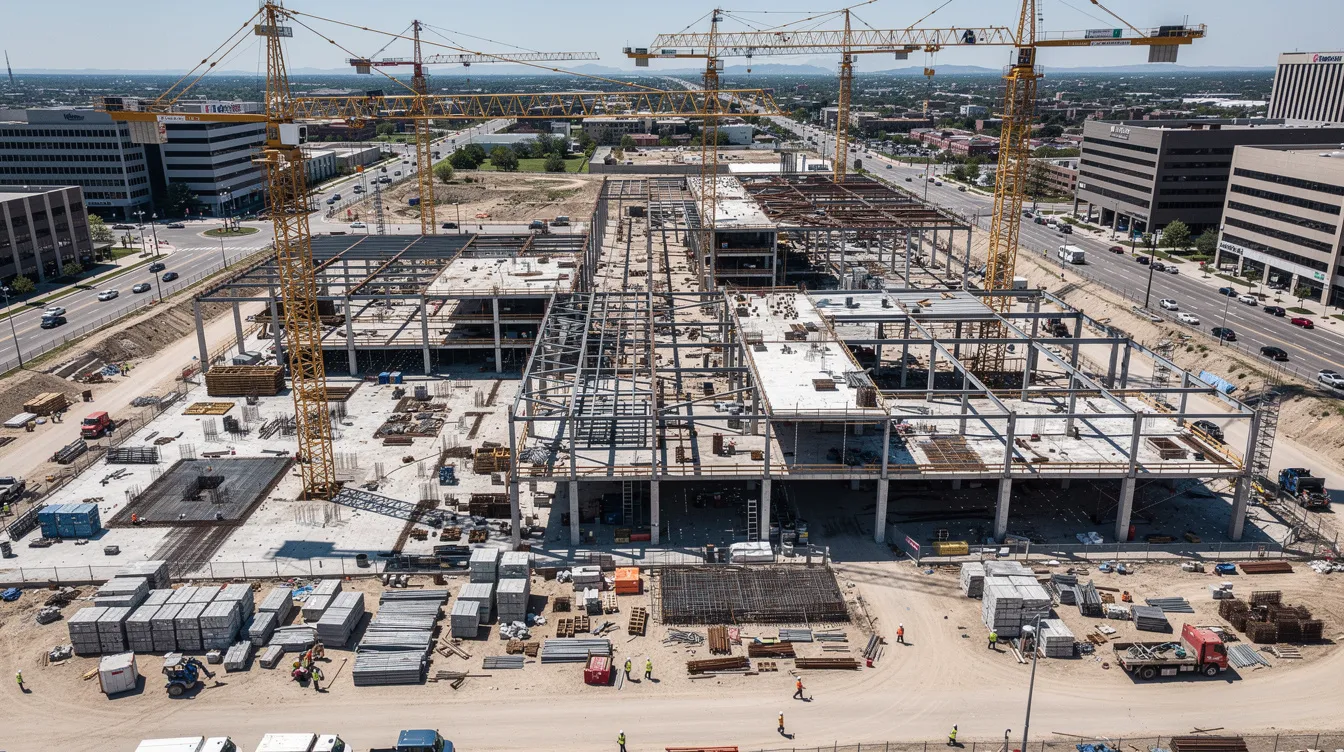
What Is a Construction Delay Claim Under Tennessee Law?
A construction delay claim is a demand for additional time, money, or both when a project finishes later than required under the construction contract, or when one party's actions interfere with an otherwise timely completion. Delay claims arise on a wide range of construction projects in Tennessee-from residential home improvement contracts in Blount County to large commercial, industrial, and public works projects in Knoxville and across East Tennessee.
A valid construction delay claim typically must establish four elements:
A delay occurred relative to the baseline or contractual schedule.
The delay affected the critical path and pushed the project completion date.
The responsible party was either the owner, contractor, or a third party.
The claiming party suffered actual damages tied to that delay.
Tennessee courts generally treat delay claims as breach-of-contract or change-in-time claims and often enforce written notice and claim procedures in the construction contract as a prerequisite to recovery. Delay disputes often turn on contract provisions related to time and damages, making the specific contract language the starting point of every analysis.
DZ Law evaluates delay claims not only for potential recovery but also for defenses-such as concurrent delays, contract notice failures, and no damages for delay clauses that limit recovery for delays in contracts-based on Tennessee construction law and the particular contract at issue.
Understanding Schedules, Critical Path, and When a Delay Becomes a Claim
Most construction contracts in Tennessee include a baseline construction schedule, important milestone dates, and a required substantial completion date, often backed by a liquidated damages clause or bonus provision for early completion. These schedules define the project plan and set expectations for every party.
The critical path is the longest chain of logically connected activities that determines the overall project duration and the project completion date. Activities on the critical path have zero or minimal float-meaning any delay there directly extends when the project will finish.
Delays are classified as critical or non-critical. A critical delay pushes the completion date. Non critical delays occur on activities with schedule float, meaning a non critical delay affects the timeline only if the float is consumed entirely. Non critical delays may be absorbed without triggering a compensable construction delay claim.
A delay turns into a claim only when it materially impacts the critical path and causes time-related or financial harm, and when the party seeking damages has met contract notice and documentation requirements. Delay quantification requires establishing project critical paths and financial impacts through careful schedule analysis.
DZ Law routinely works with updated CPM schedules, time-impact analyses, and expert schedulers to prove or defend the schedule impact element of a delay dispute. Top construction delay lawyers have a network of forensic schedule analysts, and our firm coordinates with these professionals when the complexity of the schedule demands it.
Common Types of Construction Delays: Excusable, Inexcusable, Compensable, and Concurrent
Tennessee construction delay disputes often turn on how the delay is classified. The classification determines who owes money, who gets additional time, and how damages are calculated. Misclassification can dramatically change the outcome.
The main categories are:
Inexcusable delays - caused by the contractor's actions or failures (poor planning, labor shortages, mismanaged subcontractors). The contractor may owe the owner damages.
Excusable delays - beyond the contractor's control and often beyond anyone's control (unusual weather, natural disasters, certain government shutdowns, terrorist attacks, or other force majeure events). These typically entitle the contractor to a time extension but not necessarily additional money.
Compensable delays - caused by the owner or the owner's agents (late approvals, design changes, failure to provide site access). These entitle the contractor to both additional time and additional costs.
Concurrent delays - situations where both the contractor and the owner independently cause delays that overlap and both affect the project's critical path during the same period.
These classifications are driven by the construction contract, Tennessee law, and the factual record. DZ Law helps clients position events within the correct legal category early, which influences negotiation strategy, mediation posture, and trial or arbitration presentation.
For example, a 60-day delay on a Knoxville apartment project caused by late structural drawings from the owner's design team is a compensable delay. But if during that same period the contractor's labor shortages and mis-sequenced work also contributed to the schedule slip, the dispute becomes one of concurrent delay-and the analysis becomes far more nuanced.
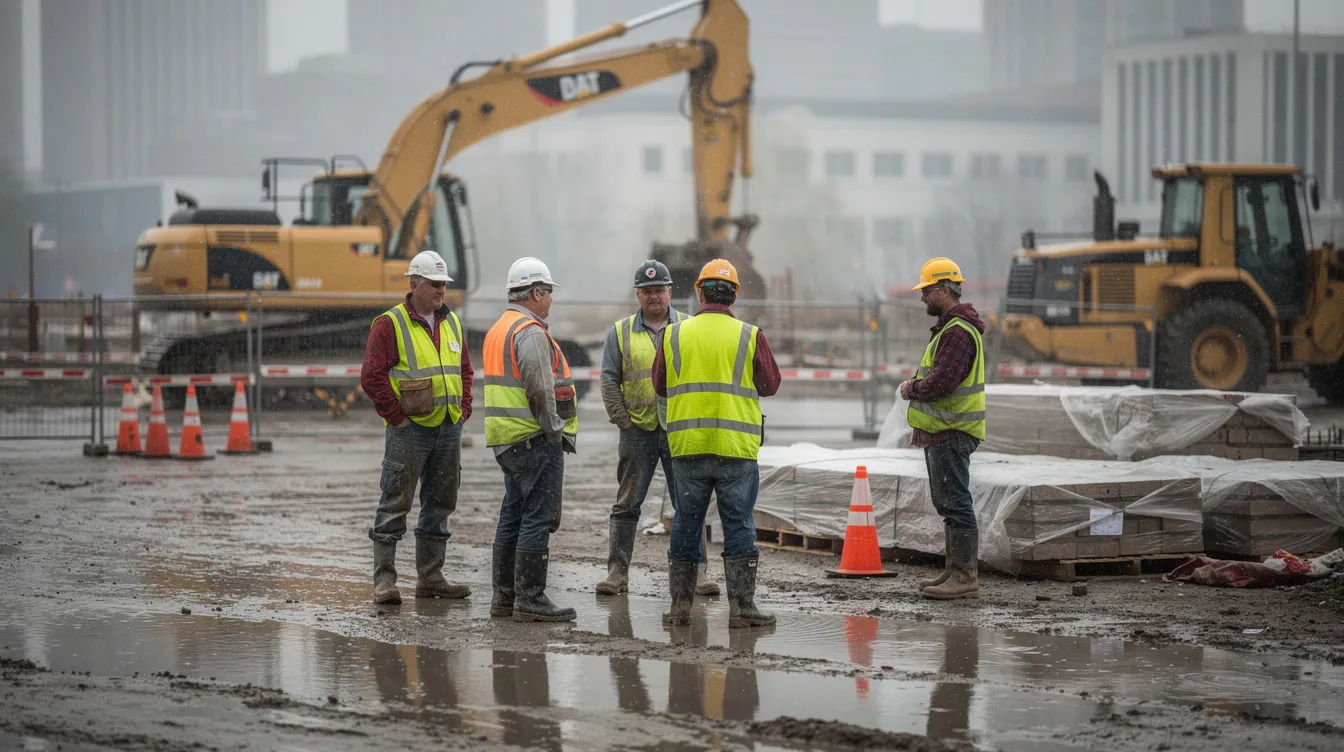
Inexcusable Delays: When Contractor Fault Drives the Claim
Inexcusable delays are those attributable to the contractor's fault or risk. Common causes include poor project management, mismanaged subcontractors, labor shortages, equipment failures, defective work requiring rework, and failure to coordinate trades in the particular order required by the construction process. Contractors are liable for inexcusable delays caused by their own actions.
When the contractor is responsible for critical delays, construction delays can trigger substantial financial losses for owners. Property owners in Tennessee may seek damages including:
Extended financing and construction loan interest
Lost rental income or business revenue
Increased insurance premiums
Extended on-site management and inspection costs
Extra general conditions costs and additional labor costs
Owners may also pursue liquidated damages if the contract provides per-day amounts, and in some cases may terminate for default and have the work completed by others. Owners can claim increased material costs from contractor delays when price escalation occurs during the extended period.
Contractors still may have defenses, including improper delay analysis by the owner, concurrent delays caused by the owner, lack of written notice of alleged default, or contract clauses limiting damages. Attorneys must understand common owner defenses regarding construction delays to mount an effective case.
Consider a contractor who misses a December 2025 completion date for a commercial build-out in Sevier County due to repeated remobilization and under-staffing-events solely within the contractor's control. The owner pursues liquidated damages plus lost seasonal revenue, arguing the delay resulted in concrete financial harm during peak tourist season. The contractor's sole responsibility for the schedule slip makes this a straightforward inexcusable delay scenario.
Excusable and Force Majeure Delays: Weather, Unforeseen Conditions, and Other Risks
Excusable delays are beyond the contractor's control. They include unusually severe weather, certain government shutdowns, strikes, regulatory issues, and other force majeure events identified in the contract. Force majeure events can excuse performance delays under contracts when the events meet the contractual definition and are properly documented. Excusable delays may entitle contractors to time extensions and compensation, though many Tennessee construction contracts grant time extensions but not necessarily additional money for non compensable delays-meaning each side generally bears its own extra costs while the completion date moves.
Weather is a frequent source of dispute in East Tennessee. The construction industry in this region regularly deals with winter freezes, heavy spring rains, and unpredictable storm patterns. However, a contractor must often show the weather was unusually severe compared to historical records-not simply that it rained or snowed. DZ Law reviews NOAA and local weather station data against baseline assumptions to assess whether a claimed weather delay is valid.
Differing site conditions-hidden rock, underground utilities, or environmental contamination discovered after work begins-may be treated as excusable or compensable delays depending on contract risk allocation. Some contracts place all subsurface risk on the contractor, while others allow recovery when conditions materially differ from what was represented in contract documents.
DZ Law reviews force majeure and changed-conditions clauses, daily logs, photos, and weather data to determine whether a claimed excusable delay qualifies and what relief is available under the specific contract.
Compensable Delays: Owner-Caused Impacts That Can Justify Time and Money
Compensable delays result from the owner's actions or inactions. When the owner, developer, or their design team causes a critical delay, the contractor may be entitled to both additional contract time and extra compensation. Owners may be liable for compensable delays due to their inaction as well as their affirmative decisions.
Common owner-caused delay scenarios include:
Late approvals of shop drawings or submittals
Delayed building permits or inspections when the owner was responsible
Failure to provide site access on the scheduled date
Major design changes during the construction process
Late decisions that hold up procurement of long-lead materials
Contractors may claim overhead and lost profits due to delays caused by the owner. Contractor damages in compensable delay claims may include extended field supervision, project management time, renting equipment and job site trailers beyond the original schedule, increased material prices, home-office overhead, additional costs incurred for acceleration, and lost productivity.
Tennessee courts and arbitrators generally require careful proof of causation-linking the owner's actions to a critical path delay-and detailed calculation of actual damages, not just broad estimates. The determining factor in most cases is whether the contractor can trace specific additional costs to specific owner-caused schedule disruptions.
For example, on a Knoxville office build, a four-month delay in city approvals attributable to owner-controlled design revisions leads to a contractor's claim for additional general conditions, extended supervision, and acceleration costs when the owner then demands the contractor make up lost time.
Concurrent Delays: When Responsibility Is Shared
Concurrent delays involve both parties causing delays simultaneously. They arise when both the contractor and the owner independently cause delays that overlap during the same period and both affect the project's critical path. Concurrent delays are common in complex construction projects and can significantly complicate the allocation of time extensions and financial responsibility.
Some contracts and Tennessee courts allow a time extension without compensable damages when concurrent delays exist, while others may apportion responsibility based on the relative impact of each party's conduct. Concurrent delays can be used as a defense against claims-an owner may argue the contractor was equally at fault, and a contractor may argue the owner's delays negated any basis for liquidated damages.
In Temple Baptist Church v. C.H. Commercial Contractors, both the contractor and the owner were responsible for a total of 220 days of delays, and the court reduced the liquidated damages award because the claimant had also contributed to the schedule slip. Lawyers need experience with concurrent delay analysis in construction disputes to handle these situations effectively.
Proving or disputing concurrent delay typically involves expert-driven schedule analysis, critical path review, and detailed examination of project records. DZ Law helps both owners and contractors use concurrent delay arguments strategically-either to reduce or defeat delay damages or to preserve entitlement to additional time on East Tennessee construction projects.
Building and Defending a Construction Delay Claim: Key Elements You Must Prove
Tennessee delay claims-whether brought in Blount County Circuit Court, the U.S. District Court for the Eastern District of Tennessee, or private arbitration-generally rise or fall on four elements: delay, causation, critical-path impact, and actual damages.
A claimant must:
Prove a delay actually occurred versus the planned project schedule
Connect the delay to the opposing party's acts or omissions
Show that the delay affected the critical path and extended the completion date
Quantify actual damages consistent with the construction contract
Contractors must prove the duration of the delay with specificity, and claims must demonstrate actual damages from the delay-not theoretical or speculative losses. Evidence must show the timeline was disrupted relative to the approved baseline.
Delay defenses attack these same elements. Common defense strategies include arguing the project finished on time despite alleged events, that delays were non critical or concurrent, that claimed costs are speculative, or that failure to comply with notice provisions weakened or extinguished the claim. Improper notice can weaken a construction delay claim significantly, and attorneys must manage strict notice requirements for construction delay claims to preserve their client's position.
DZ Law focuses early on case assessment-reviewing contracts, schedules, correspondence, change orders, and payment records-to identify strengths and vulnerabilities. Delay claims frequently overlap with payment disputes, change-order controversies, and termination allegations, which is why DZ Law's broader work in construction litigation, arbitration, and business and commercial litigation strengthens its approach to these cases.
Important Contract Provisions in Tennessee Construction Delay Disputes
In Tennessee, the written construction contract almost always controls how delay claims are handled, including notice provisions, deadlines, and limitations on damages. Understanding specific clauses before a dispute arises-or at the earliest sign of trouble-can be the difference between preserving and losing a claim.
Key clauses to review include:
Time is of the essence - these clauses can lead to material breaches for delays, making even modest schedule slips legally significant.
Liquidated damages - liquidated damages clauses specify per-day penalties for delays. Tennessee courts enforce them only if the stipulated amount was reasonable at contract formation and not grossly disproportionate to actual harm. In Beasley v. Horrell, a $500/day clause was struck as a penalty when actual damages were roughly $74–$97/day.
No-damages-for-delay provisions - no damages for delay clauses limit recovery for delay damages, though exceptions may exist for bad faith, active interference, or delays not contemplated by the clause.
Change-order and change-in-time procedures - many contracts require written change orders for both cost and time adjustments. In Moore Const. v. Clarksville Dept. of Elect., the contractor could not recover delay damages because no written change order was submitted as the contract required.
Force majeure - identifies which events qualify as excusable and what relief is available.
Dispute resolution and claim deadlines - payment terms, mediation requirements, arbitration clauses, and contractual limitations periods.
For residential projects, Tennessee imposes special rules under T.C.A. § 62-6-508, requiring home improvement contracts to state approximate start and substantial completion dates, include statutory notices, and comply with deposit and change-order limitations under T.C.A. § 62-6-510. Violations can expose contractors to Tennessee Consumer Protection Act liability and affect both parties' rights in a delay dispute.
DZ Law helps clients navigate these contract provisions to avoid unintentionally waiving delay claims or losing defenses by missing notice deadlines. If you need a construction contract reviewed for delay-related provisions, contact our team.
Actual Damages, Liquidated Damages, and Other Remedies for Construction Delays
Damages in Tennessee construction delay claims can be based on either liquidated damages specified in the contract or proof of actual damages, depending on the project and agreement.
Typical owner-side delay damages include:
Liquidated damages assessed per day of delay past the completion date
Additional interest on construction loans and financing
Lost rents or delayed use of the property
Extended design, inspection, and management expenses
Increased insurance, utility, and consequential damages
Typical contractor-side delay damages include:
Extended general conditions (job site trailers, supervision, utilities)
Additional labor costs and supervisory time
Equipment rental beyond the original schedule
Material price escalation and extra costs for procurement
Home-office overhead allocated to the delayed project
Lost profits on the delayed project or follow-on work
Tennessee law generally requires damages to be proven with reasonable certainty and tied directly to the delay events. Inflated or undocumented claimed amounts are vulnerable to challenge, and one party cannot simply seek damages based on broad estimates without supporting cost records.
DZ Law also evaluates acceleration claims-where an owner demands completion by the original date despite excusable delay-termination claims, and related mechanic's lien or payment bond rights, using its broader construction litigation experience.

Evidence and Documentation: What Records Matter Most in a Delay Dispute?
Delay claims and defenses usually succeed or fail based on project documentation, not after-the-fact testimony or generalized accusations. Daily logs and schedules are critical evidence for claims, and contemporaneous records created during the construction process carry far more weight than documents prepared after a dispute arises.
Key records that matter in construction delay disputes include:
Baseline and updated CPM schedules showing planned versus actual progress
Time-impact analyses isolating how specific events affected the critical path
Daily reports and superintendent logs documenting work performed, weather, manpower, and delays caused by other parties
Photos and videos of site conditions at key dates
RFIs, submittals, and response logs tracking design clarifications
Emails, letters, and meeting minutes reflecting notice requirements and decisions
Change orders (signed and unsigned) and contract amendments
Pay applications and invoices documenting additional costs incurred
Inspection and permit records showing regulatory issues or approval delays
Weather data from NOAA or local stations, and testing or geotechnical reports where relevant
Gaps or inconsistencies in these records can weaken a party's position significantly. Timing and documentation are crucial for addressing delay issues during ongoing projects-do not wait until the dispute has escalated to start organizing files.
DZ Law encourages owners and contractors across East Tennessee to implement disciplined project-document practices and to contact our firm early so that evidence can be preserved before memories fade or records disappear. We help clients organize and analyze project files-often coordinating with expert schedulers, accountants, or engineers-to build a coherent delay narrative that judges, juries, and arbitrators can follow.
Practical Steps to Take When a Schedule or Time-Impact Dispute Arises
When a project starts slipping behind schedule, early steps can dramatically improve the chances of resolving issues without full-blown litigation. A time consuming legal battle is rarely anyone's first choice, but failing to act early often makes it unavoidable.
Here is a step-by-step approach:
Review the contract - identify the scheduling, notice requirements, and delay-damages provisions, including whether there is a liquidated damages clause, a no-damages-for-delay clause, or specific claim deadlines.
Review the current schedule - examine the most recent schedule update and identify which critical-path activities are affected. Determine whether the delay affects the completion date or can be absorbed by float.
Document the delay events - use daily logs, photos, correspondence, and contemporaneous notes to record the specific events causing delay.
Issue timely written notice - contractors must provide notice of delays as specified in contracts. Compliance with contractual notice deadlines is vital for preserving claims, and failure to do so may bar recovery entirely.
Analyze before blaming - avoid rushing to assign fault before understanding the schedule impact and whether concurrent delay issues exist. Negotiate from an informed position rather than an emotional one.
If issues cannot be resolved informally, the contract may call for mediation, arbitration, or litigation. Most construction delay claims are resolved before trial, but early involvement of a construction delay claims lawyer helps frame the dispute and preserve all available remedies.
If you are facing an emerging delay dispute in Sevier, Blount, Knox, Loudon, Jefferson, or Cocke County, call DZ Law at (865) 259-0020 or reach out through our online contact form for guidance on next steps.
How DZ Law, PLLC Handles Construction Delay Claims, Arbitration, and Litigation
DZ Law's construction litigation and arbitration practice focuses on document-driven, schedule-focused analysis to help owners, contractors, and construction businesses across East Tennessee manage delay disputes efficiently.
Our typical workflow includes:
Early case assessment of the contract, schedule, and project records
Detailed identification of delay types (excusable, inexcusable, compensable, concurrent)
Calculation of actual damages supported by cost records and expert analysis
Development of negotiation, mediation, arbitration, or trial strategies tailored to the dispute
Coordination with forensic schedulers, accountants, and construction experts as needed
DZ Law represents clients in state courts throughout Blount County, Knox County, and surrounding counties, in the U.S. District Court for the Eastern District of Tennessee, and in private construction arbitrations under AAA, JAMS, or other rules. A neutral third party-whether arbitrator, mediator, or judge-ultimately renders a binding decision or facilitates settlement, and we prepare every case with that audience in mind.
Our experience in business and commercial litigation, business transactions, and appeals allows us to handle delay disputes that overlap with broader contract, insurance, or corporate issues, and to preserve appellate rights when important legal considerations arise.
Schedule a consultation by calling (865) 259-0020 or sending a message through our online contact portal to discuss a current or anticipated construction delay claim.
Why Choose a Local East Tennessee Construction Delay Lawyer?
Construction delay claims are heavily influenced by local practice, regional construction norms, and the preferences of judges and arbitrators in East Tennessee. A lawyer unfamiliar with how projects run in this region-or how local courts handle scheduling disputes-starts at a disadvantage.
DZ Law maintains a local presence in Blount County and represents clients throughout Sevier, Blount, Knox, Loudon, Jefferson, and Cocke Counties, as well as across East Tennessee. We work regularly with regional contractors, design professionals, and public entities and understand common scheduling practices, typical contract terms, and how local weather patterns, permitting realities, and inspection backlogs factor into delay analysis.
DZ Law brings both courtroom and arbitration experience to the table, along with a business-minded perspective that seeks efficient, practical resolutions when possible but is fully prepared to litigate delay and disruption claims when necessary.
If you are a property owner, contractor, or construction professional facing potential delay-related exposure or losses, contact DZ Law at (865) 259-0020 or through our contact page to see how a local, construction-focused firm can help protect your interests.

Frequently Asked Questions About Construction Delay Claims in Tennessee
The following FAQ section addresses practical questions about construction delay disputes that are not fully covered above. Each answer is specific to Tennessee law and East Tennessee practice. For case-specific guidance, consult a construction delay claims lawyer like DZ Law.
How long do I have to bring a construction delay claim in Tennessee?
Most construction delay claims are treated as breach-of-contract claims and are subject to a six-year statute of limitations under Tennessee Code § 28-3-109(a)(3), running from the date the breach occurs or the claim accrues. However, contracts can contain shorter contractual limitations periods, and claims on public projects, bonds, or under special statutes may follow different deadlines or notice requirements.
Do not wait until the end of a project to seek legal advice about delays. Notice provisions and claim procedures inside the contract often require much earlier action to preserve rights. Anyone unsure about deadlines on a current or recent project in Blount, Knox, Sevier, Loudon, Jefferson, or Cocke County should consult DZ Law promptly to avoid missing critical cutoffs.
Can I recover delay damages if the project still finished on time?
Under some contracts, a contractor may pursue lost-opportunity or interference claims when owner-caused delays prevent early completion, even if the project meets the contractual completion date. Success depends heavily on the contract language, the ability to prove a realistic early completion plan, and detailed schedule and cost evidence showing lost efficiencies.
Tennessee courts and arbitrators scrutinize these claims closely, so careful documentation and expert analysis are generally necessary. Owners or contractors considering such a claim-or defending against one-should speak with DZ Law to evaluate the strength of the schedule and damages evidence.
What if my contractor keeps asking for more time but never provides a written schedule update?
Many Tennessee construction contracts require formal written requests for time extensions, supported by schedule updates or time-impact analyses. Verbal requests are usually insufficient, and a contractor may lose the right to claim additional time or compensation without proper documentation.
Owners should insist on compliance with contractual procedures, including written explanations tying requested extensions to specific delay events and their impact on the critical path. If you are facing repeated informal extension requests without documentation, consult DZ Law for advice on how to respond while preserving your rights regarding liquidated and actual damages.
Do home improvement delays follow the same rules as large commercial projects?
While the basic concepts of delay and breach of contract apply to both, Tennessee has special statutes for home improvement contracts, including requirements under T.C.A. § 62-6-508. Residential contracts must specify approximate start and completion dates and include specific statutory notices. Violations can affect both the homeowner's remedies and the contractor's rights, including potential Tennessee Consumer Protection Act issues and construction-theft considerations under the intellectual property of the state's regulatory framework.
Homeowners dealing with significant project delays on remodels or additions-especially in Blount, Knox, or nearby counties-should have their contracts and project history reviewed by a construction attorney familiar with these statutes. Both homeowners and residential contractors can contact DZ Law to evaluate whether statutory violations, licensing issues, or documentation gaps may strengthen or weaken a delay claim.
Will my construction delay dispute go to court, or can it be resolved through arbitration or mediation?
Many Tennessee construction contracts require mediation as a first step, followed by either arbitration or litigation depending on the dispute-resolution clause. Arbitration is common on larger commercial and public projects, while smaller or residential disputes may proceed in state court unless the parties agreed otherwise in writing. In arbitration, a neutral third party issues a binding decision after reviewing the evidence.
DZ Law regularly represents clients in both court and arbitration proceedings and helps clients prepare for mediation with a clear understanding of their delay claims and defenses. Have your contract reviewed early so you understand whether your dispute will be decided by a judge, jury, or arbitrator-and plan your strategy accordingly.