Construction Insurance Coverage Lawyer: Disputes in Tennessee—Protecting Contractors, Developers, and Property Owners When Insurers Deny Claims
When an insurer denies a defense or limits coverage on a construction claim, the financial exposure to contractors, developers, and property owners can escalate within weeks. This guide covers how construction insurance coverage disputes arise on Tennessee projects, what the law requires of carriers, and how DZ Law, PLLC helps clients in Blount, Knox, Sevier, Loudon, Jefferson, and Cocke Counties protect their rights when coverage is denied.
Key Takeaways
DZ Law, PLLC represents Tennessee contractors, developers, and property owners in construction insurance coverage disputes when carriers deny or limit defense and indemnity obligations.
Disputes commonly involve general liability insurance, builder's risk coverage, additional insured endorsements, and policy exclusions related to construction defects and project delays.
Early legal intervention protects rights under Tennessee insurance law, construction contracts, and indemnity provisions, especially after a reservation of rights letter is issued.
If you have an active or looming coverage dispute, call DZ Law at (865) 259-0020 or message us online for a consultation.
DZ Law handles construction litigation and arbitration, business and commercial litigation, and related appeals throughout Blount, Knox, Sevier, Loudon, Jefferson, and Cocke Counties.
Why Construction Insurance Coverage Disputes Matter in Tennessee Projects
A general contractor finishes a 2025 Knoxville commercial build-out. Six months after the project owner takes occupancy, water intrusion damages drywall, flooring, and electrical systems across two floors. The owner files suit against the general contractor, alleging defective workmanship. The contractor tenders the claim to its general liability insurance carrier. Two weeks later, instead of a defense, the contractor receives a letter denying coverage based on the "your work" exclusion and questioning whether the damage constitutes an "occurrence" under the policy.
That contractor now faces defense costs, potential settlement exposure, and a project owner demanding answers. Cash flow tightens. Subcontractors are dragged in. The contracting business that built the project is left covering legal bills out of pocket while the insurer sits on the sideline.
Construction-related companies in Blount County and surrounding areas often rely on overlapping coverages, including general liability, builder's risk, property insurance, and professional liability insurance. When any one of those policies fails to respond, the financial strain ripples across the project. Coverage disputes are not just insurance problems. They are core business and construction law issues that affect contract rights, scheduling, financing agreements, and long-term relationships between owners, contractors, and subcontractors.
Coverage disputes can lead to substantial financial losses. If your insurer has recently denied or limited coverage on a Tennessee construction claim, contact DZ Law at (865) 259-0020 to discuss your options.
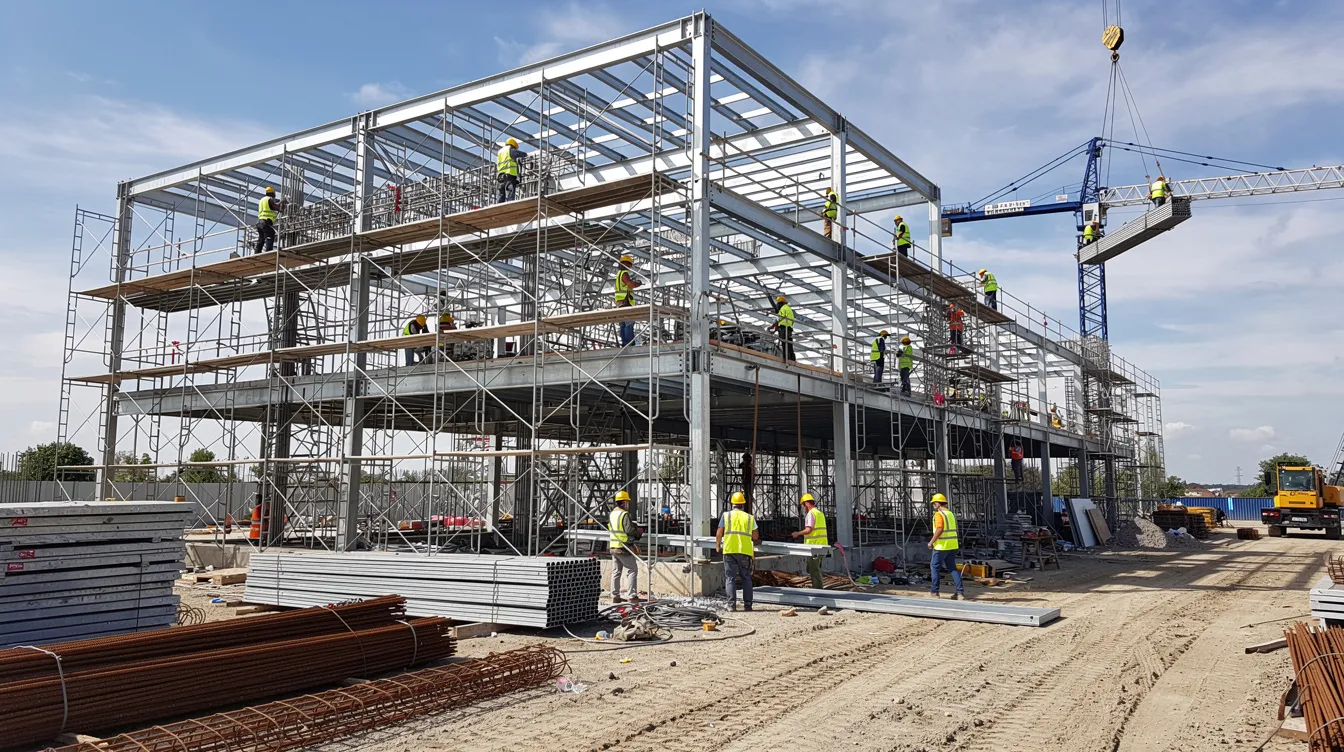
Common Types of Construction Insurance Policies on Tennessee Projects
Most sizable residential and commercial construction projects in East Tennessee involve multiple policies and multiple insureds. Understanding which policy responds to which risk is the starting point for any coverage analysis.
Key policy types relevant to coverage disputes include:
Commercial General Liability (CGL) Insurance: Covers third-party bodily injury and property damage claims arising from the insured's operations. Construction insurance includes Commercial General Liability Insurance as a baseline for most contractors.
Builder's Risk Insurance: First-party property insurance covering physical damage to buildings under construction. Builder's risk insurance is essential for construction projects because it protects the work in progress against risks like fire, vandalism, and severe weather. Builder's risk policies may also cover business interruption losses.
Property Insurance: Protects against risks like fire and vandalism on completed structures or existing buildings being renovated. Property insurance and builder's risk coverage may overlap during certain project phases.
Professional Liability Insurance: Covers design professionals' errors and omissions, including architects and engineers.
Workers' Compensation Insurance: Mandatory for construction workers in Tennessee, covering jobsite injuries to employees.
OCIP/CCIP Programs: Owner-controlled or contractor-controlled insurance programs used on large projects to centralize coverage.
Policy endorsements such as additional insured status, completed operations coverage, and contractual liability coverage for indemnity obligations are often at the center of coverage disputes. Later sections cover how these policies interact with construction contracts and indemnity provisions.
How Coverage Disputes Arise After a Construction Claim
When a claim or lawsuit is filed against a contractor or owner, the insured tenders the matter to its carrier, often generating insurance claims and coverage disputes over the carrier's response. The carrier then either accepts the defense, issues a reservation of rights letter, or denies coverage outright. Disputes over coverage often arise from allegations of defective workmanship or faulty construction, which carriers frequently argue fall outside policy coverage.
Typical fact patterns in Tennessee construction insurance coverage disputes include:
Water intrusion and resulting damage from improperly installed roofing or flashing
Structural movement and foundation issues discovered months after completion
Fire loss during an active build-out
Crane or equipment accidents causing bodily injury or property damage to adjacent structures
Construction defects discovered after project handover, triggering completed operations claims
Insurers rely on exclusions to limit or deny coverage. Common exclusions include "your work," "your product," expected or intended injury, workmanship exclusions, earth movement, and design exclusions. Understanding exclusions in policies is essential to identify potential coverage gaps before problems arise.
Disputes can also arise from policy interpretation issues across multi-year and multi-carrier situations. When resulting damage progresses slowly over several policy periods, determining which insurer must respond first becomes its own dispute. Multiple insurance policies can complicate coverage disputes and claim handling because each carrier may point to other policies as primary. In HG Jones, LLC v. Jordan Howell et al. (2025), a Tennessee Court of Appeals decision, the court addressed exactly this issue: the phrasing of "other insurance" clauses and additional insured provisions determined which carrier bore primary responsibility.
Timely claim reporting is crucial to prevent denial of coverage. DZ Law evaluates both policy language and underlying construction contracts to build a coordinated coverage and liability strategy for owners, contractors, and developers.
Understanding General Liability Insurance in the Construction Context
CGL policies are often the first line of defense for contractors facing construction defect claims or jobsite accident claims. Construction insurance disputes often involve third-party claims, and general liability coverage is the primary vehicle for responding to such claims.
What CGL policies typically cover in construction:
Bodily injury to third parties (visitors, adjacent property occupants, other trades)
Property damage to non-defective work (damage your defective work causes to other parts of the project)
Completed operations claims after project handover
Key CGL concepts that drive Tennessee coverage disputes include the distinction between occurrence-based and claims-made coverage, the definitions of "property damage" and "bodily injury," aggregate versus per-occurrence limits, and the critical difference between the duty to defend and the duty to indemnify.
Insurers have a duty to provide a legal defense against covered claims, and that duty is broader than the duty to indemnify. Under Tennessee law, if a complaint's allegations arguably fall within a policy's coverage, the insurer must defend, even if the actual facts might later negate coverage. The Sixth Circuit confirmed this principle in Forrest Construction, Inc. v. The Cincinnati Insurance Co. (2013), applying Tennessee law. Insurers may deny claims based on policy limits, but legal action can be taken if an insurer improperly denies a claim or refuses a defense.
Subcontractor work, additional insured endorsements, and "your work" exclusions can either expand or restrict general liability coverage in construction defect cases involving multiple trades. Certificates of Insurance may not fully verify coverage; actual policies must be examined to confirm what is and is not covered. DZ Law helps clients interpret these provisions, respond to reservation of rights letters, and push back when an insurer improperly narrows its defense obligations.
Builder's Risk Insurance and Property Damage to the Work
Builder's risk coverage is project-specific property insurance for buildings under construction throughout East Tennessee, whether the project is in Maryville, Knoxville, or Sevierville. Builder's risk insurance covers buildings under construction, and coverage typically ends when construction is completed, the owner accepts the structure, or occupancy begins.
Events that may trigger a builder's risk claim include fire in a partially completed structure, storm or wind damage, vandalism or theft of materials, and collapse during renovation. Policies cover risks like fire, vandalism, and severe weather. Builder's risk policies may cover business interruption losses tied to covered events, though the specifics depend on policy language.
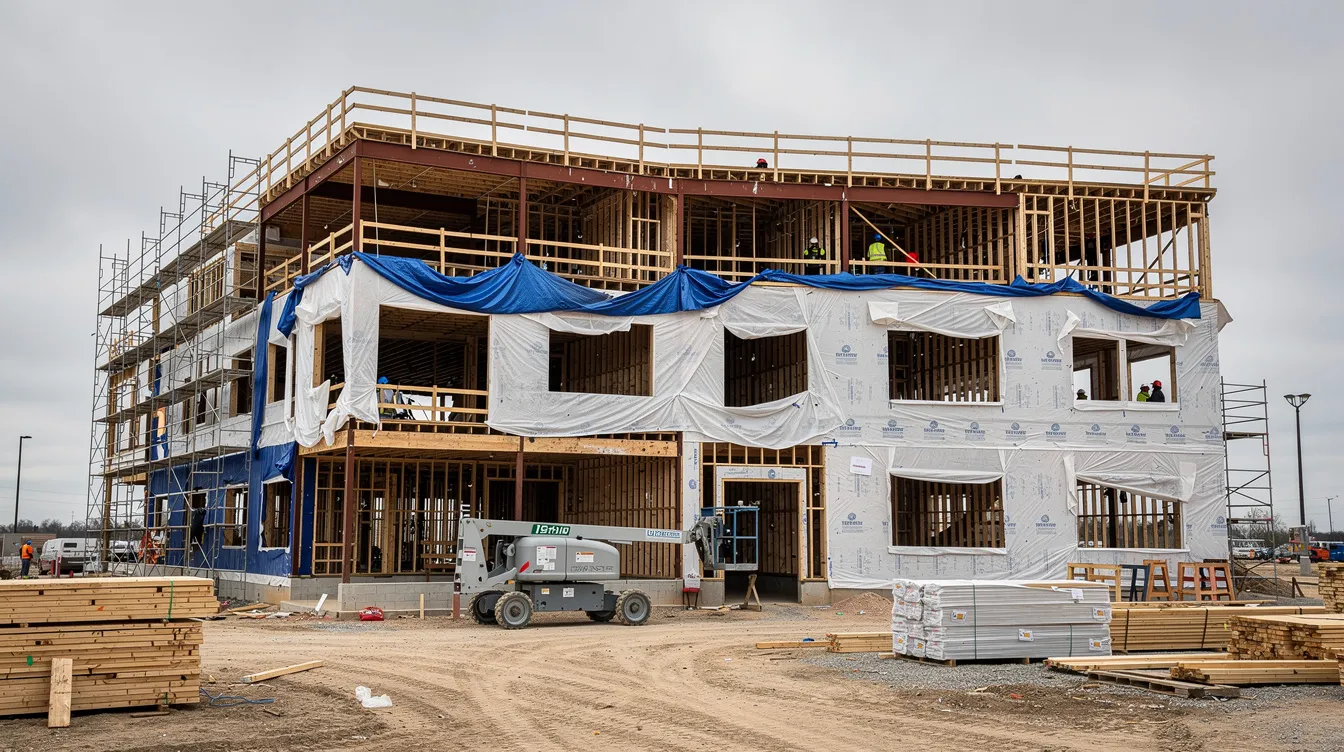
Common issues in builder's risk coverage disputes include:
Whether defective work is covered or excluded
Ensuing loss provisions (does damage from a covered peril that follows faulty work get covered?)
Coverage for temporary works and scaffolding
When the policy period actually began and ended
The question of when coverage terminates is especially contentious. In Cherokee Insurance Co. v. US Fire Insurance Co. (1977), the Tennessee Court of Appeals held that builder's risk coverage does not automatically end when only minor decorative work remains; the policy's own terms govern. The 2024 case Builders Mutual Insurance Company v. GCC Construction, LLC in the Eastern District of Tennessee illustrated another recurring problem: during renovation of a century-old building, bricks fell from a wall. The court held that the collapse exposed pre-existing decay rather than causing new damage, and dismissed the claim. That result hinged on whether the damage was "direct physical loss" caused by a covered peril.
Builder's risk policies interact with other coverages, including CGL and property insurance. Careful coordination is necessary in complex loss scenarios. DZ Law reviews builder's risk policy language, carrier correspondence, and underlying construction contracts when a claim is delayed or denied.
Construction Contracts, Indemnity Provisions, and Additional Insured Coverage
Construction contracts often allocate risk through indemnity clauses and insurance requirements that must align with the actual policies purchased. Construction contracts often include indemnification clauses to allocate financial responsibility among project participants. When the contractual requirements and the insurance policies do not match, gaps open at the worst possible time.
Tennessee construction contracts for commercial and residential projects commonly require:
Specific general liability insurance limits
Additional insured endorsements naming the owner or general contractor
Waiver of subrogation provisions
Evidence of builder's risk coverage
The relationship between contractual indemnity obligations and CGL contractual liability coverage is a frequent source of disputes involving construction defects or jobsite injuries. If the CGL policy's contractual liability exclusion applies and no exception reinstates coverage, the contractor who agreed to indemnify the owner may bear that obligation without insurance backing.
Additional insured endorsements are critical for extending coverage to general contractors and project owners, but disputes regularly arise over whether the endorsement matches the contract language. In Michael Lancaster v. Ferrell Paving, Inc. (2011), the Tennessee Court of Appeals examined whether additional insured status applied when the request was oral rather than written and whether the endorsement covered the additional insured's own negligence. That case illustrates why checking that additional insured status aligns with contract terms is a step that cannot be skipped. Construction counsel can also advise on payment remedies such as a mechanic's lien when unpaid contractors or suppliers need to secure payment.
Construction insurance involves navigating complex policy terms and exclusions. DZ Law assists contractors, developers, and owners in both drafting and enforcing risk allocation provisions, and in litigating coverage disputes when insurers refuse to honor additional insured or indemnity obligations. A construction insurance coverage lawyer can help negotiate and structure contracts to align risk and coverage before claims arise.
Reservation of Rights Letters and Conflicts Over Defense Strategy
A reservation of rights letter is a written notice from an insurer agreeing to defend a claim while preserving the right to later deny indemnity. When a contractor or owner is sued over a Tennessee construction project, receiving one of these letters means the insurer is raising coverage questions even as it provides defense counsel.
Common scenarios triggering a reservation of rights include exclusions for defective workmanship, late notice arguments, disputes about whether the alleged damage constitutes an "occurrence," and questions about additional insured status. Legal assistance is often needed to challenge insurance claim denials or reservations of rights, because the letter itself can reshape the trajectory of the underlying lawsuit.
A potential conflict of interest arises when insurer-appointed defense counsel must navigate liability issues that overlap with the insurer's own coverage defenses. If the same factual issues that determine liability also determine coverage, the insured's interests and the insurer's interests may diverge. In Tennessee, courts have recognized this tension. The Tennessee Supreme Court addressed aspects of insurer-appointed counsel obligations in Trau Med of America Inc. v. Allstate Insurance Company (2002).
Options available to insureds in Tennessee when a reservation of rights creates a conflict include demanding written clarification of the insurer's coverage position, negotiating for independent counsel at the insurer's expense, and preserving coverage positions through careful written responses.
If you have received a reservation of rights letter on a construction defect or property damage claim, speak with DZ Law promptly at (865) 259-0020 or through the firm's online contact form.
Bad Faith, Claim Handling, and Tennessee Insurance Law Considerations
When insurers deny claims improperly, delay investigation unreasonably, or repeatedly request documents already submitted, Tennessee law provides avenues for the insured to push back.
Documenting claim handling is essential: save every email, letter, adjuster communication, proof-of-loss submission, and expert report. These records become evidence in disputes over whether a carrier met its obligations.
Tennessee's statutory framework for insurance claim handling includes T.C.A. § 56-7-105, which imposes additional liability on insurers who fail in good faith to pay valid claims promptly. T.C.A. § 56-8-113 limits private causes of action for unfair or deceptive insurance practices to specific statutory remedies, meaning bad faith claims in Tennessee are more constrained than in some other states.
Construction insurance coverage disputes may involve parallel litigation: one underlying lawsuit over construction defects or property damage, and a separate case addressing the insurer's conduct. Legal representation is crucial for resolving insurance disputes across both tracks. DZ Law evaluates whether an insurer's handling of a construction claim may justify additional remedies, while keeping clients grounded in realistic litigation risks and costs.
Coordinating Construction Litigation, Arbitration, and Insurance Coverage Strategy
Many construction disputes in East Tennessee proceed on parallel tracks: an underlying construction dispute (litigation or arbitration over the project) and ongoing coverage disputes with insurers. Attorneys can manage disputes involving multiple parties in construction projects, but the strategy across these tracks must be coordinated.
DZ Law's construction litigation and arbitration practice integrates with its business and commercial litigation and appeals work to align strategy across forums. Choices about forum (state court, federal court, or arbitration) under construction contracts affect insurance coverage issues directly, including discovery scope and timing of declaratory judgment actions.
Practical steps in coordinating these tracks include:
Preserving evidence at the jobsite before remediation
Managing project documentation so it supports both the underlying case and the coverage case
Working closely with experts whose opinions address both liability and coverage questions
Ensuring communications with insurers are accurate and do not inadvertently waive coverage arguments
If your business faces both a construction dispute and a coverage dispute, reach out to DZ Law at (865) 259-0020 for an integrated case assessment.
Protecting Contractors, Developers, and Property Owners in East Tennessee
DZ Law represents a range of clients in construction insurance coverage disputes: general contractors, independent contractors, subcontractors, developers, commercial property owners, residential owners on custom builds, and design professionals.
The East Tennessee market presents distinct project types and risk profiles:
Mixed-use developments in Knoxville with layered excess coverage
Industrial projects in Loudon County where environmental and property damage overlap
Multi-family housing in Sevier County serving tourism economies, where occupancy timelines compress construction schedules
Custom lakefront homes in Jefferson and Blount Counties involving residential owners with limited insurance sophistication
Each category of client faces distinct insurance structures. A small contracting business may carry a single general liability policy and a builder's risk policy. A developer may have layered excess coverage, an OCIP program, and contractual obligations to secure payment bonds and certificates of insurance for every subcontractor on the project. Constructors face disputes over policy language and coverage limits regardless of project size.
DZ Law's geographic focus includes Blount, Knox, Sevier, Loudon, Jefferson, and Cocke Counties, with the ability to handle appropriate matters in Tennessee federal courts when jurisdictional issues arise.
When to Call a Construction Insurance Coverage Lawyer in Tennessee
Clear triggers indicating you should seek counsel:
Receiving a coverage denial letter from your insurer
Getting a reservation of rights letter with unresolved exclusion questions
Seeing defense bills rejected by the carrier
Facing insurer pressure to settle on unfavorable terms
Learning that an additional insured request has been refused
Discovering that unpaid contractors or subcontractors are filing claims that implicate your coverage
Earlier-stage signals matter too: confusing policy language at contract drafting time, disagreements with other parties about who should tender a claim, or looming statute-of-limitations concerns for coverage actions.
Early involvement allows an attorney to help shape claim presentation, protect contractual rights, and avoid strategic missteps that weaken coverage arguments later. Even if you are already involved in construction litigation or arbitration, a separate coverage review can uncover options for shifting defense and indemnity costs back to insurers or other responsible parties. Construction insurance protects property owners, contractors, and developers from financial loss, but only if the right coverage is in place and properly enforced.
Do not wait until trial is imminent. Contact DZ Law now at (865) 259-0020 or through the firm's online message form.
How DZ Law, PLLC Approaches Construction Insurance Coverage Disputes
DZ Law's core practice areas (construction litigation and arbitration, business and commercial litigation, premises liability, appeals and federal court litigation, and business transactions and contracts) converge in the legal services the firm provides in insurance coverage matters. A coverage dispute is rarely a standalone problem; it usually sits at the intersection of a construction defect claim, a contract dispute, and an insurance contract question.
The firm's front-end case assessment process involves reviewing construction contracts, change orders, project correspondence, and all relevant insurance policies and endorsements across the applicable policy years. From there, DZ Law analyzes tender and denial letters, advises on communications with insurers, evaluates whether to file a declaratory judgment action, and coordinates strategy with any underlying construction defect or injury case.
The firm emphasizes disciplined documentation, careful expert selection, and willingness to take coverage issues through trial or appeal when negotiation fails. Based in Maryville and representing clients throughout East Tennessee, DZ Law provides direct attorney involvement rather than a volume-driven model. That matters when the subject of the dispute is a denied defense on a six-figure or seven-figure construction claim.
Practical Steps You Can Take Now to Protect Coverage on Your Project
If you are currently operating a jobsite or facing an emerging dispute, these steps can strengthen your coverage position:
Documentation practices:
Keep organized project records, including daily logs, inspection reports, and meeting minutes
Maintain copies of all insurance policies and endorsements (not just certificates of insurance)
Save every reservation of rights letter, denial letter, and adjuster communication
Track all communications with the carrier in writing
Claim-reporting best practices:
Give timely notice to all potentially relevant carriers when problems arise
Confirm tenders in writing, specifying which entities are seeking coverage (the general contractor, the project owner, additional insureds)
Do not assume a single carrier will coordinate with other policies
Proactive contract management:
Review standard contract forms for indemnity and insurance provisions before each project
Confirm that certificates of insurance match contract requirements; remember that certificates alone may not fully verify coverage
Update contract language to reflect current Tennessee construction law and the right coverage for the project's risk profile
Consider a preventive consultation with DZ Law even before disputes arise, particularly for businesses planning major projects or revising their construction contract templates.
Contact DZ Law, PLLC About a Tennessee Construction Insurance Coverage Dispute
If your insurer has denied a defense, issued a reservation of rights, or limited coverage on a Tennessee construction project, the cost of waiting compounds. Defense bills accumulate, deadlines pass, and coverage arguments weaken with each week.
DZ Law, PLLC represents contractors, subcontractors, developers, and property owners facing insurance claim denials, limited defenses, and confusing policy positions across East Tennessee. The firm's extensive experience in construction litigation, business and commercial litigation, premises liability, and appeals allows it to manage both the underlying dispute and the related coverage conflict under one roof.
Call (865) 259-0020 to schedule a confidential consultation, or reach out through DZ Law's secure online contact form for a prompt response.
Frequently Asked Questions About Construction Insurance Coverage Disputes in Tennessee
The following questions address practical concerns that come up regularly in construction coverage matters. Every situation is different; the answers below are general and should not replace advice tailored to your specific project and policies.
How quickly should I contact a lawyer after my insurer denies or limits coverage?
Contact a lawyer as soon as you receive a denial or reservation of rights letter. Tennessee policy terms and law impose deadlines for responding, preserving defenses, and filing declaratory judgment actions. Some policies require suit within a specific window (often shorter than Tennessee's general six-year contract statute of limitations). Early review allows DZ Law to shape communications with the insurer and avoid unintentional admissions that could weaken your coverage arguments later.
Can DZ Law work with my existing construction defense lawyer?
Yes. In many cases, one law firm handles the underlying lawsuit over construction defects or injuries while DZ Law focuses on insurance coverage disputes and the related business litigation issues. The firm is accustomed to coordinating with existing counsel to align strategy, avoid duplication of effort, and present a unified position to insurers and opposing parties. This arrangement works well when the coverage dispute involves different legal questions than the underlying lawsuit.
What information should I bring to an initial consultation about a coverage dispute?
Key documents include:
All relevant insurance policies and endorsements for the applicable project years
The construction contracts and subcontracts
Certificates of insurance from all project participants
The claim or lawsuit filings (complaints, cross-claims)
All letters and emails from insurers, adjusters, and brokers
Project schedules, change orders, and photos of alleged damage
Prior correspondence with other project participants (general contractors, subcontractors, design professionals)
The more complete the file, the faster DZ Law can assess coverage positions and identify next steps.
Do you represent out-of-state owners or contractors with Tennessee projects?
DZ Law frequently represents clients who live or have headquarters outside Tennessee but are involved in East Tennessee construction projects, including investors, regional contractors, and national developers. The firm's familiarity with local courts, arbitrators, and construction practices in Blount, Knox, Sevier, Loudon, Jefferson, and Cocke Counties is a practical advantage for non-local clients. Much of the initial work can be handled by phone or videoconference.
How are attorney's fees handled in construction insurance coverage cases?
Fee arrangements vary based on the nature and complexity of the dispute. DZ Law typically discusses hourly rates, retainers, and potential recovery of fees (where Tennessee law allows) during the initial consultation. The firm aims to give clients a clear picture of expected costs and strategic options before any major litigation steps are taken. Call (865) 259-0020 or contact DZ Law online to discuss your specific situation.