Subcontractor Dispute Lawyer Tennessee: Managing Payment, Performance, and Contractual Risk on Commercial Projects
When a subcontractor dispute surfaces on a commercial construction project, the financial and schedule consequences can escalate quickly. Whether you are a general contractor managing a multi-trade build-out or a subcontractor fighting for payment you have earned, the outcome often depends on contract language, Tennessee construction law, and how early you take action to protect your position.
Key Takeaways
DZ Law, PLLC helps Tennessee general contractors, subcontractors, owners, and developers resolve subcontractor disputes involving payment, performance, and contractual risk on commercial construction projects.
The firm is based in Blount County and represents clients across Sevier, Blount, Knox, Loudon, Jefferson, and Cocke Counties in state and federal courts and in arbitration.
Construction disputes in Tennessee involve strict statutory rules and complex contracts. Subcontractor disputes often turn on specific contract language, statutory deadlines, and detailed project documentation, so early intervention can provide more options than waiting for issues to escalate.
DZ Law routinely handles construction litigation and arbitration, mechanics' liens, bond claims, business and commercial litigation, and complex commercial contract disputes.
If you are facing a subcontractor dispute right now, call (865) 259-0020 or message DZ Law online for a confidential consultation.
Subcontractor Disputes on Tennessee Commercial Projects: How DZ Law Can Help You Now
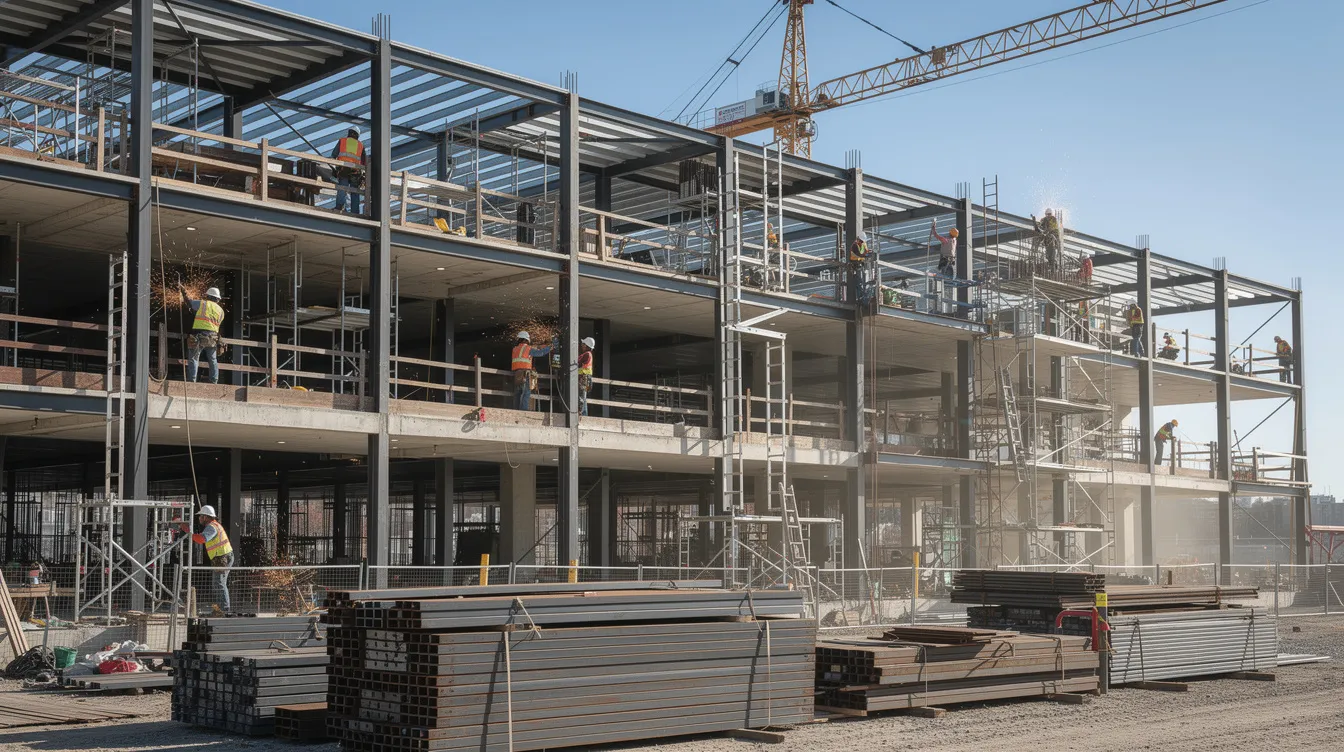
Payment disputes, scope fights, and questions about a subcontractor's performance can stall a construction project, erode margins, and strain relationships with owners and lenders. On commercial and industrial projects throughout East Tennessee-from retail centers in Knox County and hospitality developments in Sevier County to manufacturing facilities in Blount and Loudon Counties-these conflicts arise more frequently than most parties anticipate.
DZ Law's construction litigation and arbitration attorney practice focuses on precisely these situations, and the firm's construction lawyers represent both general contractors and subcontractors, as well as owners and real estate development entities, in disputes that arise during or after a construction project. Many of these matters involve overlapping issues: defective work, schedule delay, change orders, retainage withholding, termination, and backcharges that must all be evaluated together.
If you are dealing with a subcontractor dispute on a Tennessee commercial project, call DZ Law at (865) 259-0020 or send a detailed message through the firm's online contact form to submit a request for practical guidance before the situation worsens.
Common Types of Subcontractor Disputes in Tennessee
Construction disputes often involve multiple parties with complex liability considerations. Here are the dispute categories DZ Law encounters most frequently across the construction industry in East Tennessee:
Payment disputes: Unpaid progress payments, retainage that is not released at completion, disputed change orders, and final payment withheld due to alleged construction defects or delay. These are often the catalyst for everything that follows.
Performance issues: Alleged defective work, failure to meet specifications or building codes, incomplete punch-list items, and disagreements about workmanship standards. Construction disputes can hinge on elements like scheduling delays and change orders intertwined with performance allegations.
Schedule and delay claims: Missed milestones, interference by other trades, resequencing of work, and disputes over liquidated damages and acceleration costs that affect the overall project schedule.
Scope-of-work conflicts: Disagreements over who was responsible for particular portions of the work, conflicts between drawings and specifications prepared by architects, engineers, and other design professionals, and unexpected site conditions requiring scope adjustments.
Termination and replacement disputes: Termination for cause versus convenience, supplementing a subcontractor's workforce, and claims for wrongful termination or lost profits. These situations frequently involve builders, contractors, and owners pointing fingers in multiple directions.
Bond and lien disputes: Payment bond claims on public projects and mechanics' lien issues affecting private real estate development in East Tennessee.
What Can Constitute Subcontractor Default Under Tennessee Law and Your Contract?
"Default" is primarily a contract-driven concept. What counts as a subcontractor's failure to perform depends first on the specific subcontract language and, secondarily, on Tennessee construction law and general contract principles.
Typical default triggers found in commercial subcontracts include:
Repeated failure to supply sufficient labor or materials
Failure to follow plans, specifications, or contractual requirements
Chronic schedule delays affecting the critical path
Safety violations that endanger workers or the public
Abandonment of the project
However, not every imperfection in a subcontractor's performance justifies immediate termination. Some issues-punch-list items, minor warranty repairs, or cosmetic deviations-are better handled through holdback or warranty provisions rather than default. Courts analyze whether the alleged breach is "material" or merely incidental.
General contractors should document performance issues immediately after identification. Supporting documentation may include inspection reports and photographs that can help establish the existence of a subcontractor default and support each key point in any later default claim or defense. General contractors should also maintain contemporaneous records of defaults-daily logs, RFIs, emails, and site photographs-because documentation can make or break a claim months later.
Tennessee has strict statutory thresholds for contractor licensing, and each contractor must understand Tennessee's licensing laws to enforce contracts or seek recovery. Unlicensed contractors may face significant barriers in court.
Before taking drastic steps, encourage a contract review from experienced counsel. DZ Law helps clients identify whether alleged conduct actually triggers default provisions in both the subcontract and the upstream prime contract with the owner.
Reviewing the Subcontract and Prime Contract Before You Act
The first step in any subcontractor dispute is a careful review of the written subcontract and relevant portions of the prime contract. The ability to analyze construction contracts is critical for resolving disputes effectively, and overlooking a single clause can change the entire trajectory of a case.
Key provisions that usually control the dispute include:
Default and termination clauses
Notice and cure provisions
Change-order procedures
Pay-when-paid or pay-if-paid clauses
Dispute-resolution provisions (litigation vs. arbitration, venue, and governing law)
Indemnity and insurance requirements
On larger construction projects, the subcontract often incorporates the prime contract by reference. This means the general contractor's obligations to the owner can quietly change the timing and handling of subcontractor problems. A clause in the prime agreement requiring mediation before litigation, for example, may bind the subcontractor through an incorporation provision the subcontractor never closely examined.
Tennessee courts have addressed pay-when-paid clause ambiguity and held that unless contract language clearly shifts risk, the general contractor remains obligated to pay even if the owner has not paid. This means contract language matters enormously, and parties on both sides should work closely with counsel to understand what their agreement actually says.
DZ Law's business and commercial litigation and construction contract practices regularly involve dissecting layered contract documents to identify hidden requirements, risk allocations, and leverage points that the parties may not have recognized at signing.
Notice and Opportunity to Cure: A Critical Step Before Termination
Many Tennessee commercial subcontracts require written notice of default and a defined opportunity to cure before the general contractor may supplement the work, suspend payment, or terminate for cause. Subcontracts often require written notice before exercising default remedies-and failing to follow these steps is one of the most common and costly mistakes in construction disputes.
An effective notice typically includes:
The specific contractual provisions allegedly breached
A factual description of deficient performance
Supporting documentation (photographs, inspection reports, schedule analyses)
A clear deadline for cure-for example, 48 hours for safety emergencies versus 7 to 10 days for other issues
Subcontractors may have a defined period to cure performance issues, and that period must be respected. Terminating a subcontractor before the cure period expires-or without providing contractually required notice-can give rise to wrongful-termination claims. A subcontractor may claim wrongful termination if procedures are not followed, including demands for unpaid balances and lost profits. Termination is a last resort after other remedies fail.
Termination of a subcontractor requires following specific contractual procedures. Subcontracts often require written notice before termination, and termination should follow the specific procedures outlined in the subcontract.
Notices should be factual, not emotional. Written documentation should be sent by the contract-specified method and preserved for later litigation or arbitration. DZ Law helps both general contractors and subcontractors draft or respond to default letters in real time-preserving contractual rights while avoiding missteps that undermine leverage.
Supplementing a Subcontractor's Performance Without Overstepping
When a subcontractor's work falls behind or falls short, general contractors sometimes need to add labor, equipment, or materials to keep the construction project moving while the performance dispute is unresolved. This is generally referred to as "supplementation."
General contractors may supplement a subcontractor's performance under certain conditions, but some subcontracts strictly limit or prohibit it. Contract review is essential before taking this step.
Best practices for supplementation include:
Documenting all supplemental efforts with time-stamped records
Keeping supplemental time and cost records separate from normal project expenses
Providing written updates to the subcontractor about what is being supplemented and why
Preserving a clear connection between the subcontractor's failure and the need for additional resources
General contractors can recover costs for completing a defaulted subcontractor's work, but detailed records are necessary for claiming completion costs after defaults. Without contemporaneous documentation, backcharge claims often fail.
Supplementation decisions influence later allocation of completion costs and delay damages-especially on projects involving multiple trades, construction managers, and tight schedules. DZ Law's construction litigation and arbitration practice helps clients develop supplementation strategies that balance schedule pressures with contractual and legal risk.
Payment Disputes, Withholding, and Tennessee Construction Law on Payment
Payment disputes sit at the center of most subcontractor conflicts, particularly on multi-million-dollar commercial and real estate development projects. Understanding Tennessee's payment framework is essential for both general contractors and subcontractors.
Common payment dispute scenarios include:
Withholding progress payments due to alleged defective work
Disputes over change-order compensation
Disagreements about retainage release at or after completion
Claims involving pay-when-paid or pay-if-paid clauses
Tennessee-specific payment rules parties must know:
Tennessee law caps retainage typically at 5% for both public and private projects.
Tennessee's Prompt Pay Act regulates timing and penalties for delayed payments. Statutory interest penalties may apply for timely payment violations under Tennessee law.
General contractors must pay subcontractors within 30 days of receiving payment or an approved invoice.
Contracts often include clauses specifying payment terms that can affect disputes, including retainage schedules and milestone-based releases.
Withholding obligations and risks:
General contractors must document the basis for withholding payments. Subcontracts often require written notice before withholding payments.
Improper withholding can lead to claims and penalties. Withholding payment may create separate legal claims against contractors-including statutory interest, attorneys' fees, and lien liability under Tennessee law.
General contractors must document reasons for withholding payments in writing and tie those reasons to specific contract provisions.
While Tennessee law governs these projects, it is worth noting that other states like California impose their own distinct requirements for withholding payments-a consideration for firms working across state lines on development projects.
DZ Law regularly advises clients on structuring payment practices that comply with Tennessee law while preserving leverage in ongoing disputes. If you are considering withholding payment or pursuing unpaid sums, call (865) 259-0020 or contact DZ Law online before taking action.
Mechanics' Liens, Payment Bonds, and Other Security for Subcontractors
Mechanics' liens and payment bonds are powerful tools that subcontractors and suppliers may use to secure payment rights on Tennessee projects. Attorneys must navigate specific statutory notice and filing requirements for lien claims, and attorneys should have experience handling mechanic's liens and bond claims given how technical the process is.
Mechanics' liens on private projects:
Under T.C.A. § 66-11-101 et seq., subcontractors, suppliers, and remote contractors may enforce lien rights on private real estate if they comply with notice, recording, and suit deadlines. Key deadlines include:
Subcontractors must serve a sworn Notice of Nonpayment within 90 days to protect lien rights (specifically, within 90 days after the last day of each month in which labor or materials were furnished).
Notice of lien must be recorded within 90 days after last furnishing of work or materials.
Suit to enforce the lien must be filed within one year.
Payment bonds on public projects:
Public property is immune from liens. Instead, for public construction contracts exceeding $100,000, Tennessee requires payment bonds under T.C.A. § 12-4-201 to guarantee that subcontractors and suppliers will be paid.
Removing a subcontractor from a project does not automatically eliminate lien or bond exposure for the owner or general contractor. Unpaid parties may still pursue claims if statutory requirements are met. DZ Law's construction litigation practice includes representing claimants and defending owners and general contractors in lien foreclosure suits, bond claims, and related commercial litigation.
Delay, Acceleration, and Completion Cost Claims
A subcontractor's performance problems can ripple through an entire construction project's schedule and budget. Delay and completion cost disputes are among the most financially significant claims in the construction industry.
Common issues include:
Critical-path delays attributed to a single trade
Concurrent delays involving multiple parties and overlapping liability
Owner-directed changes that compress the remaining schedule
Acceleration directives-overtime, additional crews, extended shifts-to recover lost time
Recoverable damages can include added labor, equipment, and material costs, extended site overhead, and, where the agreement allows, liquidated damages or other delay-related sums.
The key to prevailing on delay claims is documentation. Parties should maintain detailed schedule updates, daily job logs, RFIs, and correspondence to show how a particular subcontractor's work affected substantial completion. Without this evidence, even strong claims can fall apart in arbitration or at trial.
DZ Law combines its construction litigation and business and commercial litigation experience to assess delay and completion cost claims on complex commercial projects in accordance with industry scheduling standards, sometimes with the assistance of scheduling experts.
Performance Bonds, Insurance, and Risk Allocation for Subcontractor's Work
Many commercial construction projects in Tennessee require subcontractors to provide performance bonds, payment bonds, or specific insurance coverages to backstop their obligations. Performance bonds may dictate specific conditions for subcontractor claims, and understanding those conditions is essential for both the party seeking recovery and the surety.
Performance bonds generally work as follows:
Triggering conditions must be met (usually formal default declaration after notice and cure)
The surety then has options: finance the defaulting subcontractor, supply a replacement contractor, or pay completion costs
Failure to comply with bond notice requirements may impair the general contractor's or owner's ability to recover from the surety
Insurance considerations:
The interplay between CGL insurance, professional liability policies (for design-build or engineering services by design professionals), and contractual indemnity provisions becomes critical when a subcontractor's work causes property damage or third-party injury on the project. Coverage gaps between these policies can leave parties exposed if not properly coordinated at the contract stage.
DZ Law assists clients in reviewing bond forms and insurance endorsements during contract negotiation and later in pursuing or defending bond and coverage claims in litigation and arbitration.

Negotiation, Mediation, Arbitration, and Litigation in Subcontractor Disputes
Most subcontractor disputes move through several stages before reaching a courtroom. Effective dispute resolution strategies often precede litigation and require negotiation skills that complement legal knowledge.
Dispute-resolution paths:
Informal negotiation: Direct discussions between the parties, often with counsel involved to frame proposals and preserve rights.
Mediation: A facilitated process where a neutral mediator helps parties reach a voluntary resolution. Many subcontractor agreements require mediation or arbitration rather than courtroom trials.
Binding arbitration: Many construction subcontracts incorporate arbitration clauses, often using American Arbitration Association rules, and specify venue, governing law, and time limits for bringing claims.
Litigation: Cases filed in Tennessee state or federal courts, sometimes involving appeals where DZ Law's appeals and federal court litigation capabilities become essential.
Strategic considerations in choosing or preparing for each forum:
Speed and cost of resolution
Confidentiality (arbitration is typically private; litigation is public)
Ability to join multiple parties (courts are generally more flexible than arbitration panels)
Appeal rights and scope of review
DZ Law's representation spans every stage: early claim evaluation, preservation of evidence, drafting demand letters, preparing mediation submissions, prosecuting or defending arbitration, and taking cases through trial and appeal. Clients interests are best served when counsel is involved early-before dispute-resolution clauses become traps that cause missed deadlines or waived claims.
Preventing Subcontractor Disputes Through Better Contracts and Project Management
The most cost-effective way to handle a subcontractor dispute is to prevent it. Owners, general contractors, associated general contractors, and trade subcontractors who invest in better contracts and project management practices on the front end reduce their exposure significantly.
Contract-related best practices:
Clear scope-of-work descriptions that minimize ambiguity about what each party must complete
Well-defined change-order procedures requiring written approval before extra work begins
Realistic schedules and milestone definitions tied to actual project conditions
Transparent retainage and payment terms consistent with Tennessee law
Carefully drafted default and termination provisions that specify notice, cure, and supplementation rights
A firm familiarity with local building codes and municipal procurement rules is essential for attorneys drafting or reviewing these documents
Project-management practices:
Regular progress meetings with documented minutes
Timely documentation of issues as they arise
Prompt written responses to RFIs from subcontractors, architects, and engineers
Early involvement of local counsel when problems begin to escalate
DZ Law's business transactions and contracts practice drafts and negotiates construction subcontracts, master service agreements, and related commercial contracts that allocate risk in a practical, enforceable manner. The firm encourages clients to have standard subcontract forms reviewed before using them on major commercial or development projects across East Tennessee.
Why Choose DZ Law, PLLC for Subcontractor Disputes in East Tennessee?
DZ Law's combination of construction litigation and arbitration, business and commercial litigation, and business transactions and contracts makes the law firm well suited to handle subcontractor disputes from initial contract review through trial and appeal. Tennessee court experiences can differ based on regional legal practices and procedures, and DZ Law's local presence gives the firm insight into how disputes are handled across the region.
The firm is based in Blount County and regularly represents clients in Sevier, Blount, Knox, Loudon, Jefferson, and Cocke Counties, as well as in Tennessee state and federal courts. DZ Law's experience extends to related areas that frequently intersect with subcontractor litigation-construction defects, construction delay claims, mechanics' liens, commercial lease disputes, business fraud, bid mistakes, and appeals.
DZ Law takes a practical, business-oriented approach. The firm evaluates not just legal theories but also schedule impact, cash flow, ongoing customer relationships, and long-term real estate development plans. The goal is representation that accounts for all aspects of a client's circumstances-not just the courtroom strategy.
Call (865) 259-0020 or contact DZ Law online to discuss your subcontractor dispute with experienced East Tennessee counsel.
What to Do If You Are Facing a Subcontractor Dispute in Tennessee Right Now
If a dispute has already surfaced, here is a practical checklist to protect your contractual rights:
Gather and organize key documents: Executed contracts and change orders, schedules, daily reports, emails and texts, pay applications, inspection reports, and photographs of the subcontractor's work.
Pause before sending accusatory communications. Consult counsel to draft clear, factual correspondence aligned with contract requirements. Emotional or threatening messages can undermine your position.
Track every deadline. Notices of default, claims, mechanics' liens, and contractual limitation periods all run on specific timelines. Rights can be permanently lost by inaction.
Identify your dispute-resolution obligations. Does your subcontract require mediation? Arbitration? A specific process before filing suit? Know the answer before you act.
Assess your financial exposure. Quantify costs, potential backcharges, outstanding invoices, and retainage. Understand what the other side may claim against you.
Contact experienced counsel immediately. Early legal advice helps preserve leverage, avoid mistakes, and position the matter for cost-effective resolution.
DZ Law provides focused case evaluations for parties on both sides of subcontractor disputes. Call (865) 259-0020 or message the firm securely online to take the first step.

Frequently Asked Questions About Subcontractor Disputes in Tennessee
How quickly should I contact a lawyer if a subcontractor stops performing work?
You should seek legal advice as soon as serious performance issues or work stoppages arise-ideally before sending a default or termination letter. Contracts often contain short deadlines for notice and cure, and Tennessee law imposes time limits on certain claims. Breach of contract claims must generally be filed within six years under T.C.A. § 28-3-109, but lien and bond deadlines are far shorter. Delay can forfeit important rights. Contact DZ Law promptly to review your subcontract and develop a response strategy.
Can a general contractor terminate a subcontractor immediately for poor performance?
Immediate termination is sometimes permitted in extreme circumstances-serious safety violations or outright abandonment of the project. But most contracts require written notice and an opportunity to cure before termination. Terminating without following contractual procedures can expose the general contractor to wrongful-termination claims, including demands for unpaid balances and lost profits. Consult DZ Law before taking final steps to ensure compliance with contract terms and Tennessee construction law.
What if the owner has not paid the general contractor-do I still have to pay my subcontractors?
Pay-when-paid and pay-if-paid clauses attempt to shift the risk of owner nonpayment. Tennessee courts have generally held that unless the contract language is clear and unambiguous, general contractors remain obligated to pay subcontractors regardless of whether the owner has paid. Even with such clauses, general contractors may have obligations under Tennessee's Prompt Pay Act, bond obligations, or other contracts. Both parties should have DZ Law review their contracts and payment structures to understand their rights.
Can I file a mechanics' lien if I am a subcontractor on a Tennessee project?
Many subcontractors and suppliers can file mechanics' liens on qualifying Tennessee private projects if they strictly comply with statutory notice and timing requirements under T.C.A. § 66-11-101 et seq. Public projects generally involve payment bonds rather than lien rights on the underlying real estate. Because the deadlines are strict and technical-90 days for nonpayment notices, 90 days for lien recording, and one year to file suit-subcontractors should contact DZ Law quickly to evaluate their lien and bond options.
Does DZ Law handle subcontractor disputes outside Knoxville?
DZ Law, PLLC is based in Blount County but regularly represents construction clients throughout Sevier, Blount, Knox, Loudon, Jefferson, and Cocke Counties and in both Tennessee state and federal courts. For larger commercial and development projects, the firm may also assist clients whose disputes extend beyond East Tennessee, subject to applicable court rules and admissions. Call (865) 259-0020 or contact DZ Law online to discuss whether the firm can assist with your specific subcontractor dispute.