Construction Acceleration Claim Lawyer: When Owners Demand Faster Completion and Contractors Face Unexpected Costs
When an owner demands faster project completion, the financial consequences for contractors can be severe. Understanding your rights and obligations under Tennessee law is the first step toward protecting your business.
Key Takeaways
A construction acceleration claim requests compensation for the additional costs incurred when a contractor speeds up work to meet a deadline that should have been extended. These acceleration costs can include overtime premiums, extra crews, expedited material shipments, and lost productivity from resequencing work. Whether the acceleration was directed by the owner or forced through constructive pressure, the financial impact on contractors can be substantial.
Under US law, and particularly in Tennessee construction contract claims, contractors may recover costs when there is an excusable delay, a proper request for a time extension, and wrongful denial or delay of that extension. Tennessee courts enforce contract provisions strictly, which means timely notice and proper documentation are critical in pursuing a construction acceleration claim. Contractors who fail to follow their contract's notice and claim procedures risk waiving their right to recover entirely.
DZ Law, PLLC represents contractors, subcontractors, owners, and construction professionals in Blount, Knox, Sevier, Loudon, Jefferson, and Cocke Counties, helping them pursue or defend acceleration claims in court, arbitration, and mediation.
If you suspect a constructive acceleration issue on a Tennessee project, call (865) 259-0020 or message DZ Law online for a consultation.
Introduction: When "Finish Faster" Becomes a Legal Dispute
Consider a 2024 commercial build in Knox County. The owner's design consultant was months late delivering approved structural drawings, pushing the contractor well behind the original schedule. Rather than granting a time extension, the owner threatened liquidated damages and insisted the contractor hit the original completion date. The contractor had no practical choice but to add night shifts, bring on additional crews, and pay overtime premiums for weeks on end. By the time the project wrapped up, the contractor had absorbed hundreds of thousands of dollars in costs that were never part of the original bid.
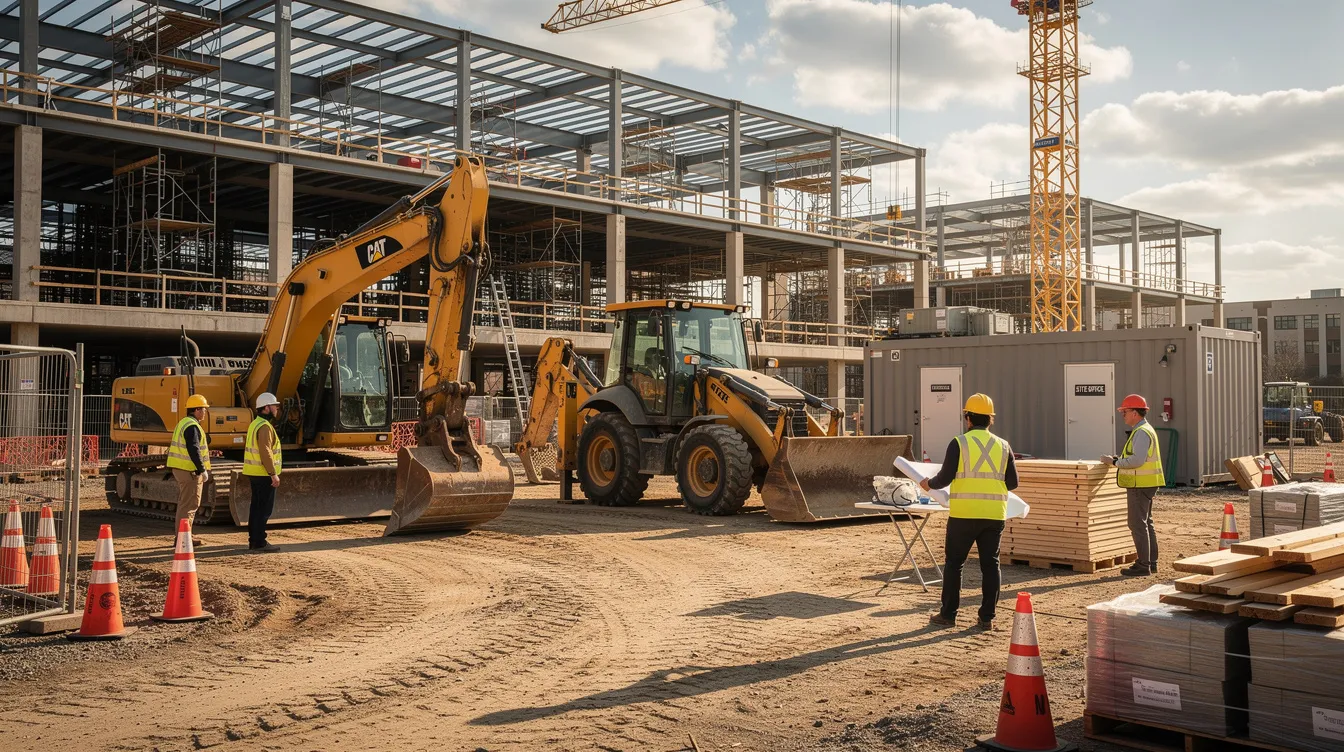
This scenario plays out across East Tennessee with surprising regularity. "Acceleration" in construction means pushing work to finish earlier than the current contractual schedule requires—or in spite of excusable delay—usually by adding labor, shifts, or changing work sequences. Those acceleration measures almost always generate significant costs that were never contemplated in the original contract price.
The dispute that follows typically centers on a straightforward question: who pays? Was the contractor legally required to accelerate, or was it entitled to an extension of time instead? The answer depends on the type of acceleration involved, the contract language, and how well each party documented its position.
DZ Law's construction litigation and arbitration practice routinely handles acceleration claims, delay claims, change orders, and related scheduling disputes across East Tennessee. This article focuses on how these principles play out under Tennessee law and the common construction contract language used in the region, grounded in the broader framework of US law.

Understanding Acceleration in Construction Projects
What Is Acceleration?
Acceleration means completing contract work at a faster pace than the current contractual schedule requires. It is not simply "working hard." It involves measurable changes to how, when, and with what resources the work is performed—changes that drive up project costs.
Typical Acceleration Efforts
Typical acceleration efforts include:
Overtime and weekend work
Adding extra crews or additional labor
Stacking trades in confined areas
Resequencing work logic to compress the critical path
Expediting materials and equipment deliveries
These acceleration measures increase direct costs and often reduce productivity. Crowded work areas, unfamiliar sequences, and fatigued workers all contribute to inefficiency. That combination of higher costs and lower output is precisely why acceleration claims and litigation arise so frequently.
Contract Language and Types of Acceleration
Most standard contracts used in Tennessee—including common AIA and ConsensusDocs forms—address schedule, delay, and changes, but rarely spell out constructive acceleration clearly, leaving room for dispute. Identifying the type of acceleration is the starting point for analyzing who bears the financial burden.
It is worth noting the difference between acceleration and delay mitigation, especially because the two compensable forms usually discussed are directed and constructive acceleration. Delay mitigation reduces the effects of project delays and often involves changes in work sequence. However, mitigation does not require additional costs for contractors in the same way acceleration does. Acceleration goes further: it compresses the schedule beyond what mitigation alone would achieve, and the additional work and costs are what give rise to a claim.
Voluntary Acceleration: Speeding Up at the Contractor's Risk
Voluntary acceleration occurs when a contractor independently decides to speed up work without an owner directive or wrongful denial of a time extension. The contractor may choose to accelerate voluntarily for any number of business reasons.
Common scenarios include:
A contractor in Sevier County falls behind schedule due to its own delays and accelerates to avoid liquidated damages it would rightfully owe.
A contractor wants to finish early to free up crews for another project starting in 2025.
A subcontractor pushes to wrap up before winter weather hits, even though the contract schedule allows more time.
In each case, the contractor typically bears the extra costs. Voluntary acceleration is usually not compensable because it is a business decision rather than a change imposed by the owner or a response to an excusable delay.
Practice pointer: Tennessee contractors should clearly distinguish voluntary acceleration from compensable acceleration in all correspondence and project records. Before deciding to accelerate, obtain written clarification from the owner about whether the acceleration is being directed, whether a time extension will be granted, and who will bear the associated acceleration costs. Without that clarity, a contractor's efforts may later be characterized as purely voluntary—and non-recoverable.
Directed Acceleration: When the Owner Clearly Orders You to Speed Up
Directed acceleration occurs when the owner, construction manager, or architect explicitly instructs the contractor to speed up work and finish earlier than required by the current contract schedule. This is the most straightforward form of acceleration from a legal standpoint.
Directed acceleration often occurs through:
Written change directives or formal change orders
Instructions invoking the contract's changes clause (such as those found in AIA A201 and similar forms used on Tennessee projects)
Letters or emails from the owner's representative specifying a new, earlier completion date
Under US law and general contract principles, a direct order to accelerate that changes the required completion date is typically a compensable change. In directed acceleration, the contractor is generally entitled to recover costs—giving rise to an acceleration claim for all additional costs attributable to the compressed schedule.
Recoverable acceleration costs in a directed acceleration claim commonly include:
Overtime wage premiums and shift differentials
Extra supervision costs
Equipment standby charges or additional rentals
Expediting fees for materials and supplies
Added subcontractor charges and premium pricing
DZ Law can help contractors document and price directed acceleration claims, and assist owners in reviewing, negotiating, or disputing such claims to ensure fair outcomes.
Constructive Acceleration: When Time Extensions Are Wrongfully Withheld
What Is Constructive Acceleration?
Constructive acceleration is a legal theory recognized in US federal contract law. Constructive acceleration occurs when a contractor faces an excusable delay, properly requests a time extension, and the owner denies or fails to act on the request—effectively forcing the contractor to accelerate to meet the unextended date.
Unlike directed acceleration, there may be no explicit written acceleration order. Instead, constructive acceleration happens when a contractor accelerates work without explicit instruction from the owner. The pressure to maintain the original completion date—often reinforced by threats of default or liquidated damages—creates an implied demand to accelerate.
Financial Impact of Constructive Acceleration
Constructive acceleration can lead to additional costs if the contractor meets original deadlines that should have been extended. Contractors incur these additional costs to meet original completion dates that, under the contract, should have been pushed back. The financial burden can be enormous: additional crews, overtime, expedited shipments, and productivity losses compound rapidly on complex projects.
Constructive Acceleration in Practice
Constructive acceleration claims are frequently paired with delay claims, especially on complex commercial or infrastructure projects in Knox and Blount Counties where design changes, permitting issues, or late owner decisions cause excusable delay. Federal cases and boards—such as the U.S. Court of Federal Claims and boards of contract appeals—have outlined the standard elements for proving constructive acceleration, and Tennessee courts look to similar contract principles when evaluating these disputes.
If you suspect a constructive acceleration claim because time extensions are being ignored while on-time completion is still demanded, contact DZ Law at (865) 259-0020 or reach out online at our contact page before the situation escalates.
The Role of Excusable Delay and the Right to a Time Extension
An excusable delay is a delay beyond the contractor's reasonable control that entitles the contractor to an extension of time under the contract. Excusable delays may include severe weather, design changes, or owner-caused bottlenecks—any event that impacts the critical path and was not the contractor's fault.
Tennessee projects frequently encounter excusable delays:
Significant flooding or severe storms disrupting site access
Supply-chain disruptions delaying material deliveries
Late building department approvals in Knoxville or Maryville
Owner-directed design revisions mid-construction
It is important to distinguish between a time extension and compensation. Some contracts allow only a time extension for non-compensable delay (such as weather), while others allow both additional time and money for compensable delays caused by the owner. This distinction matters because acceleration claims hinge on the time extension concept. If the contractor was truly entitled to an extension but instead had to maintain the original date, any resulting acceleration efforts may become compensable.
Tennessee's statute of limitations for contract actions is generally six years under Tenn. Code Ann. § 28-3-109(a)(3)—far longer than the one-year limit for personal injury. But contract notice requirements and claim deadlines written into the contract itself can be much shorter. Cases like Haren v. Metropolitan Government confirm that Tennessee courts enforce these contractual deadlines strictly, making early legal advice important.
The Five Elements of a Constructive Acceleration Claim
Under US law, courts often follow a five-element test derived from federal decisions like Norair Engineering Corp. v. United States (ASBCA No. 22916, 1979) to evaluate constructive acceleration claims. Five elements must be proven for a constructive acceleration claim to succeed.
Here is the framework, presented as a practical checklist:
An excusable delay occurred. The delay must have been beyond the contractor's reasonable control—not caused by the contractor's own delays or mismanagement. Tennessee contractors should document the cause of delay with weather reports, correspondence, RFIs, and schedule analyses showing critical path impact.
A valid extension of time request must be made by the contractor. The contractor must timely and properly request a time extension under the contract's notice provisions. In Ray Bell Construction Co. v. Tennessee Department of Transportation, the Tennessee Supreme Court confirmed that contractors must submit written requests for extension when conditions beyond their control cause delay.
The owner must deny or delay the extension of time request. The owner denies, ignores, or unreasonably delays acting on the time request. Tennessee courts examine whether the owner responded within a reasonable time and whether the response was substantively justified.
The owner insisted on completion by the original (or insufficiently extended) date. This can be explicit—letters demanding adherence to the original schedule—or implicit, such as continued assessment or threats of liquidated damages. This element often triggers constructive acceleration. Emails, meeting minutes, and formal correspondence are critical evidence.
The contractor actually undertook acceleration efforts and incurred additional acceleration costs. The contractor must demonstrate actual acceleration efforts and the resulting costs through project records such as payroll records, overtime logs, equipment invoices, and schedule comparisons.
Failing to prove even one of these five elements can doom a constructive acceleration claim. That is why careful project administration and legal guidance are essential from the early stages of a dispute. DZ Law's construction litigation practice is designed to methodically build or challenge each of these elements through discovery, expert analysis, and, where appropriate, arbitration or trial.
Proving Constructive Acceleration: Documentation, Schedules, and Evidence
Key Documentation
Proving constructive acceleration requires far more than a general complaint about working "harder." It demands a detailed record showing when delays occurred, when time extensions were requested, and how the schedule was compressed.
Key documents Tennessee contractors should preserve include:
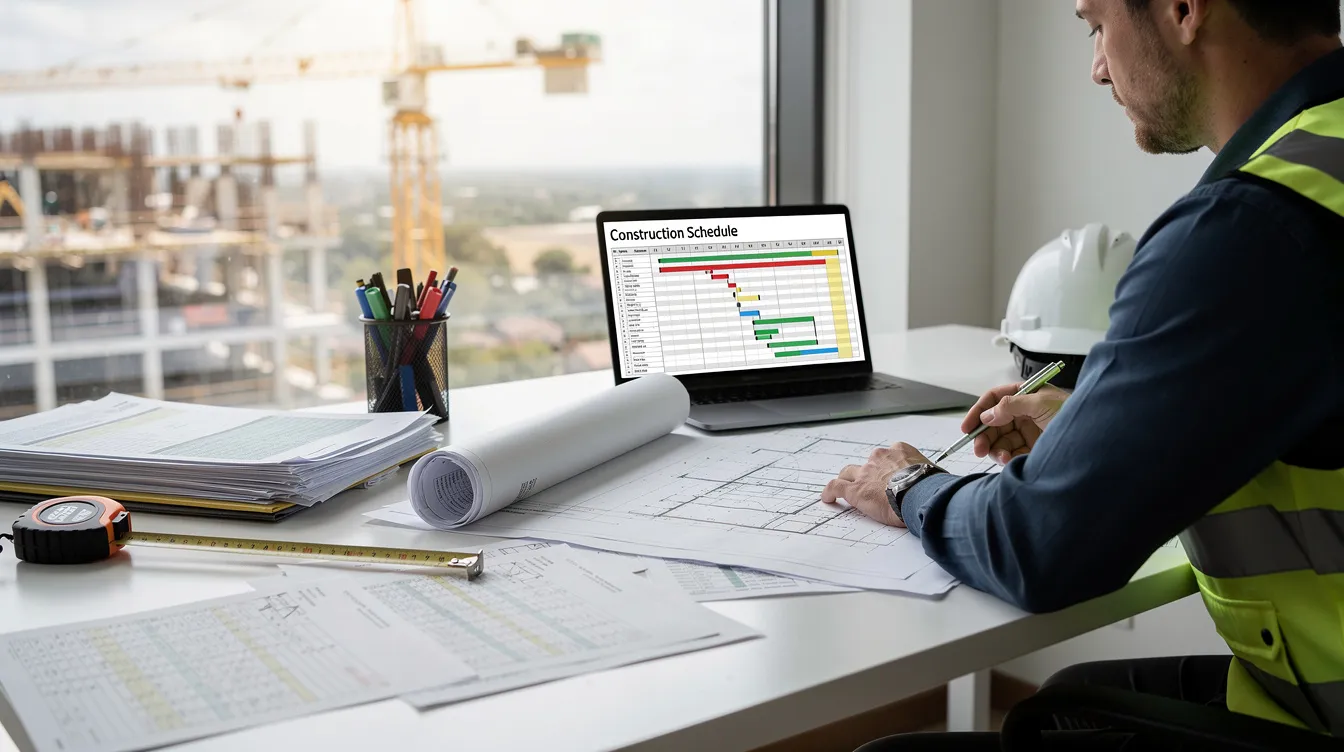
Baseline and updated CPM schedules
Daily reports (maintained in detail to support acceleration claims)
Payroll records and overtime logs
Subcontractor invoices showing premium charges
Change orders and RFIs
Email correspondence showing owner pressure or threats
Written denial or silence on extension requests
Supporting documentation for each time extension request
Forensic Schedule Analysis
Forensic schedule analysis sits at the center of most acceleration claims. Methods like Time Impact Analysis compare the as-planned schedule against the as-built schedule, establishing "but-for" completion dates and demonstrating the difference between what should have happened and what the contractor was forced to do.
Importance of Contemporaneous Records
Contemporaneous records are crucial for acceleration claims—and contemporaneous records are critical for supporting claims in court or arbitration. Records created during the project in 2023–2025 carry far more weight than spreadsheets assembled after-the-fact once a dispute is already brewing. Maintain detailed daily reports to support acceleration claims throughout the project, not just when things go wrong.
Failure to document acceleration efforts can bar cost recovery entirely. DZ Law often works with scheduling experts and construction cost experts to build or defend acceleration claims. If you are in the middle of a project and acceleration is underway, call (865) 259-0020 to discuss your documentation before critical evidence is lost.
Acceleration Costs: What Can Be Recovered?
Acceleration costs are the additional, incremental costs incurred solely because the contractor accelerated—above and beyond what it would have cost to perform the work at the original pace. Contractors must document acceleration costs for recovery; without clear cost segregation, proving damages becomes extremely difficult.
Common categories of recoverable costs include:
Cost Category | Examples |
|---|---|
Labor premiums | Overtime wages, weekend/holiday pay, shift differentials |
Additional crews | Temporary labor, additional crews mobilized for compressed work |
Supervision | Extra supervision for night shifts or multiple crews |
Equipment | Additional equipment mobilization, extended rentals, standby charges |
Materials | Expediting fees, air freight, premium pricing for rush orders |
Subcontractors | Increased subcontractor rates for schedule compression |
Productivity losses | Reduced efficiency from trade stacking, resequencing, fatigue |
Productivity losses are often intertwined with acceleration. Crowded workspaces, stacking trades, and resequencing can reduce efficiency by an estimated 10–30% over normal labor productivity.
These effects may be recoverable if properly documented and tied to acceleration efforts rather than general disruption.
Track productivity rates before and after acceleration efforts to establish the difference.
Document costs separately from normal project costs to avoid confusion. Accurate job-cost accounting—using separate cost codes for acceleration work—makes it far easier to prove damages in a Tennessee court or arbitration. Poor record-keeping can significantly reduce or eliminate recovery.
DZ Law also advises businesses on front-end contract drafting and risk allocation, helping owners and contractors write clearer provisions on acceleration, extension of time, and cost recovery before a dispute ever arises.
Owner and Contractor Strategies: Preventing and Managing Acceleration Disputes
For Contractors
Promptly identify excusable delay events and provide timely written notice
Submit detailed extension of time requests with supporting documentation showing critical path impact
Reserve rights when working under protest—send written correspondence stating that acceleration is being undertaken "subject to our rights" under the contract
Avoid accelerating without clear documentation of the owner's expectations
Keep contemporaneous documentation of every acceleration measure, cost, and communication
For Owners and Developers
Respond reasonably and in writing to extension of time requests within a reasonable time
Evaluate schedule impacts with the project team or an independent scheduling expert
When acceleration is desired, issue clear directives and negotiate pricing rather than relying on informal pressure
Include well-drafted acceleration and extension provisions in the contract from the outset
Tennessee's modified comparative fault principles, while most visible in personal injury cases, reflect a broader legal expectation that parties take reasonable steps to act fairly and mitigate damages. Courts expect reasonableness from both sides in contract disputes, making documentation of good-faith conduct important.
Many Tennessee construction contracts require mediation, arbitration, or structured dispute resolution prior to filing suit. DZ Law represents clients both in private arbitration forums and in state and federal courts across East Tennessee.
If you are an owner, contractor, or subcontractor facing a brewing acceleration dispute in Blount, Knox, Sevier, Loudon, Jefferson, or Cocke County, reach out to DZ Law at (865) 259-0020 or through our online contact form.
How DZ Law, PLLC Handles Construction Acceleration and Delay Claims
DZ Law's construction litigation and arbitration practice is led by attorneys who regularly handle complex scheduling, delay, and payment disputes for East Tennessee businesses. A construction lawyer assists by reviewing contracts, preserving claims, analyzing responsibility, and managing documentation from the earliest stages of a dispute.
The firm's typical process in an acceleration case includes:
Early review of the contract and project correspondence
Analysis of schedule updates and critical path impacts
Coordination with scheduling and cost experts for forensic schedule analysis
Calculation of acceleration costs using contemporaneous records and job-cost data
Evaluation of how acceleration issues interact with other disputes—change orders, termination threats, payment bond claims, or warranty issues
DZ Law represents both plaintiffs and defendants. Contractor claims seeking to recover acceleration costs receive the same rigorous attention as owner defenses against what they view as overstated or unsupported claims. The firm's related practice areas—business and commercial litigation, appeals and federal court litigation, and business transactions and contracts—provide depth for handling contract drafting, dispute escalation, and appeals when necessary.
DZ Law is based in Blount County and frequently appears in courts in Knoxville and surrounding counties on behalf of construction industry clients facing high-stakes acceleration and delay disputes.
Related Contract and Business Issues: Beyond the Acceleration Claim Itself
Acceleration disputes rarely stand alone. They often intersect with other business and contract issues:
Payment bond claims and mechanics' liens when acceleration costs go unpaid
Termination disputes where an owner terminates for default after the contractor refused to accelerate without compensation
Shareholder or partnership disputes within construction companies strained by cash-flow problems from uncompensated acceleration
Supplier and subcontractor conflicts triggered by compressed schedules and extra resources demanded without prior arrangement
Compressed schedules and cash-flow strain from acceleration efforts can trigger broader business and commercial litigation issues, including loan covenant problems and conflicts among LLC members or shareholders.
DZ Law's business transactions and contracts group assists construction clients in negotiating future contracts that better address acceleration, constructive acceleration, and mitigation obligations up front—reducing the risk of future litigation. The firm's appeals and federal court litigation practice ensures that when construction acceleration disputes are litigated in federal court or appealed, key legal issues and a solid record are preserved from the trial level.
Construction businesses in East Tennessee should view acceleration disputes as part of a broader risk-management strategy and consult DZ Law early to align project, business, and legal strategies.
Local and Jurisdictional Considerations: US Law and Tennessee Projects
Constructive acceleration claims are recognized in US federal law, developed primarily through federal contract appeals and court decisions. Tennessee state courts generally apply similar contract principles when evaluating whether an owner's conduct required a contractor to accelerate without proper compensation. In Moore Construction Co. v. Clarksville Dept. of Electric, the Tennessee Court of Appeals recognized a contractor's right to both time extension and cost recovery when owner conduct caused the delay—principles consistent with the constructive acceleration framework.
Jurisdictional issues can arise when projects involve federal funding or federal agencies. Work at federal facilities or TVA-related projects in East Tennessee may bring federal boards (such as ASBCA, referenced by case number in federal claims involving Norair Engineering Corp. and others) or the U.S. Court of Federal Claims into play.
Contract choice-of-law and dispute resolution clauses may specify another state's law or require arbitration under specific rules, so early legal review is important in multi-state or complex commercial projects. Tennessee law imposes deadlines for bringing contract claims, and contractual limitations periods or claim-notice provisions through the contractual process can be shorter than default statutes, making timely action crucial.
DZ Law evaluates the applicable law, forum, and procedural requirements at the outset of an acceleration dispute to protect clients' rights and maximize recovery or defense options.
When to Call a Construction Acceleration Claim Lawyer
Practical warning signs that it is time to contact counsel include:
Repeated schedule updates showing slippage but no granted extension of time
Emails or letters pressuring completion by the original date despite documented owner-caused delay
The project manager directing significant overtime and weekend work not covered by change orders
Threats of default or liquidated damages despite excusable delay
The contractor accelerated work but the parties have not agreed on who pays
The contractor failed to receive any response to a properly submitted extension request
Early involvement of a construction acceleration claim lawyer can help shape project communications, preserve key evidence, and avoid missteps—such as inadvertently waiving rights or treating compensable acceleration as purely voluntary. A contractor that accelerated without preserving its entitlement through proper notice may find recovery far more difficult.
DZ Law offers consultations to owners, contractors, and subcontractors throughout Blount, Knox, Sevier, Loudon, Jefferson, and Cocke Counties to assess potential acceleration claims and defenses.
Call (865) 259-0020 today or send a message through our secure online form if you are facing schedule pressure or suspect constructive acceleration on a current or recent project.
Waiting until after project completion or close-out can make demonstrating acceleration efforts and costs significantly more difficult. The value of prompt legal guidance cannot be overstated.
FAQ: Construction Acceleration Claims in Tennessee
The following questions address common concerns Tennessee owners, contractors, and subcontractors bring to DZ Law about acceleration, constructive acceleration, and related disputes.
Is every schedule problem or overtime situation an "acceleration claim"?
No. Not every instance of working overtime or adding crews qualifies as an acceleration claim. The key is whether the contractor was contractually required or reasonably compelled to speed up because of owner actions or wrongful refusal to grant a time extension. If the contractor simply mismanaged the schedule or fell behind due to its own issues, any extra effort to catch up is usually considered voluntary acceleration or mitigation, for which the contractor bears the cost. If you are unsure whether your situation qualifies, gather your schedule updates and correspondence and consult DZ Law for a case-specific evaluation.
Can I recover acceleration costs even if the owner eventually grants a late time extension?
Under US law, a late or partial extension of time does not necessarily erase a constructive acceleration claim if the contractor already constructively accelerated and incurred additional costs before the extension was granted. Courts and arbitrators closely examine the timing: when the extension should have been granted, when acceleration efforts began, and whether those efforts were reasonable under the circumstances. Detailed documentation of when acceleration efforts started—compared to when an extension was requested and eventually granted—is critical to potential recovery.
How do acceleration claims interact with liquidated damages provisions?
Owners often rely on liquidated damages clauses to pressure contractors to maintain the original contract completion date, which can contribute to constructive acceleration if coupled with wrongful denial of an extension of time. In some cases, a contractor may both avoid or reduce liquidated damages through acceleration and still recover acceleration costs if the legal elements of constructive acceleration are satisfied. DZ Law evaluates the interplay between liquidated damages, delay responsibility, and acceleration costs as part of a comprehensive strategy for both owners and contractors.
What if my contract requires mediation or arbitration before I can sue over acceleration costs?
Many construction contracts in Tennessee require mediation, arbitration, or other dispute resolution steps before a party can file a lawsuit—and these provisions are generally enforceable. Acceleration claims can still be fully addressed in arbitration or mediation, and schedule and cost experts often testify in those forums just as they would in court. Seek counsel early so you do not miss contractual deadlines for giving notice, requesting mediation, or initiating arbitration in connection with acceleration disputes. Additional resources, including your contract's dispute resolution clause and any applicable rules, should be reviewed immediately.
How soon should I contact DZ Law about a potential acceleration dispute?
Owners and contractors should contact a construction lawyer as soon as they see repeated excusable delays, denied or ignored time extension requests, or escalating overtime and stacking of trades not supported by clear change orders. Early legal advice can help shape project communications and recordkeeping, improving the odds of resolving the dispute cost-effectively—or succeeding if litigation or arbitration becomes necessary. If the parties agree that a problem exists but cannot resolve it informally, legal involvement becomes urgent. Call DZ Law at (865) 259-0020 or reach out through our online contact form to discuss your specific project and potential acceleration issues.